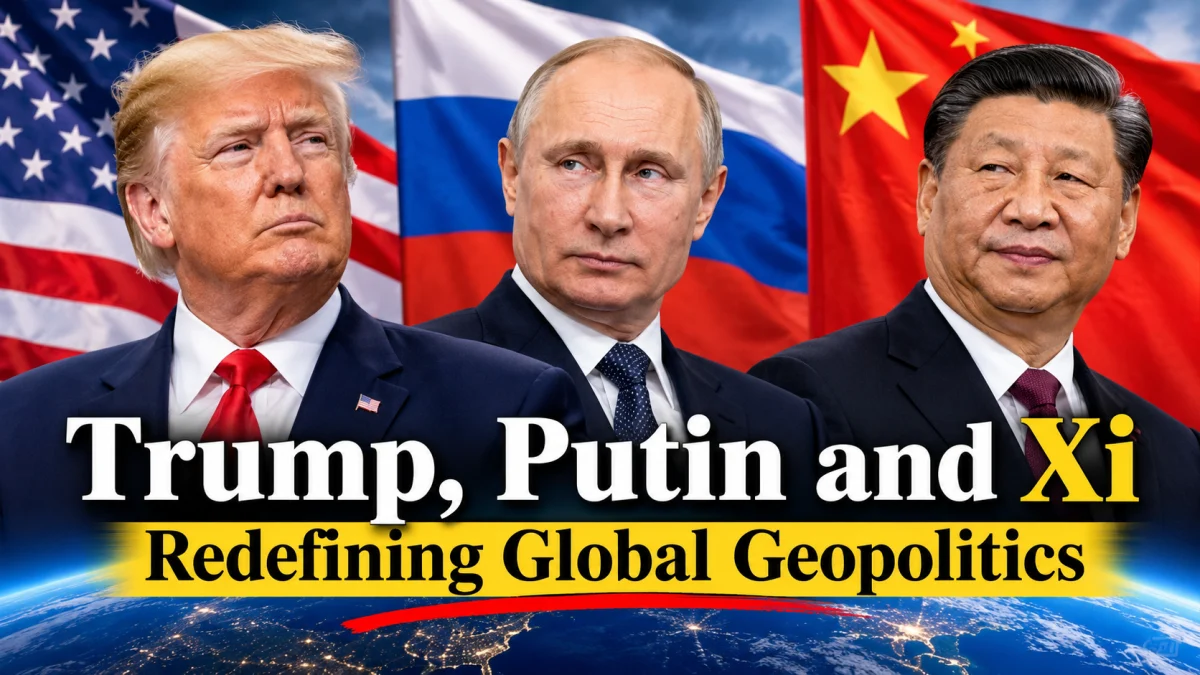
The proposed meeting between US President Donald Trump, Russian President Vladimir Putin and Chinese President Xi Jinping on 19 November 2026 in Shenzhen, China, represents an important moment in international diplomacy. Scheduled alongside the Asia-Pacific Economic Cooperation (APEC) summit, the gathering is expected to bring together the leaders of three major global powers for their first trilateral meeting. Discussions are expected to address nuclear arms reduction, international security and the conflict involving Iran. The meeting comes at a time of growing geopolitical competition, changing diplomatic relationships and uncertainty over the future international order.
Also Read: Ajeet Bharti’s 50-seat Challenge to Giriraj Singh
Meeting of Trump, Putin and Xi
The proposed trilateral meeting is significant because the United States, Russia and China possess considerable military, economic and diplomatic influence. Their decisions affect international security, global trade, energy markets and regional conflicts.
According to reports, the meeting is scheduled for 19 November in Shenzhen. The gathering is expected to provide an opportunity for direct dialogue on major international issues.
However, the three countries do not share identical strategic objectives. Washington is seeking opportunities for diplomatic engagement, Moscow wants to strengthen its international position, and Beijing is interested in managing its relationship with the United States while protecting its wider strategic interests.
The gathering should therefore be understood as an opportunity for dialogue rather than evidence of an emerging political alliance.
Also Read: India’s Strategic Autonomy in a Changing Global Order
2. Donald Trump's Strategic Priorities
For Donald Trump, the meeting provides an opportunity to engage directly with two major competitors of the United States. His administration has indicated an interest in discussing nuclear weapons reduction and the Iran conflict.
Washington is also seeking to manage its complicated relationship with Beijing, particularly concerning trade, advanced technology, critical minerals and national security.
The United States faces the challenge of maintaining its global influence while addressing disagreements with both Russia China. Diplomatic engagement could help reduce tensions, although achieving lasting agreements would require compromises from all three governments.
Also Read: Central Government Jobs November 2026: 198 Vacancies, Apply Online
3. Vladimir Putin and Russia's International Position
For Vladimir Putin, the meeting offers an opportunity to engage directly with the American and Chinese presidents during a period of continuing international tensions.
Russia's relationship with Western countries remains strained because of the war in Ukraine, economic sanctions and disagreements over European security.
Moscow has sought greater diplomatic engagement with Washington while maintaining close economic and strategic cooperation with Beijing.
Russia may use the meeting to communicate its security concerns and strengthen its diplomatic position. Nevertheless, differences between Moscow and Washington over Ukraine and European security remain substantial obstacles to improved relations.
Also Read: Rajeev Goswami: The Face of India's Anti-Mandal Movement
4. Xi Jinping and China's Strategic Interests
China occupies an important position in the proposed meeting because it is hosting the gathering and maintains significant economic relationships with both countries.
Xi Jinping faces the challenge of managing competition with Washington while maintaining China's strategic partnership with Russia.
One major issue is nuclear arms control. The New START treaty, the last remaining major nuclear arms-control agreement between the United States and Russia, expired in February 2026. Washington has expressed interest in a broader framework that includes China.
However, Beijing has resisted joining negotiations that place equal restrictions on countries with significantly different nuclear arsenals. China argues that the United States and Russia possess substantially larger stockpiles and should address their own reductions first.
This disagreement could make nuclear negotiations difficult.
Also Read: The 1991 Economic Reforms and India's Changing Economic Order
5. Implications for Global Security
The three countries possess substantial military capabilities, including nuclear weapons. Their relationship therefore has direct consequences for international security.
Cooperation on nuclear risk reduction, communication and strategic stability could help prevent misunderstandings and reduce the possibility of escalation.
Nevertheless, disagreements over military competition, regional conflicts, technology restrictions and territorial disputes could limit the meeting's achievements.
Another important concern is the position of countries that are not directly represented. Ukraine, Taiwan and several regional powers have significant interests in decisions involving the three governments. Any diplomatic understanding affecting their security would need to consider their sovereignty and legitimate interests.
Also Read: Can Economic Growth Thrive Without Creating More Jobs?
6. What the Meeting Means for India?
India will have an important interest in the evolving relationship between Washington, Moscow and Beijing.
New Delhi maintains strategic and economic relationships with all three countries, although its relationship with each involves different priorities and challenges.
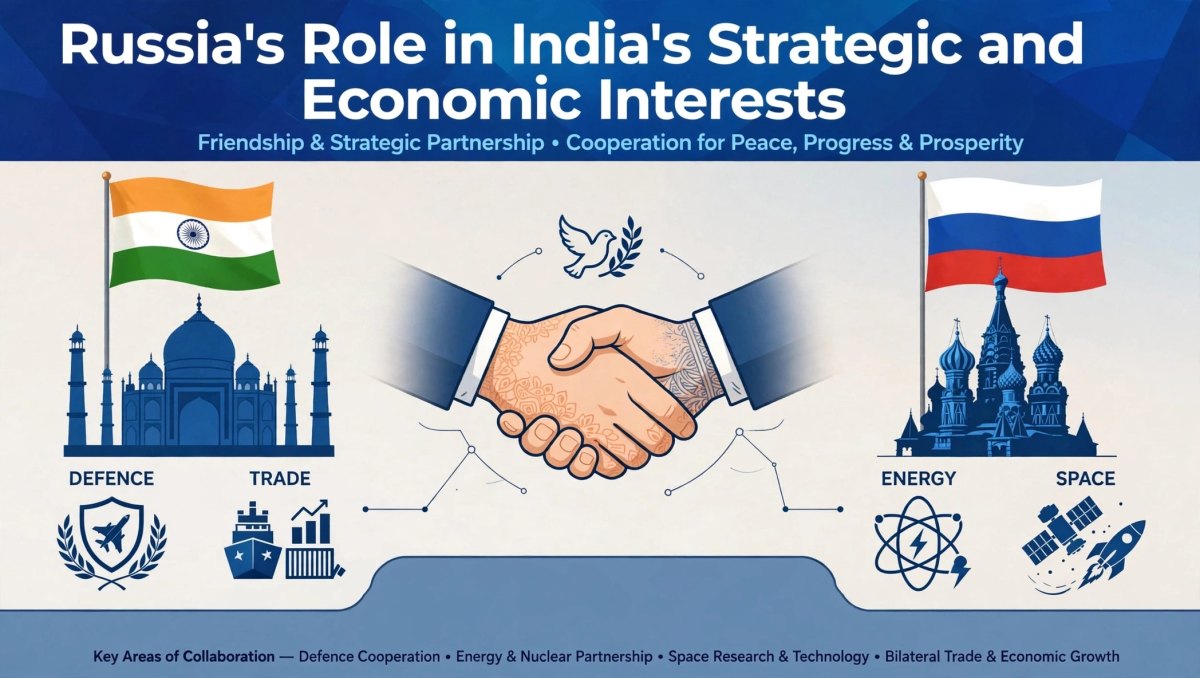
The United States is an important defence, technology and economic partner. Russia remains a significant defence and energy partner, while China is an important trading partner and a continuing source of border and security concerns.
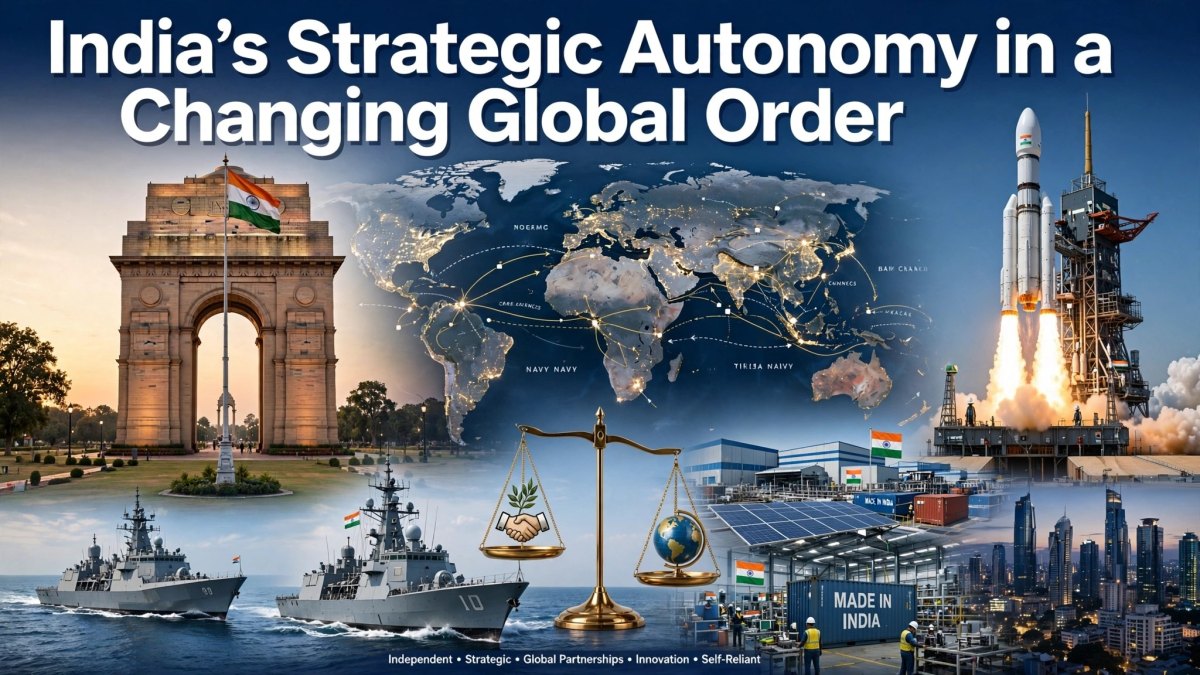
India's policy of strategic autonomy allows it to maintain independent relationships without formally aligning itself with a single major power.
Developments arising from the proposed meeting could influence India's diplomatic calculations, energy security, defence cooperation and position in the Indo-Pacific.
For India, maintaining balanced international relationships while protecting its national interests will remain important as global power competition evolves.
Also Read: Purushottam Khedekar Controversy: Legal Case, BJP Links and 2026 Verdict
Sources and Further Reading
1. Reuters – China Confirms Xi, Putin and Trump Meeting
2. Associated Press – Trump, Xi and Putin Plan an Unprecedented Joint Meeting
https://apnews.com/article/trump-xi-putin-summit-china-5fe92253ef38100bae913834a9b74d72
3. Al Jazeera – Why Is China Resisting a Nuclear Treaty with the US and Russia?
4. Reuters – A New Yalta? Trump and Putin Push for a Meeting Xi Is Wary of Hosting
Join the Conversation