Summary
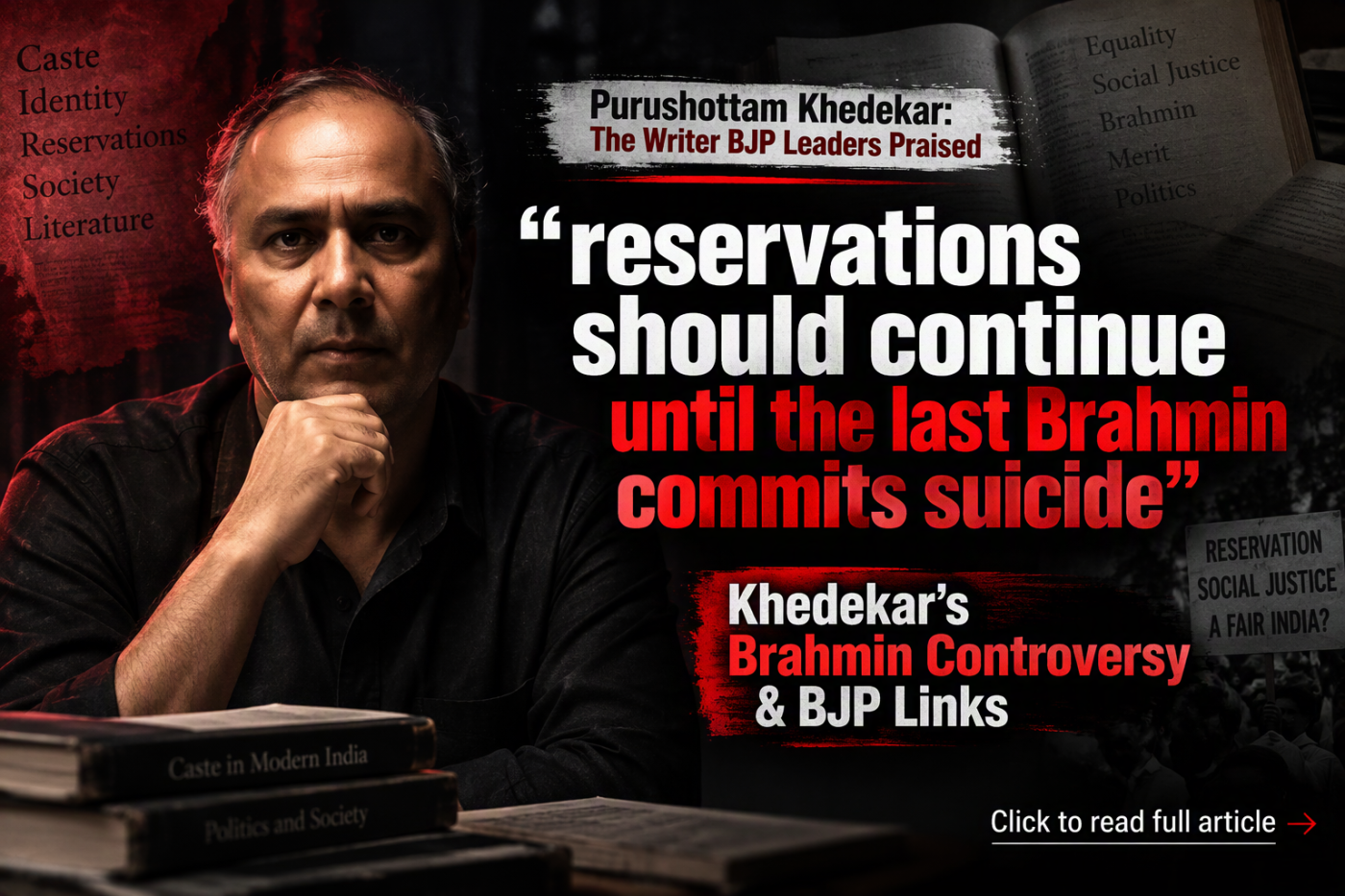
Purushottam Khedekar, founder of the Maratha Seva Sangh and Sambhaji Brigade, has remained a prominent figure in Maharashtra’s socio-political landscape. Known for his vocal critique of dominant traditional structures, Khedekar became the center of a major legal battle following a 2005 speech and the 2009 publication of his book Shivrayanchya Badnamichi Kendre. After years of legal proceedings, a Pune court formally acquitted him and his publisher in April 2026. This explainer examines the origins of the controversy, the nature of his political linkages with the Bharatiya Janata Party (BJP), and the outcome of the judicial process.
Chronology of the Controversy and Legal Case
The friction surrounding Khedekar’s writings and public addresses unfolded across two decades, marked by sharp ideological polarization and subsequent criminal litigation:
-
2005: Khedekar delivered a speech at Sindkheda addressing the social dominance of what he termed "Brahmanism," sparking strong pushback from various community organizations.
-
2009: He published the book Shivrayanchya Badnamichi Kendre ("Centres of Shivaji's Defamation"), which intensified public debate over historical interpretations and caste dynamics in Maharashtra.
-
2011: Following complaints from individuals alleging that the publication promoted enmity and community tensions, a First Information Report (FIR) was registered against Khedekar.
-
2013: Following an investigation, the local police filed a formal chargesheet in court.
-
2015: Khedekar filed an unconditional affidavit and apology in court concerning certain criticisms made in his publications. Concurrently, during the same year, he was appointed as the chairman of a committee for the memorial project dedicated to Chhatrapati Shivaji’s mother, Jijabai, under senior leader Nitin Gadkari.
-
2017: The case transitioned into the formal evidence stage, with multiple hearings examining the publications and witness testimonies.
- 2026: Prajakta P. Patil, JMFC, acquitted Purushottam Khedekar and the publisher because the prosecution failed to produce sufficient evidence and did not examine key witnesses.
Political Linkages and the Bharatiya Janata Party (BJP)
Khedekar’s relationship with mainstream political parties—particularly the BJP—has often been viewed through a complex lens given the ideological foundations of the Maratha Seva Sangh, which historically positioned itself outside traditional Hindutva frameworks.
However, intersecting family and political ties bridged these domains over time:
-
Family Representation: Rekha Purushottam Khedekar, wife of Purushottam Khedekar, represented the BJP as an elected representative from 1995 to 2009, later maintaining engagements within regional political spheres such as the Nationalist Congress Party (NCP).
-
Strategic Alignment: Over subsequent years, Khedekar and affiliated outfits floated tactical political discussions regarding potential alignment with the BJP, viewing electoral pragmatism alongside regional coalition dynamics.
-
Institutional Recognition: Senior BJP figures like Nitin Gadkari have publicly acknowledged Khedekar's administrative cooperation during past infrastructure initiatives in Maharashtra, illustrating a pragmatic administrative working relationship that existed independently of ideological friction.
Also Read: Central Government Jobs November 2026: 198 Vacancies, Apply Online
The 2026 Legal Verdict and Court Findings
In April 2026, the long-running legal case concluded in a Pune court. Presiding Judge Prajakta P. Patil, with defense arguments presented by advocate Milind Pawar, acquitted Purushottam Khedekar and the publisher Kishore Kadu.
The court held that the prosecution failed to produce sufficient, credible evidence demonstrating that the contents of the book directly incited enmity or public disturbance between communities, and noted that key witnesses were not examined to substantiate the charges. This ruling brought legal closure to a 15-year criminal proceeding stemming from the 2011 FIR.

Join the Conversation