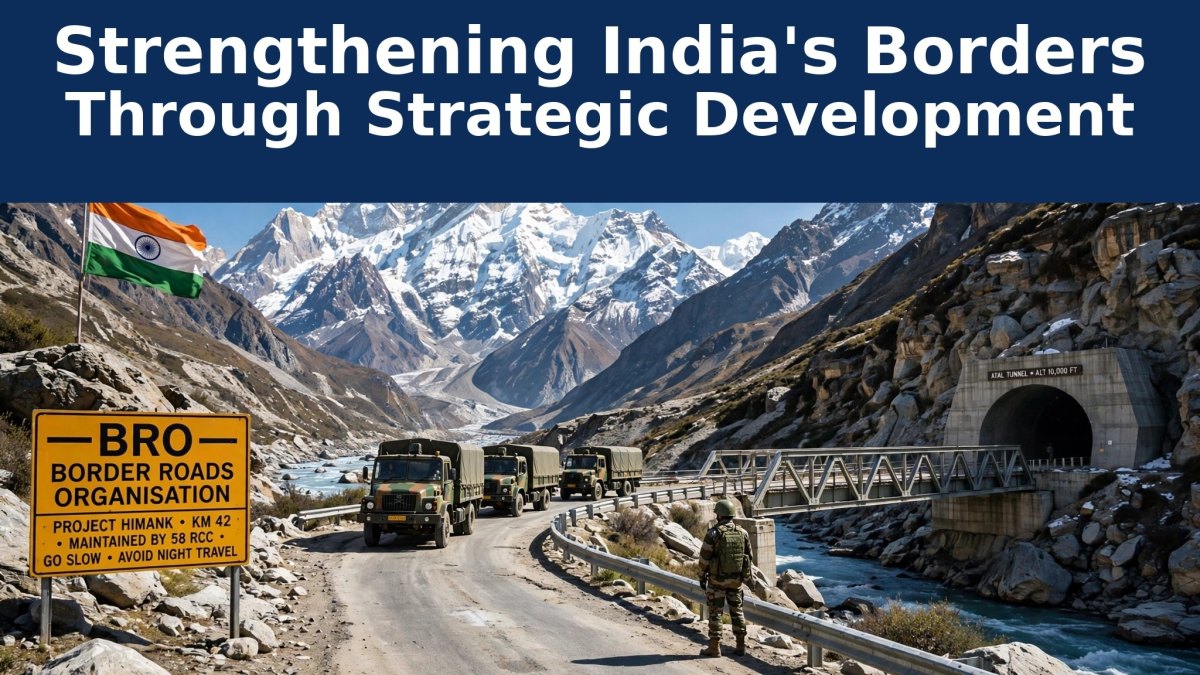
- India's diversity in geography (Himalayas, Deserts, Forests and Riverine) creates several challenges for border connectivity, infrastructure development and national security.
- The Border Roads Organization (BRO) constructs roads, bridges and tunnels to improve strategic connectivity. Improved strategic connectivity ensures logistical support and provides all Weather military access.
- The Government schemes like the ‘Vibrant Villages’ Programme focus on providing essential services, better infrastructure and enhanced livelihood opportunities in border areas. Additionally, the program helps in addressing regional development and security challenges.
Also Read: UIDAI Expands Aadhaar Offline Verification to 300 Entities
1. India's Geographical and Strategic Border Challenges
The Himalayan mountain range, deserts and forests, and riverine areas are the geographical features of the areas along the borders of India which include Pakistan, China, Nepal, Bhutan, Bangladesh and Myanmar. Difficult geographical conditions pose challenges for establishing and maintaining communication and security.
Connectivity Challenges
Northern states such as Ladakh, Uttarakhand, Sikkim and Arunachal Pradesh face challenging conditions for road communications such as landslides, avalanches, rivers in spate and extreme temperature conditions. In such difficult areas, road communications need to be built and maintained all the time to ensure reliable connectivity.
Also Read: Is Youth Representation Adequate in Indian Politics?
2. Development of Roads, Bridges and Tunnels
The Border Roads Organisation (BRO) is central to the development of required communications and transport infrastructure in remote and strategic areas.
Importance of all Weather connectivity
Roads and bridges improve connectivity to remote areas and serve the transport of essential supplies and services. All weather connectivity allows movement of personnel, and if required, provides medical support and evacuation.
Also Read: Indian Navy Gets New Indigenous Warship Amini
3. Border Infrastructure and Military Preparedness
Border Infrastructure helps improve military preparedness and mobility. The military requires all time, unhindered, quick and reliable connectivity. Logistic support means conveyance. The military requires all time, unhindered and reliable connectivity. The logistic support system needs to be located along border areas.
Military mobility and emergency operations
Improvement in infrastructure, helps not only military personnel and equipment, but also medical support and personnel for rescue and relief operations.
Dependable transportation networks are important for effective military deployment and preparedness for border defense.
Also Read: Is India's Military Modernisation Moving Fast Enough?
4. Connectivity and Development of Border Villages
Under this policy, ensuring the availability of basic services and means of livelihood would help create an enabling environment for people to stay and improve their living conditions and thereby reduce migration.
The Vibrant Villages Programme
In February 2023, the Government of India launched the Vibrant Villages Programme to provide basic services and improve living conditions of border villages. The second phase, approved in April 2025, expanded the coverage to other border areas. It focuses on improving road connectivity and public services, and development of tourism and other livelihoods.
Also Read: Israel's Somaliland Embassy Plans Trigger Regional Tensions
5. Strategic Competition and Infrastructure Challenges
Challenging topography and unstable climate combined with diverse strategic interests of regional and global powers complicate India's border infrastructure development.
A strategic imperative is to establish reliable connectivity along China's south Western frontier.
Infrastructure development projects in remote and extreme environments encounter obstacles including difficult terrain and adverse weather. High cost and environmental impact are two other considerations that require special planning for projects in Himalayan ecosystems.
As with any development project, it is important for India to strike a balance between sufficient development of regional infrastructure to improve connectivity and trade, and protect the environment.
Also Read: How Parliamentary Committees Support India's Democracy?
6. Future Priorities for Border Infrastructure
Effective integration of cross border infrastructure projects and remote area development to address local needs would benefit the area strategically as well as meet the day to day needs of the local population.
Also Read: Vote-Bank Politics and Its Impact on India's Development
Combining Investment and Local Development
Tourism, skill development, employment, agriculture, all weather roads, communications and public infrastructure are a few priority projects that can strengthen border communities.
Adequate project management, better integration of defense, infrastructure and civilian agencies, and improving the speed of project implementation can help attain development goals.
Also Read: River Pollution and Water Management in India
Sources and Further Reading
1. Press Information Bureau – Border Roads Organisation: Connecting Places, Connecting People (19 January 2026): https://www.pib.gov.in/PressReleasePage.aspx?PRID=2215957
2. Ministry of Home Affairs – Vibrant Villages Programme (I & II): https://www.mha.gov.in/index.php/scheme/vibrant-villages-programme-vvp-i
3. Press Information Bureau – Cabinet Approves Vibrant Villages Programme-II (4 April 2025): https://www.pib.gov.in/PressReleasePage.aspx?PRID=2118731
4. Press Information Bureau – Implementation of Vibrant Villages Programme (3 February 2026): https://www.pib.gov.in/PressReleasePage.aspx?PRID=2222585

Good
Excellent news
Excellent news