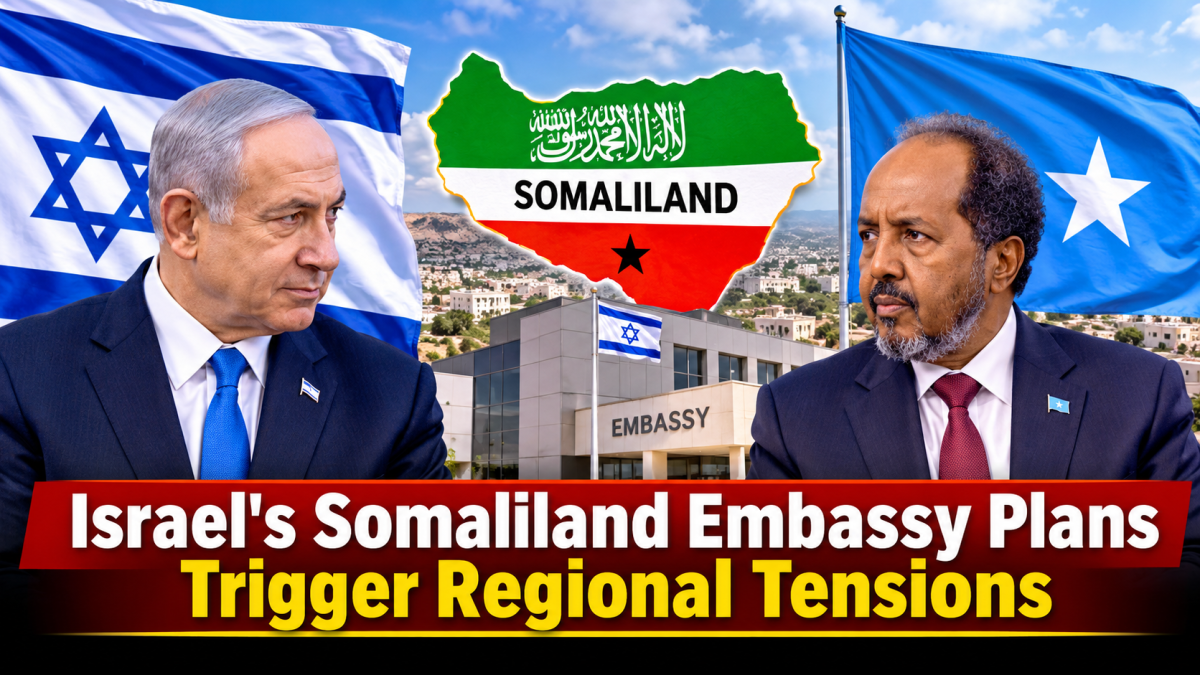
Israel's Somaliland Embassy Plans Trigger Diplomatic Row
Israel is moving ahead with plans to establish an embassy in Somaliland despite opposition from Somalia, China, Saudi Arabia and Turkey, intensifying diplomatic tensions in the strategically important Horn of Africa. The development follows Israel's recognition of Somaliland in December 2025 and has renewed international debate over sovereignty, territorial integrity and influence around the Red Sea.
1. Israel Advances Embassy Plans
On 1 November 2026, Israel's first ambassador to Somaliland, Michael Lotem, presented his credentials to Somaliland President Abdirahman Mohamed Abdullahi in Hargeisa, the territory's capital. Officials also laid the cornerstone for a planned Israeli embassy.
The move represents another step in formalising relations between the two sides. Israel recognised Somaliland on 26 December 2025, becoming the first United Nations member state to formally recognise the territory since it declared independence from Somalia in 1991.
Israeli Foreign Minister Gideon Sa'ar has reiterated Israel's intention to strengthen diplomatic relations with Somaliland.
2. Somalia Rejects Israel's Move
Somalia has strongly opposed Israel's recognition and the proposed embassy, arguing that Somaliland remains an integral part of its sovereign territory.
The Somali government has described Israel's diplomatic actions as a violation of its sovereignty and territorial integrity. Mogadishu maintains that Somaliland's status cannot be changed through unilateral recognition by another country.
Somalia's objection has placed the issue at the centre of a wider diplomatic dispute involving countries with significant political and security interests in the region.
3. China, Saudi Arabia and Turkey Oppose Recognition
Israel's decision has attracted criticism from several influential countries.
China has opposed the recognition, warning against foreign support for separatist movements and interference in Somalia's internal affairs.
Saudi Arabia has reaffirmed its support for Somalia's unity, sovereignty and territorial integrity. Turkey has also rejected Israel's recognition, maintaining strong diplomatic and security ties with the Somali government.
Egypt has raised concerns about the potential consequences for regional stability. These positions reflect broader concerns about the balance of influence in the Horn of Africa and surrounding maritime areas.
4. Why Somaliland Matters Strategically?
Somaliland occupies a strategically important position along the Gulf of Aden, close to the Red Sea and the Bab el-Mandeb Strait.
The maritime corridor connects the Red Sea with the Gulf of Aden and the Indian Ocean, making it important for international shipping and global trade.
The Port of Berbera, developed with investment from the United Arab Emirates, has further increased the territory's strategic importance.
Its geographical position has attracted international attention as countries seek to strengthen maritime security, protect shipping routes and expand their regional partnerships.
5. United States Maintains Its Position
The United States has defended Israel's right to establish diplomatic relations but has not formally recognised Somaliland as an independent country.
Washington's position highlights the distinction between supporting Israel's diplomatic engagement and recognising Somaliland's statehood.
The United States continues to maintain a separate position on Somaliland's international status, while Somalia remains an important partner in regional security cooperation.
Israel's embassy plans have added another dimension to the dispute over Somaliland's international status. While Israel and Somaliland are seeking stronger diplomatic relations, Somalia and several regional powers continue to oppose the move on sovereignty grounds.
Sources and Further Reading
1. Business Insider Africa – Despite Warnings from China, Saudi Arabia and Turkey, Israel Advances Embassy Plans

Join the Conversation