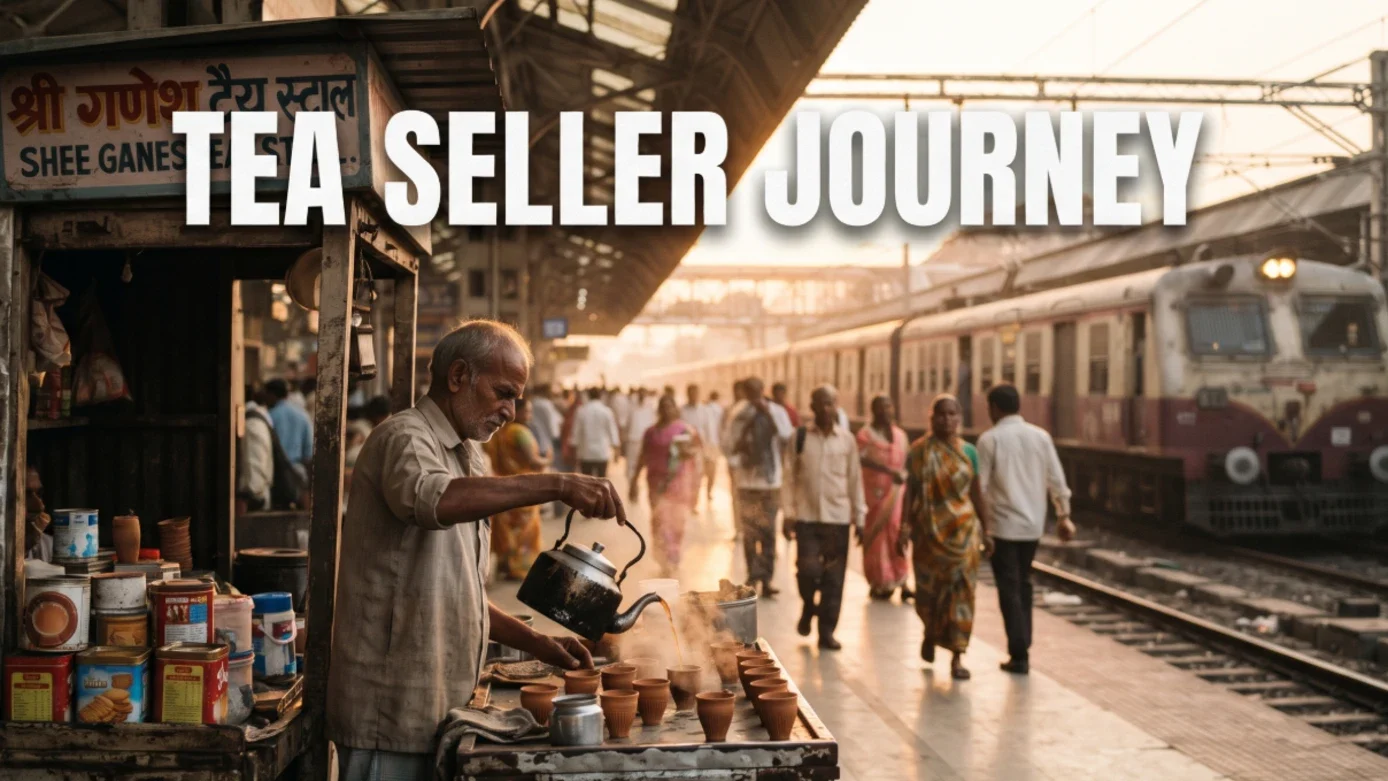
The narrative of Narendra Modi rising from a railway station tea vendor to the highest executive office in the world's largest democracy is a defining study in modern political mobilization. Born on September 17, 1950, in Vadnagar, Gujarat, Modi grew up in a financially constrained family belonging to an Other Backward Class (OBC) community. While his early years assisting his father at a tea stall provided a potent symbol of grassroots connection, his eventual ascent to the premiership was driven by structural party organization, decades of ideological discipline, and calculated administrative transitions rather than symbolism alone.
Also Read: Pakistan and Ramayana: Democracy vs Minority Rights
Ideological Grounding and Grassroots Organization
Modi's entry into public life began well before electoral politics. At a young age, he joined the Rashtriya Swayamsevak Sangh (RSS), a right-wing Hindu nationalist volunteer organization that served as his ideological and operational incubator.
-
Cadre Training: Decades spent as an RSS pracharak (propagandist) instilled rigorous organizational discipline and tactical field experience.
-
Party Building: Transitioning to the Bharatiya Janata Party (BJP) in the late 1980s, Modi worked behind the scenes as a strategist. He managed critical electoral groundwork, such as L.K. Advani's 1990 Rath Yatra, proving his capacity for large-scale mobilization.
Also Read: Can Economic Growth Thrive Without Creating More Jobs?
Administrative Testing Ground: The Gujarat Chief Ministership
The critical turning point in Modi’s trajectory occurred in October 2001, when the BJP leadership appointed him Chief Minister of Gujarat, despite his lack of prior legislative experience.
-
Crisis and Consolidation: Taking office in the wake of the devastating 2001 Bhuj earthquake and later facing intense international and domestic scrutiny over the 2002 Gujarat riots, Modi consolidated political control by securing consecutive electoral victories (2002, 2007, and 2012).
-
The "Gujarat Model": His administration centralized governance and promoted aggressive industrialization, infrastructure expansion, and streamlined bureaucracy, branding the state as investment-friendly. This economic track record became the central pillar of his national appeal.
National Pivot and Electoral Realignment
By 2013, the BJP positioned Modi as its prime ministerial candidate for the 2014 Lok Sabha elections. His campaign capitalized on widespread public discontent with economic inflation and governance scandals plaguing the incumbent administration.
| Milestone Year | Key Political Transition | Electoral Outcome |
| 2001 | Appointed Chief Minister of Gujarat | Transitioned from party strategist to head of government |
| 2014 | Declared BJP Prime Ministerial candidate | Secured a historic single-party majority in Parliament |
| 2019 / 2024 | National incumbent campaigning on welfare and leadership | Secured consecutive re-elections, forming a coalition government in 2024 |
Also Read: Purushottam Khedekar Controversy: Legal Case, BJP Links and 2026 Verdict
Implications and Conclusion
Modi’s journey illustrates a broader shift in Indian democracy: the transition from elite-dominated political lineages to aggressive, cadre-backed populism. While supporters attribute his success to decisive leadership, welfare delivery, and anti-corruption messaging, critics point to the centralization of authority and polarized social dynamics. Ultimately, his path from a tea stall in Vadnagar to South Block demonstrates how meticulous organizational loyalty, paired with a personalized political brand, can reshape a national electorate.
Sources Used
-
Encyclopædia Britannica (2026) — Narendra Modi Biography, Career, & Facts.
-
Government of India (PM India Official Portal) — Personal Life Story and Timeline of Narendra Modi.
-
Wikipedia — Narendra Modi (Comprehensive Chronological and Historical Overview).

Join the Conversation