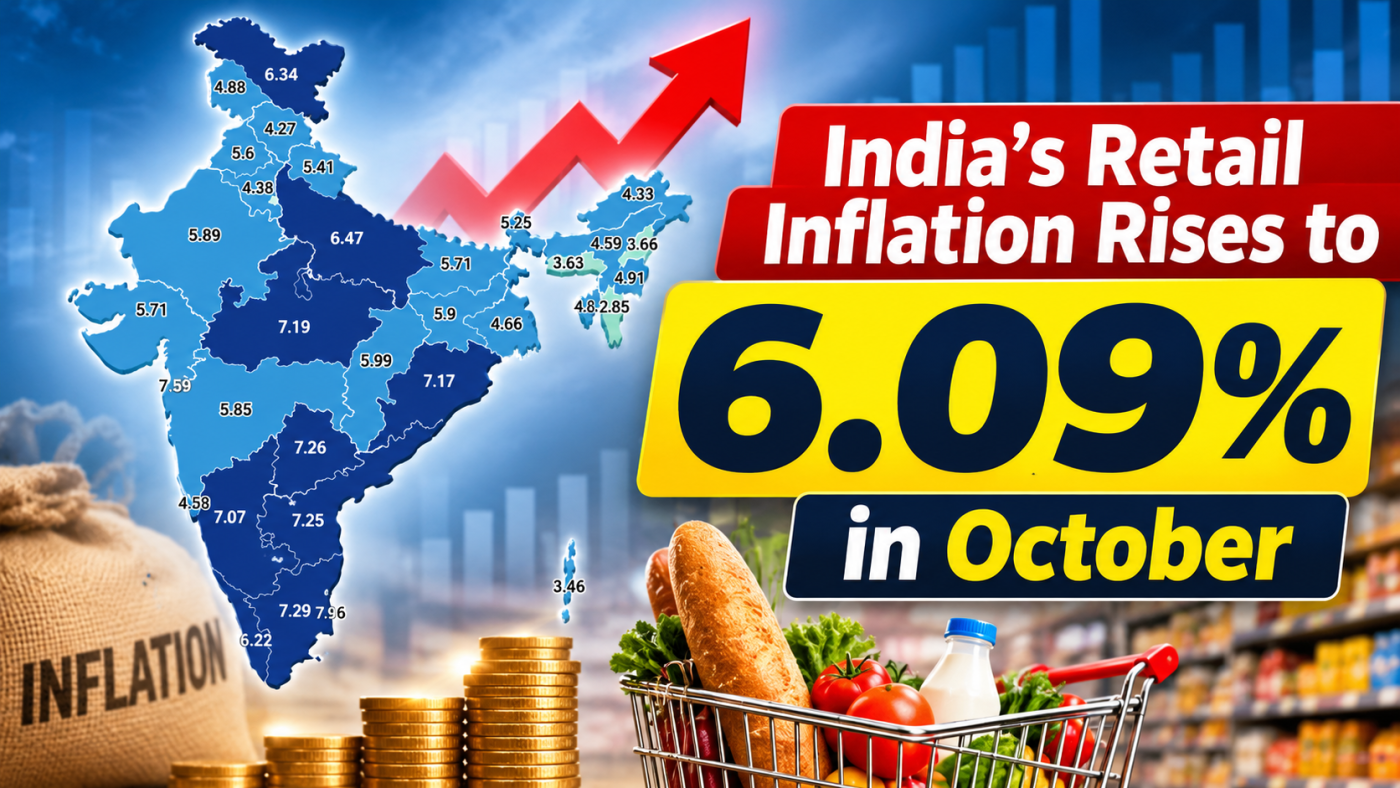
India's Retail Inflation Rises to 6.09% in October 2026 as Food Prices Surge; Puducherry Records Highest Rate
India's retail inflation climbed to 6.09% in October 2026, with significant differences across states and union territories. Food inflation increased to 8.94%, while Puducherry recorded the highest state/UT-level inflation at 7.96%.
India's retail inflation witnessed a fresh increase in October 2026, reaching 6.09%, compared with 5.54% in September, highlighting growing price pressures across the country. The latest data released by the Ministry of Statistics and Programme Implementation (MoSPI) on November 12 shows that inflation is affecting different parts of India at varying rates, with several southern and eastern regions recording higher figures than the national average.
According to the National Statistics Office (NSO), the Consumer Price Index (CPI)-based inflation rate for October was 6.09% on a year-on-year basis. Food inflation emerged as a major concern, rising to 8.94%, compared with 7.74% in September. The figures are provisional and have been calculated using the revised CPI base year of 2024.
Puducherry Records the Highest Inflation Rate
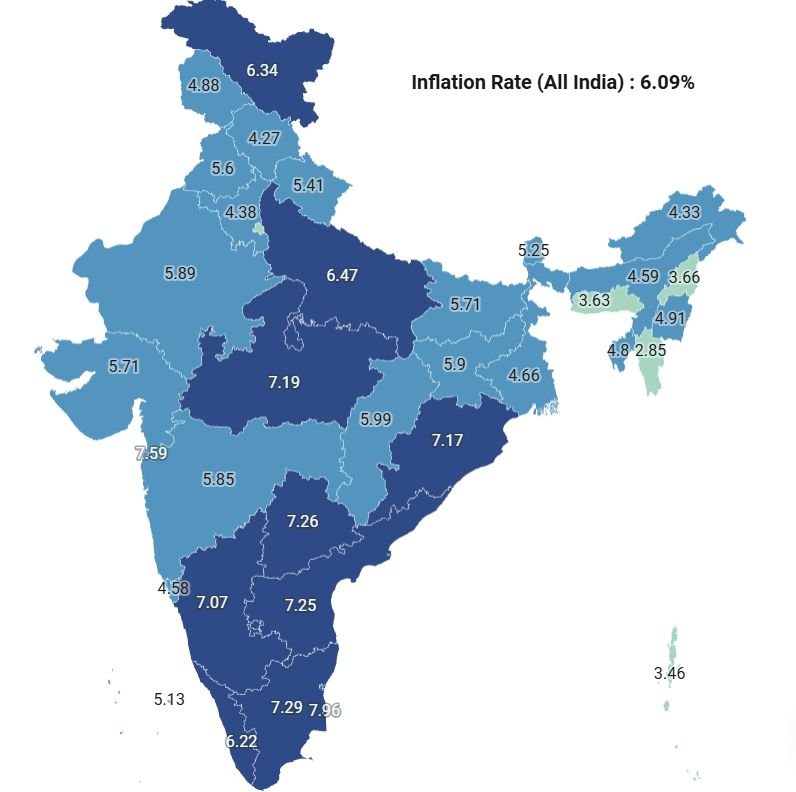
The state-wise inflation map reveals considerable differences in price movements across India. Puducherry recorded the highest combined inflation rate among states and union territories at 7.96%, followed by Dadra and Nagar Haveli and Daman and Diu at 7.59%.
Among states with populations exceeding 50 lakh, Tamil Nadu recorded the highest inflation at 7.29%, followed by Telangana at 7.26%, Andhra Pradesh at 7.25%, Madhya Pradesh at 7.19% and Odisha at 7.17%.
Several other states also recorded inflation above the national average. Karnataka stood at 7.07%, while Uttar Pradesh registered 6.47% and Kerala recorded 6.22%.
These figures indicate that inflationary pressures remain unevenly distributed across different regions, with several southern and central states experiencing relatively higher price increases.
Mizoram Records the Lowest Inflation
In contrast, Mizoram recorded the lowest combined inflation rate among states and union territories at 2.85%. Andaman and Nicobar Islands followed at 3.46%, while Meghalaya recorded 3.63% and Nagaland registered 3.66%.
The National Capital Territory of Delhi recorded inflation of 3.80%, significantly below the national average.
The difference between Puducherry's 7.96% and Mizoram's 2.85% highlights the substantial variation in inflation across the country.
Uttarakhand Remains Below the National Average
Uttarakhand recorded a combined inflation rate of 5.41% in October, remaining below the national average of 6.09%.
The state's rural inflation stood at 5.84%, while urban inflation was recorded at 4.66%. This suggests that rural areas experienced comparatively higher price increases than urban areas in Uttarakhand during the reporting period.
Neighbouring states also displayed varying inflation trends. Uttar Pradesh recorded 6.47%, while Himachal Pradesh stood at 4.27%.
Rural Inflation Higher Than Urban Inflation
The national-level figures reveal a considerable difference between rural and urban inflation.
Rural inflation reached 6.63% in October, compared with 5.41% in urban areas. Food inflation was also higher in rural regions at 9.09%, compared with 8.68% in urban areas.
This difference highlights the importance of monitoring price movements in rural markets, where food-related expenditure plays a significant role in household budgets.
Food Prices Remain a Major Concern
The increase in food inflation is particularly significant because it directly affects everyday household expenditure.
According to MoSPI's October report, the food and beverages category recorded inflation of 8.51%. Other categories also experienced considerable price increases, including personal care and miscellaneous goods and services at 10.14%, and restaurants and accommodation services at 10.06%.
The report also identified substantial price increases in selected items, including onions, garlic, ginger and lemons.
What Does the Latest Inflation Data Indicate?
The October 2026 inflation figures present a mixed picture of India's economic situation. Although inflation varies considerably between states, the increase in the national headline rate and food inflation indicates that households continue to face pressure from rising prices.
The gap between rural and urban inflation also demonstrates that the impact of price increases is not uniform across different sections of society.
For policymakers, the latest figures underline the importance of monitoring food prices, strengthening supply chains and maintaining price stability across regions.
As India continues to navigate changing economic conditions, the coming months will be important in determining whether inflationary pressures moderate or remain elevated.
Also Read: Financial Inclusion in India: Access, Growth and Gaps



Join the Conversation