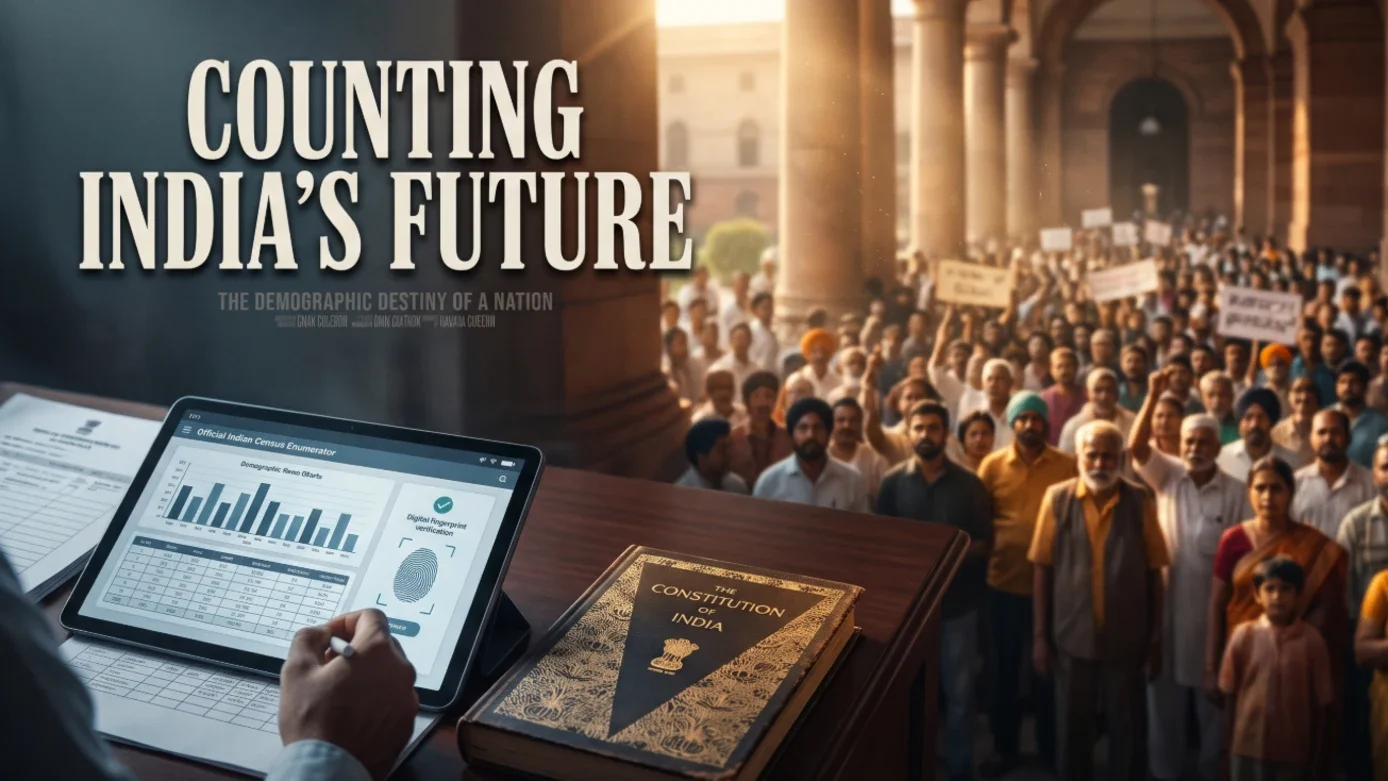
For the first time since 1931, India is preparing to record the caste of every citizen during the Population Enumeration phase of its 16th Census in February 2027. Approved by the Union Cabinet in 2025 after years of pandemic-induced delays, this exercise has ignited fierce debate. While policymakers describe it as an administrative necessity to update century-old demographic baselines, political parties across the spectrum have quickly framed it as a battle over representation and power. Whether this count becomes an instrument for targeted governance or a tool for electoral polarization depends on how the data is collected, interpreted, and translated into law.
What the Census Measures vs. How Politics Frames It
Under the Census Act of 1948, the Office of the Registrar General and Census Commissioner conducts the decennial count in two stages: Houselisting in 2026 and Population Enumeration in February 2027. Historically, post-independence censuses recorded data only for Scheduled Castes (SCs) and Scheduled Tribes (STs) against notified lists. In the 2027 round, Question 10 of the notified schedule introduces an open-entry column to capture all other communities, including Other Backward Classes (OBCs). Strictly speaking, the Census measures self-reported social identity alongside housing, literacy, and occupation. Political messaging, however, often equates raw headcounts directly with automatic entitlement to state resources, transforming a demographic survey into a campaign slogan.
The Case for Modern Demographic Data
Supporters of caste enumeration argue that modern social policy cannot rely on colonial-era projections from 1931. Currently, the 27% central reservation for OBCs rests largely on estimates extrapolated by the Mandal Commission decades ago. Advocates contend that statutory, pan-India data collected under the Census Act will provide indisputable legal validity, unlike state-level surveys that face jurisdictional challenges. Reliable figures can help governments identify underserved sub-castes within broad backward categories, eliminate duplicate beneficiaries, and ensure welfare schemes reach communities genuinely excluded from economic mobility.
Methodological Risks and the Shrinking Open Pool
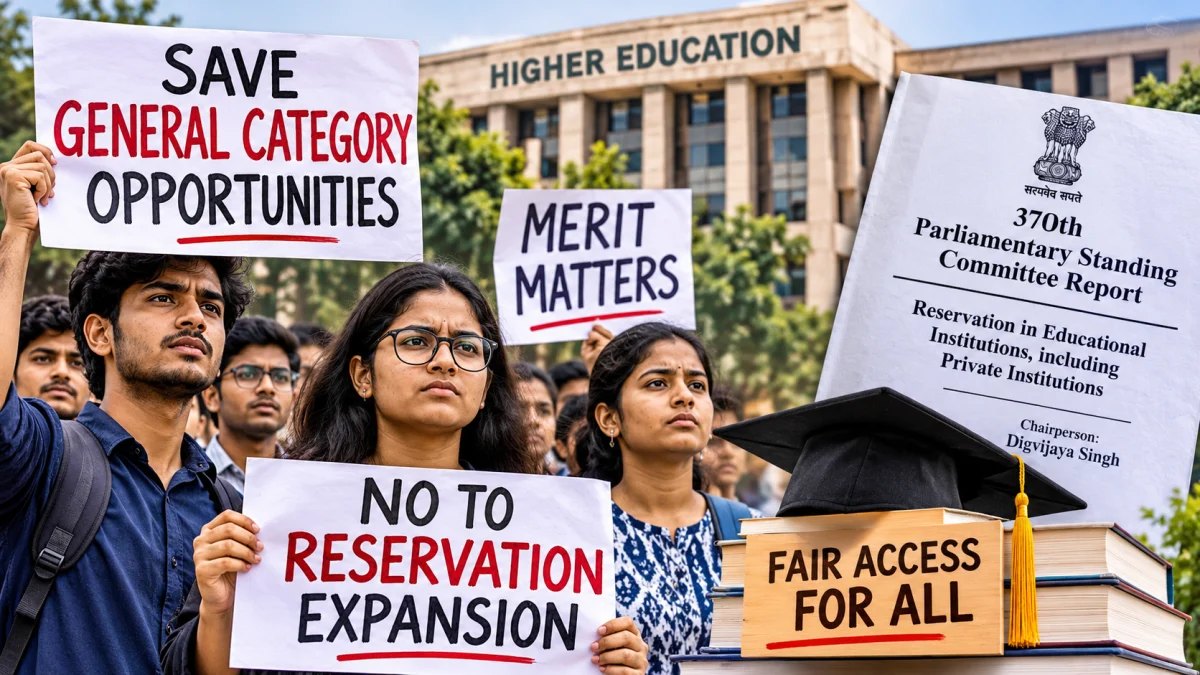
Critics warn that both the survey design and its political fallout pose severe risks. Methodologically, using an open-ended entry without a pre-coded OBC drop-down menu threatens to repeat the failure of the 2011 Socio-Economic and Caste Census (SECC). Because respondents entered regional variations, surnames, and spelling differences, the 2011 SECC generated nearly 46.7 lakh distinct caste names—rendering the data unusable and forcing the government to withhold it. Politically, publishing updated population shares intensifies demands to breach the 50% reservation ceiling. Expanding quotas proportionally would sharply shrink the unreserved (Open) category pool, raising concerns over merit-based access in higher education and public employment. Furthermore, critics note that pure headcounts ignore intra-caste economic disparities, arguing that policy should shift toward multi-dimensional, deprivation-based economic metrics rather than birth-based group totals.
Constitutional and Judicial Guardrails
Any attempt to convert Census numbers into expanded quotas faces strict constitutional limits. While Articles 15(4), 15(5), and 16(4) empower the state to make special provisions for socially and educationally backward classes, the Supreme Court established a firm boundary in Indra Sawhney v. Union of India (1992). The nine-judge bench capped total reservations at 50%—permitting exceptions only in extraordinary circumstances—and mandated the exclusion of the affluent "creamy layer" among OBCs. Additionally, Article 342A (amended by the 105th Constitutional Amendment Act, 2021) preserves separate Central and State OBC lists. For instance, after the 2023 Bihar caste survey reported that backward classes comprised over 63% of the state's population, the state raised its quota ceiling to 65%, only for the Patna High Court to strike down the hike in 2024 for violating the Indra Sawhney cap. Similarly, in October 2026, the Supreme Court declined to mandate a pre-loaded OBC drop-down menu for Census 2027, ruling that survey methodology remains within the executive's technical domain.
Also Read: US Plans Higher Tariffs on India, China and Other Major Trading Partners
Looking Ahead
The 2026–2027 Census represents a rare opportunity to replace political guesswork with verified empirical evidence. To prevent the exercise from descending into data chaos or divisive quota battles, administrators must standardize caste classifications during data processing and cross-tabulate social identity with household income, education, and asset ownership. By anchoring affirmative action in measurable socio-economic deprivation rather than raw population shares alone, India can honor constitutional equality while directing state support to those who genuinely need it most.
Join the Conversation