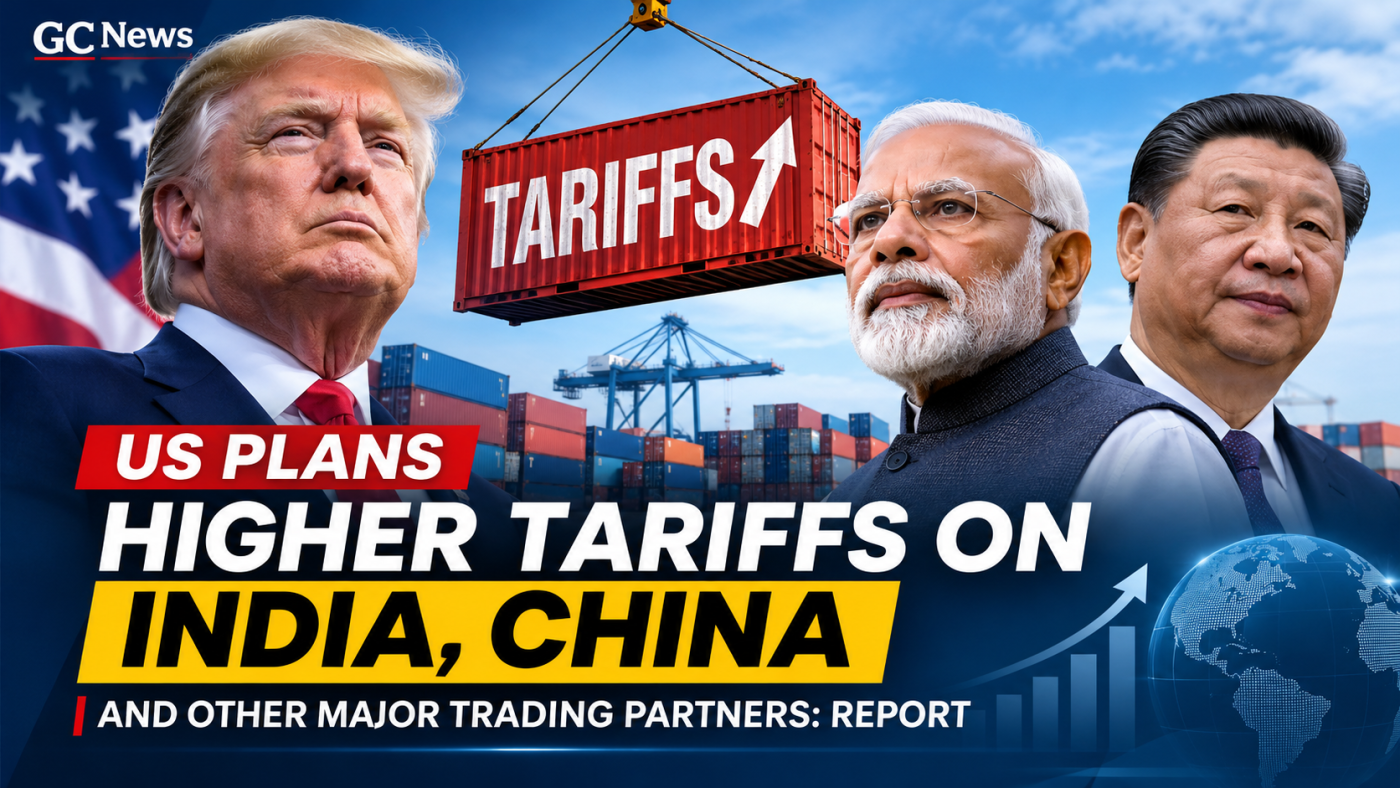
India could face higher import duties than Japan and the European Union as Washington prepares a fresh round of trade measures targeting industrial subsidies and excess manufacturing capacity.
The United States is preparing to raise tariffs on imports from India, China and several other major trading partners, potentially opening another chapter of uncertainty in global trade and placing fresh pressure on Indian exporters.
According to a report published by The Wall Street Journal on Tuesday, the administration of US President Donald Trump is considering higher import duties on economies whose industrial policies, Washington argues, have placed American manufacturers at a competitive disadvantage.
US Trade Representative Jamieson Greer is expected to release the findings of a months-long investigation into foreign industrial subsidies and manufacturing capacity as early as this week. However, people familiar with the matter cautioned that the announcement could be delayed.
The proposed tariff rates, list of affected products and implementation dates have yet to be officially confirmed.
Also Read: CONFIRMED: No Reservation in CA Course, Says ICAI BoS Chairman
India Could Face Higher Tariffs Than Japan and the EU
India's position in the proposed tariff framework is particularly significant given its ongoing efforts to strengthen economic and commercial ties with the United States.
According to the report, Japan, South Korea and the European Union could face tariff rates of 15 per cent or below, while India and Vietnam may be subjected to comparatively higher duties, reflecting the terms of their respective trade arrangements with Washington.
China is also expected to face steeper tariffs, with US officials expressing particular concern over the scale of government support provided to its manufacturing sector.
The development comes despite efforts by New Delhi and Washington to reduce trade barriers and expand bilateral economic cooperation.
In February 2026, India and the United States announced a framework for an interim trade agreement that envisaged an 18 per cent reciprocal tariff on several categories of Indian goods. However, subsequent legal developments in the United States complicated the earlier tariff framework.
The latest proposal does not necessarily mean that the 18 per cent rate will be restored. India's eventual tariff exposure will depend on the details of the new measures.
Why Is the United States Considering Fresh Tariffs?
On March 11, 2026, the Office of the United States Trade Representative (USTR) launched investigations under Section 301 of the Trade Act of 1974 into the industrial policies of 16 economies.
The investigation covers India, China, the European Union, Japan, South Korea, Vietnam, Bangladesh, Taiwan, Singapore, Switzerland, Norway, Indonesia, Malaysia, Cambodia, Thailand and Mexico.
Washington's central argument is that government assistance, preferential financing and other forms of state intervention can encourage manufacturers to produce more goods than market demand would ordinarily support.
US officials contend that such practices can lead to artificially competitive export prices, making it harder for American companies to compete.
Industrial incentives, however, are also widely used by governments to attract investment, generate employment and strengthen domestic manufacturing. The broader dispute centres on whether particular measures create unfair advantages in international markets.
What Could the New US Tariffs Mean for India?
For India, the significance of the proposed measures extends well beyond trade negotiations.
According to official USTR figures, bilateral trade in goods and services between India and the United States reached an estimated $239.6 billion in 2025. US merchandise imports from India stood at approximately $103.8 billion during the same period.
Higher import duties could make Indian products more expensive in the American market, particularly where buyers can source similar goods from countries facing lower tariffs.
Export-oriented industries such as textiles, garments, leather, footwear, chemicals and engineering goods could face additional pressure if their products fall within the scope of the new measures.
Smaller exporters may find it particularly difficult to absorb additional costs, especially those operating with limited profit margins and long-term supply contracts.
Although tariffs are generally paid by importers in the United States, their economic burden can extend to foreign manufacturers through demands for lower prices, reduced orders and renegotiated contracts.
The actual impact on Indian businesses will depend on the final tariff structure, product exemptions, currency movements and the ability of exporters to diversify into alternative markets.
Will All Products Be Affected?
According to media reports, the proposed measures could cover a broad range of imported goods.
Certain products, including steel, aluminium and automobiles, may be excluded from this particular round of duties because they are already subject to separate US tariff measures linked to national security.
Such exclusions, if confirmed, would not necessarily make these products tariff-free.
Businesses will therefore need to examine the final product classifications and applicable customs duties rather than relying solely on headline tariff rates.
Trump's Tariff Policy Enters a New Phase
The latest development follows a significant legal setback for the Trump administration earlier this year.
On February 20, 2026, the US Supreme Court ruled that the International Emergency Economic Powers Act did not authorise the president to impose tariffs under that law.
The administration is now pursuing trade measures through other statutory mechanisms, including Section 301 of the Trade Act of 1974, which provides a legal framework for responding to foreign trade practices considered harmful to US commerce.
The proposed duties suggest that tariffs remain a central instrument of Washington's economic policy, despite the judicial limitations placed on its earlier approach.
What Happens Next?
Attention is now focused on the findings of the USTR investigation and whether Washington announces a formal tariff schedule in the coming days.
For India, the key questions will be whether its existing trade negotiations offer protection against higher duties and whether Indian exporters remain competitive against suppliers from other economies.
For global businesses, another change in US tariff policy could complicate sourcing decisions, investment plans and international supply chains.
Until Washington releases its official findings, however, the reported tariff increases remain prospective measures rather than an implemented policy.
India's eventual position will become clearer once the United States publishes the applicable tariff rates, product exemptions and implementation timeline.

Join the Conversation