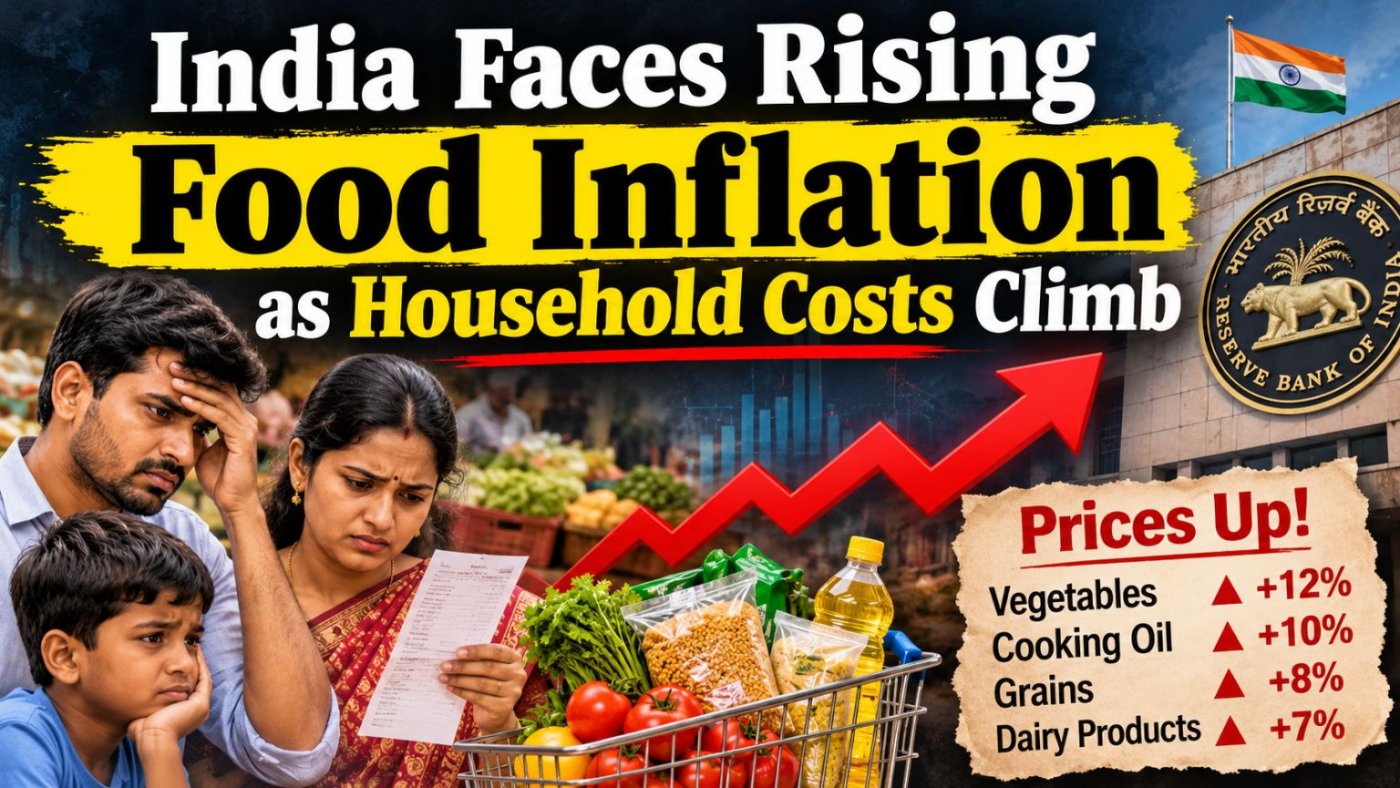
India is facing renewed concerns over rising food inflation as increasing prices of essential commodities put pressure on household budgets. According to the Ministry of Statistics and Programme Implementation (MoSPI), India's retail inflation reached 6.09% in October 2026, while food inflation climbed to 8.94%. The figures highlight the growing pressure on consumers, particularly middle Income and lower income households that spend a significant proportion of their earnings on food and daily necessities.
The increase presents an economic challenge for the government and the Reserve Bank of India (RBI), as controlling inflation while maintaining economic growth remains an important policy priority.
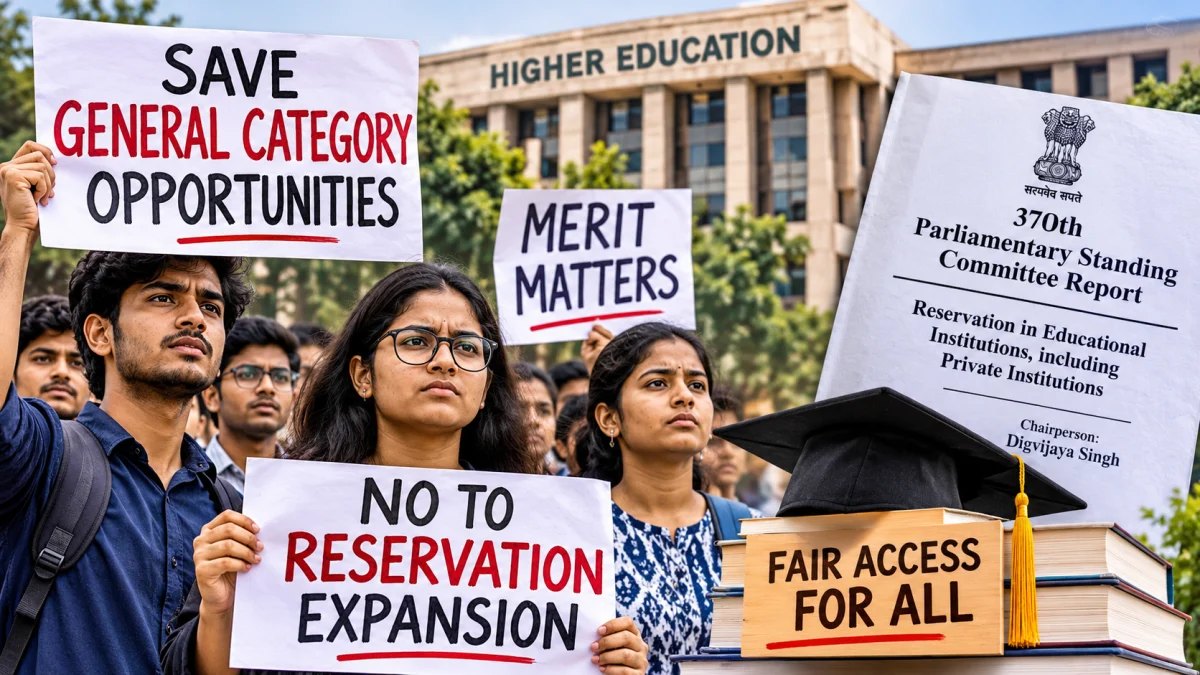
Also Read: General Category Students Challenge Reservation Expansion
1. India's Rising Food Inflation
Food prices remain one of the most important components of household expenditure in India. Changes in the prices of vegetables, pulses, cereals and other essential commodities directly affect millions of families.
October Inflation Figures
According to the official CPI report released on 12 November 2026, India's retail inflation increased to 6.09% in October, compared with 5.54% in September.
Food inflation also increased considerably, reaching 8.94% in October from 7.74% in September.
The figures indicate that food prices are rising faster than overall consumer inflation. Rural food inflation stood at 9.09%, while urban food inflation reached 8.68%.
These developments demonstrate how inflationary pressures are affecting households across different parts of the country.
Essential Commodities Under Pressure
The government data identifies several commodities that experienced significant price increases.
Onion inflation reached 116.22% in October, while garlic recorded 60.74%. Ginger inflation stood at 48.32%, and Lemon prices increased by 47.30%.
Such increases can affect household purchasing power, particularly when essential food products become more expensive over an extended period.
However, not every commodity experienced an increase. Potato prices declined by 14.24%, while cauliflower prices fell by 10.57%.
Also Read: Medical Aid Beyond Caste and the Case for Need-Based Welfare
2. Impact on Indian Households
Food inflation has consequences beyond economic statistics. It directly influences how families manage their monthly expenses, savings and consumption patterns.
Pressure on Middle Income and Lower Income Families
Households with limited disposable income are particularly vulnerable to rising food prices. When essential commodities become expensive, families may have to reduce spending on other requirements, including education, healthcare, transportation and savings.
Middle Income households also face financial pressure as food expenses increase alongside housing, electricity, education and transportation costs.
The situation highlights the importance of maintaining price stability to protect household purchasing power.
Rural and Urban Differences
The October inflation figures show that rural retail inflation reached 6.63%, compared with 5.41% in urban areas.
Food inflation was also higher in rural areas, at 9.09%, against 8.68% in urban India.
These differences demonstrate that inflation does not affect every region equally. Agricultural production, transportation costs, supply chains and local market conditions can influence commodity prices.
3. Challenges for the Government and RBI
Rising inflation creates a difficult policy environment for India's economic institutions. The government must address supply side difficulties, while the RBI monitors inflation and its wider implications for monetary policy.
Managing Supply and Commodity Prices
The availability of agricultural products, storage infrastructure, transportation networks and efficient distribution systems plays an important role in determining food prices.
Disruptions in agricultural supply or seasonal shortages can contribute to price fluctuations.
Strengthening agricultural infrastructure, improving cold storage facilities and reducing transportation inefficiencies could help limit sudden increases in essential commodity prices.
The government also needs to monitor market conditions and ensure that essential commodities remain accessible to consumers.
RBI's Inflation Challenge
The Reserve Bank of India operates under an inflation targeting framework, with a medium term consumer inflation target of 4% and a tolerance band of 2% to 6%.
October's retail inflation figure of 6.09% exceeded the upper limit of this tolerance band.
This development creates an additional challenge for monetary policymakers. Interest rate decisions must consider inflationary pressures while also accounting for economic growth, investment and credit demand.
Food inflation is particularly complicated because monetary policy alone cannot resolve supply shortages or agricultural production difficulties.
Also Read: US Plans Higher Tariffs on India, China and Other Major Trading Partners
4. India's Economic Stability and Future Outlook
India's long-term economic performance depends not only on growth figures and investment but also on the purchasing power of ordinary households.
Balancing Growth and Price Stability
Maintaining economic growth while controlling inflation remains a major policy challenge.
Persistent increases in essential commodity prices can influence consumer spending and reduce household savings. If families spend more on basic necessities, their capacity to purchase other goods and services may decline.
A stable price environment is therefore important for sustaining domestic consumption, which remains a significant component of India's economic activity.
Strengthening Agricultural and Distribution Systems
Long-term solutions require improvements in agricultural productivity, storage facilities, transportation and market infrastructure.
Better coordination between agricultural producers, distribution networks and policymakers can help reduce supply disruptions.
India's ability to maintain affordable food prices will remain an important indicator of its broader economic stability.
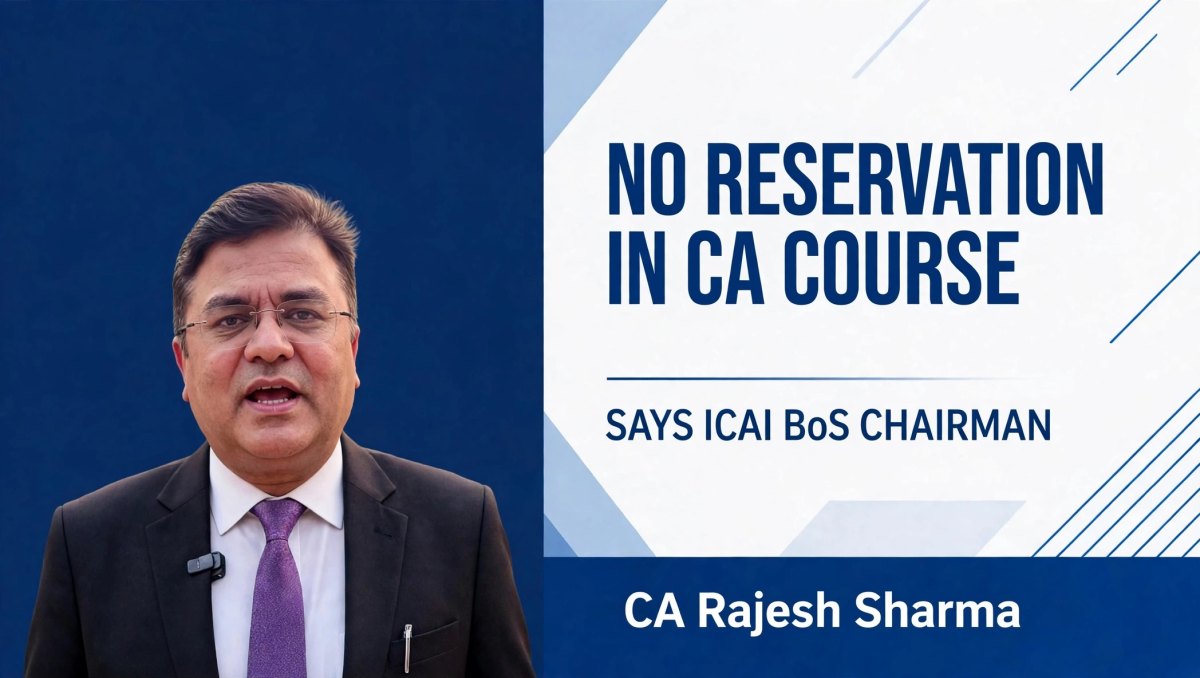
Also Read: CONFIRMED: No Reservation in CA Course, Says ICAI BoS Chairman
Sources and Further Reading
1. Press Information Bureau (12 November 2026) – "Official Consumer Price Index Report for October 2026" https://www.pib.gov.in/PressReleasePage.aspx?PRID=2335416
2. Ministry of Statistics and Programme Implementation – "Consumer Price Index: October 2026 Report" https://mospi.gov.in/
3. Reuters (6 November 2026) – "India's October Consumer Inflaion Likely Nears Top of RBI Target on Food Costs" https://www.reuters.com/world/india/indias-october-consumer-inflation-likely-nears-top-rbi-target-food-costs-2026-11-06/
4. Reserve Bank of India – "Monetary Policy and Inflation Targeting" https://www.rbi.org.in/

Join the Conversation