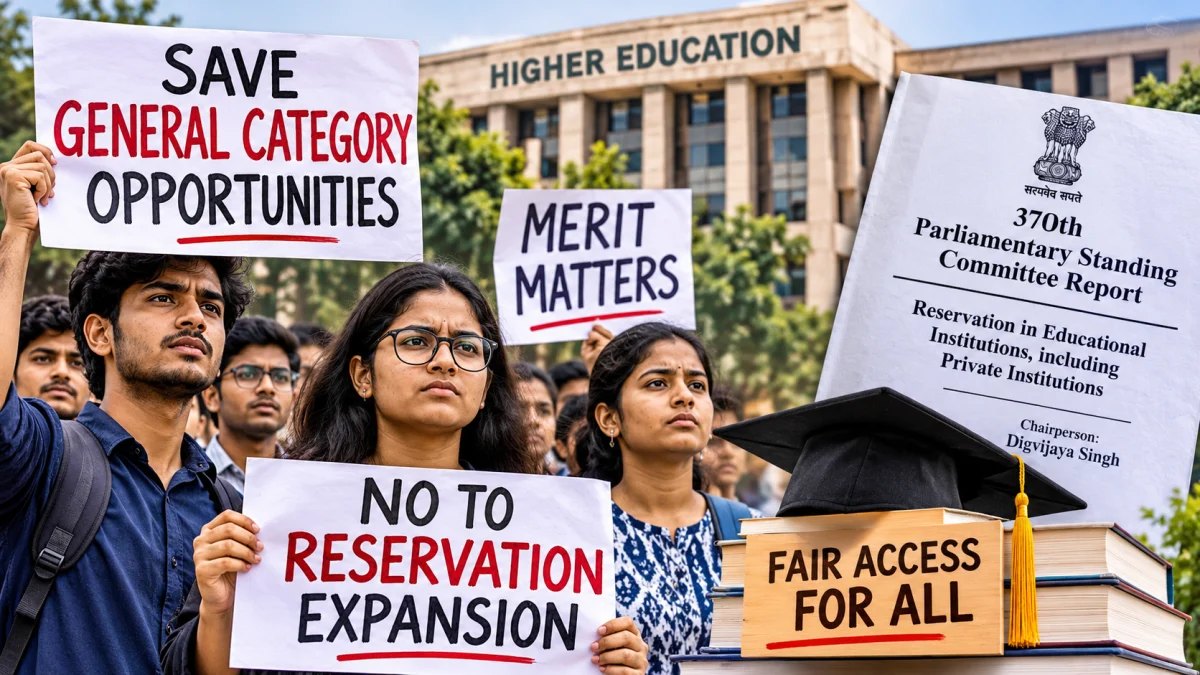
India’s higher education system is expanding, but the changing enrolment figures raise serious questions about whether every student is receiving a fair opportunity. General Category (GC) students, including those from economically weaker families, are increasingly concerned about access to educational institutions, financial assistance and the future of merit based competition.
The debate has gained renewed attention following an updated analysis of All India Survey on Higher Education (AISHE) data by the Centre for Development Policy and Management at IIM Udaipur. The report examines enrolment trends between 2010–11 and 2023–24 and highlights a recent decline in General Category enrolment.
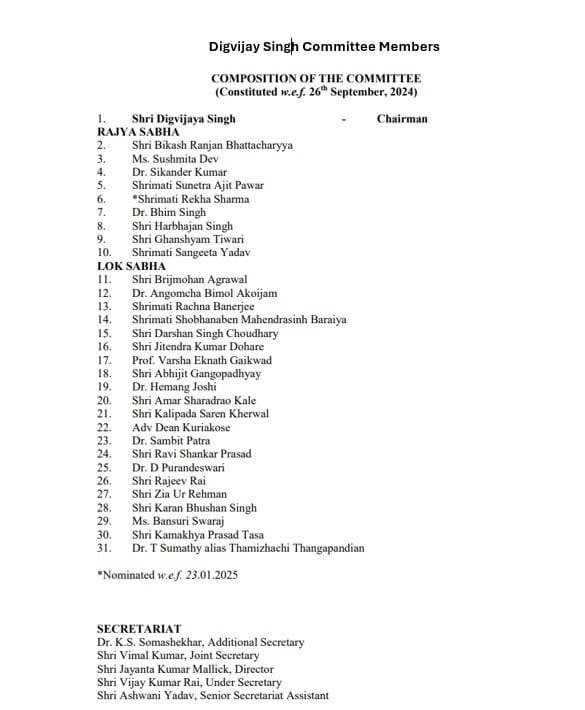
At the same time, the 370th Parliamentary Standing Committee Report, chaired by Congress MP Digvijaya Singh, has recommended expanding reservation provisions in private higher educational institutions. These developments raise an important policy question: should India continue expanding caste-based reservation, or should it reconsider the system and give greater attention to economic disadvantage and the educational needs of all students?
1. General Category Enrolment and the Changing Data
The updated IIM Udaipur analysis provides an important basis for examining the position of General Category students.
Declining Enrolment in Recent Years
According to the report, General Category enrolment, including EWS, declined from approximately 1.83 crore in 2020–21 to 1.71 crore in 2023–24.
This represents a reduction of around 11.4 lakh students during a period when total higher education enrolment increased by approximately 36 lakh. The report also found that 21 states and union territories recorded a decline in General Category enrolment.
Why the Figures Deserve Attention?
If the higher education system is expanding, policymakers should investigate why a substantial number of General Category students are not appearing in the enrolment figures.
However, the data alone does not establish that reservation caused the decline. AISHE does not distinguish between students admitted through open-category merit seats and those admitted through reserved seats. Other factors, including financial difficulties, migration, demographic changes and students choosing alternative career pathways, may also influence enrolment.
The correct response is not to dismiss the figures, but to investigate them transparently.
2. Why the Government’s Reservation Policy Needs Review?
The BJP-led government has continued to operate within a reservation framework that gives substantial weight to caste-based categories. While the government presents reservation as a measure of social justice, the concerns of General Category students require equal attention in the formulation of educational policy.
Economic Disadvantage Among GC Students
Many students from General Category families face financial hardship, high tuition fees, intense competition and limited access to scholarships designed for specific social categories. Economic disadvantage does not disappear simply because a student belongs to the General Category.
A policy that identifies disadvantage primarily through caste may fail to adequately support poor students outside the reserved categories. The government should therefore examine whether existing financial assistance, EWS provisions and scholarship schemes are sufficient to ensure that economically disadvantaged students can pursue higher education.
The Need for a Policy Reassessment
The issue is not whether any student should be denied education because of their social background. Rather, it is whether public policy should continue expanding caste-based preferences without sufficiently evaluating their effects on other students.
A fair system should protect access to education, improve school-level learning and provide financial support based on genuine need. The government must also publish clear data on admissions, scholarships, cut-off marks and seat availability across categories.
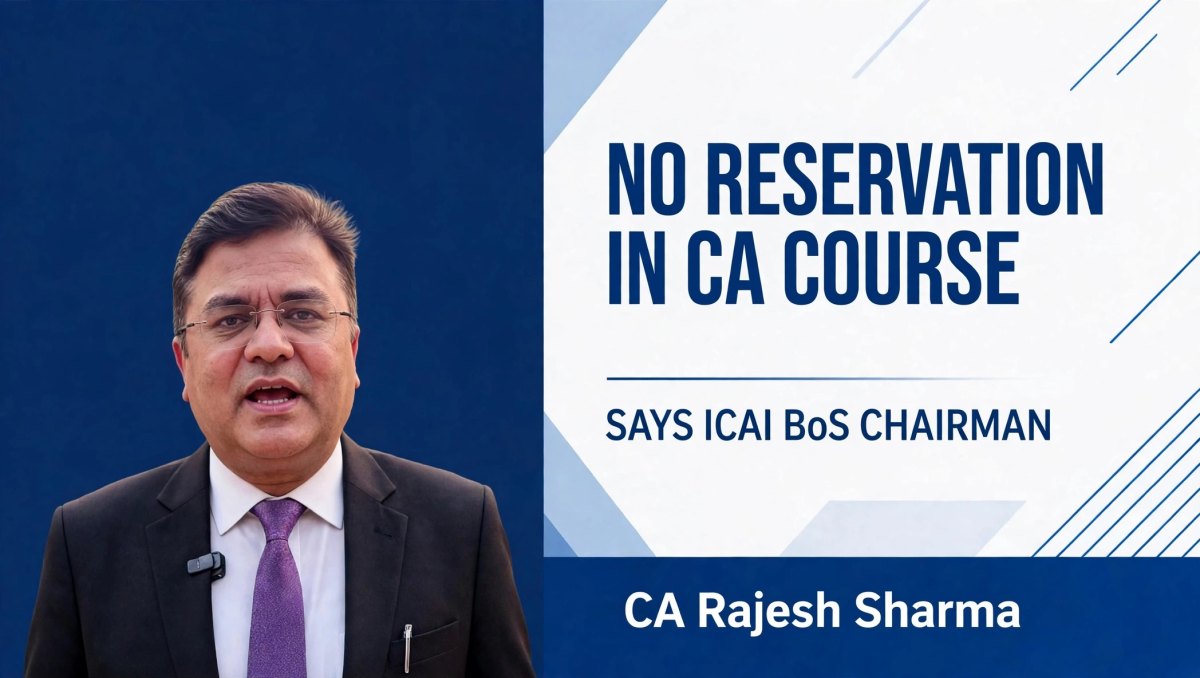
Also Read: CONFIRMED: No Reservation in CA Course, Says ICAI BoS Chairman
3. The 370th Parliamentary Committee and Private Colleges
The 370th Parliamentary Standing Committee Report, chaired by Digvijaya Singh, recommended legislation to implement Article 15(5) of the Constitution in private higher educational institutions.
The Proposed 49.5% Reservation Framework
The committee recommended reservation of 27% for OBCs, 15% for Scheduled Castes and 7.5% for Scheduled Tribes in private higher educational institutions. Together, these recommendations amount to 49.5% reservation.
This proposal deserves strong scrutiny because private institutions operate under different financial and administrative conditions from government institutions. Many students choose private colleges after considering their courses, facilities, admission standards and fee structures.
Potential Impact on General Category Applicants
Introducing a substantial reservation framework into private institutions could alter admission competition and institutional planning. Even if the committee recommends increasing seats and providing government funding, those measures require detailed implementation plans, adequate public expenditure and guarantees that educational quality will not suffer.
The committee’s recommendation should not be treated as an unquestionable solution. Parliament and the government must consider the interests of all students, including General Category applicants who may face increased competition for the remaining seats.
Also Read: Eluru Temple Priest Assault Allegation Raises Concerns
4. Concerns About the Committee’s Approach
The committee relied on AISHE information and submissions from selected private institutions, including BITS Pilani, OP Jindal Global University, Ashoka University and Shiv Nadar University, among others.
Representativeness of the Evidence
The committee also referred to aggregate figures showing the representation of OBC, SC and ST students in private higher education. Therefore, it would be inaccurate to claim that it relied only on a handful of institutions or ignored AISHE altogether.
Nevertheless, the evidence raises questions about how representation should be measured and how policy should be designed. A national reservation policy should be based on comprehensive, comparable and regularly updated information across institutions, regions, courses and income groups.
Need for a Comprehensive Impact Assessment
Before expanding reservation into private higher education, the government should publish detailed assessments of the likely impact on admissions, institutional autonomy, educational standards, fees and the availability of seats for General Category students.
A major change in educational policy should not proceed without examining its consequences for every group affected.
5. A Fairer Alternative for General Category Students
The decline in General Category enrolment should lead to a serious policy review. General Category students should not be treated as a group whose educational difficulties can be ignored.
Economic-Based Educational Support
The government should consider a broader system of financial assistance that supports students from economically weaker families across all communities. Scholarships, fee support, affordable hostels, coaching assistance and education loans should be designed to address financial barriers directly.
A national-level mechanism to examine General Category grievances could also help identify gaps in scholarships, admission opportunities and educational access. Such a body should focus on evidence, policy review and equal opportunity rather than creating further social divisions.
Transparency in Admission Data
The government should publish annual data showing category-wise enrolment, admissions through open merit, scholarship eligibility and uptake, and the number of students who discontinue their studies.
Such transparency would help determine whether current policies are achieving their stated objectives and whether additional support is required for General Category students.
Also Read: UGC Equity Regulations 2026: Supreme Court Stay Continues, Centre Considers Review Committee
Conclusion
The changing AISHE enrolment figures and the 370th Parliamentary Committee’s recommendations have brought General Category representation into an important national debate.
The decline in General Category enrolment during recent years deserves investigation, particularly when overall higher education enrolment has increased. At the same time, the proposal to expand reservation into private higher educational institutions raises significant questions about fairness, competition, institutional autonomy and the future opportunities available to GC students.
The government should not move forward with further expansion of caste-based reservation without a transparent assessment of its consequences. General Category students, including those from poor and lower-middle-income families, deserve meaningful support and fair access to education.
A genuinely equitable education policy must recognise disadvantage wherever it exists. India should move towards a system that combines social justice with economic support, academic standards and equal opportunity for every student.
Sources and Further Reading
1. IIM Udaipur – Caste-Based Enrolment in Indian Higher Education: Insights from AISHE, 2010–11 to 2023–24
2. Rajya Sabha – 370th Parliamentary Standing Committee Report on Reservation in Private Higher Educational Institutions
3. Ministry of Education – AISHE Official Website
4. Press Information Bureau – Ministry of Education
5. AISHE – Official Higher Education Reports
Join the Conversation