The Geopolitical Importance of the Mekong River Basin
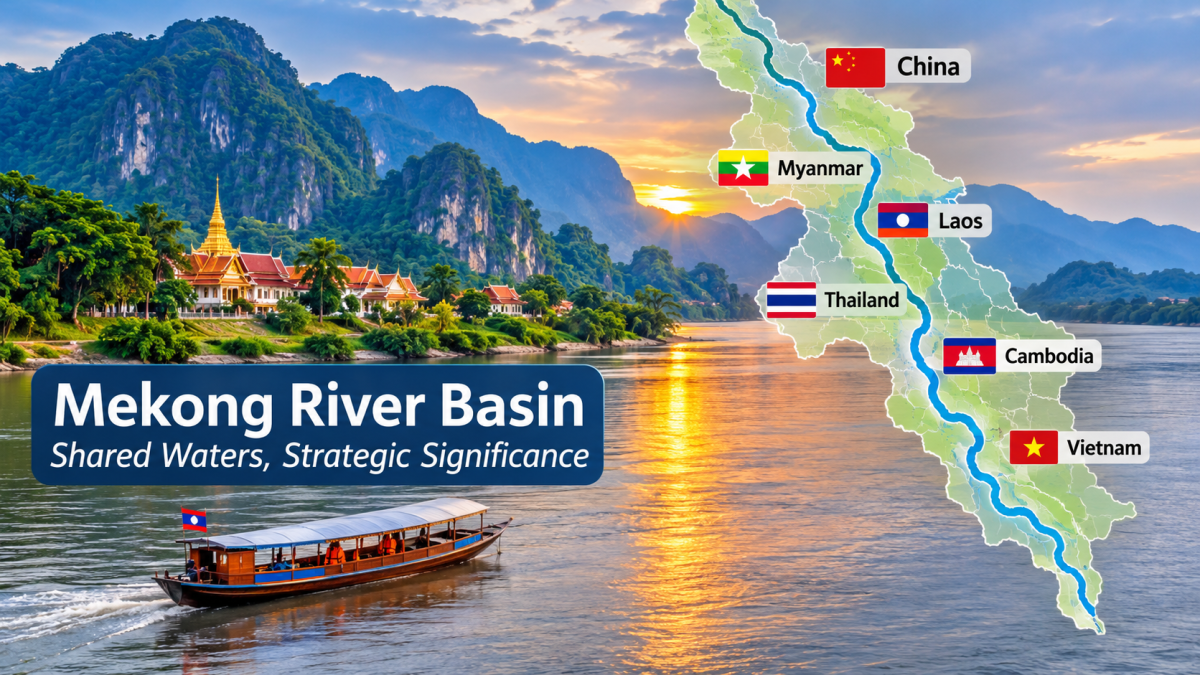
The Mekong River is one of Southeast Asia's most important natural resources, connecting six countries through a shared system of freshwater, agriculture, trade and economic activity. Originating in the Tibetan Plateau, the river flows through China, Myanmar, Laos, Thailand, Cambodia and Vietnam before reaching the South China Sea. Beyond its environmental and economic significance, the Mekong has become an increasingly important subject of regional geopolitics because of its role in water security, hydropower development, diplomatic relations and strategic competition.
As countries seek to expand their economies and strengthen energy security, the management of the Mekong's water resources has become increasingly complex. Upstream infrastructure development, changing river flows, climate change and competing national priorities have raised questions about how the countries sharing the river can balance economic development with environmental protection. Consequently, the Mekong River Basin represents an important example of how natural resources can influence international relations and regional power dynamics.
1. Geographical and Strategic Importance of the Mekong River
The Mekong extends approximately 4,900 kilometres and supports communities across mainland Southeast Asia. It is among the region's most important waterways, providing freshwater for agriculture, fisheries, transportation and electricity generation.
The river is particularly important to Cambodia and Vietnam, where millions of people depend on its resources for their livelihoods. Its extensive floodplains, tributaries and delta systems support agricultural production and fisheries that contribute significantly to regional food security.
The Mekong also connects countries with different economic structures and development priorities. While upstream countries focus on hydropower and infrastructure development, downstream economies place considerable importance on fisheries, agricultural production and the stability of seasonal water flows.
This geographical interdependence makes the river an important factor in regional diplomacy.
2. Six Countries and Their Competing Interests
The Mekong River Basin involves six countries, each with distinct economic and strategic interests.
• China: The river is known as the Lancang in China. Its upper reaches are important for hydropower generation and water management. China's upstream position gives it considerable influence over the river's management.
• Myanmar: Myanmar shares a relatively small portion of the Mekong system. Its geographical position nevertheless makes it part of regional water-management discussions.
• Laos: Laos has pursued hydropower development as part of its economic strategy. Electricity exports from hydropower projects are an important component of its development ambitions.
• Thailand: Thailand depends on the Mekong and its tributaries for agriculture, water management and regional economic cooperation.
• Cambodia: The river supports Cambodia's fisheries, agricultural communities and the Tonle Sap system, which is closely connected to seasonal changes in Mekong water levels.
• Vietnam: The Mekong Delta is particularly important to Vietnam's agricultural economy. Changes in freshwater availability, sediment movement and saltwater intrusion create significant challenges for the region.
These differing interests demonstrate why managing a shared river requires sustained diplomatic cooperation.
3. China's Upstream Position and Regional Influence
China occupies a strategically important geographical position because the Mekong originates within its territory. The upper section, known as the Lancang River, contains major hydropower infrastructure and water-management projects.
China's dam development has attracted international attention because changes in upstream water storage and releases can influence downstream river conditions. These concerns are particularly important during periods of drought, when countries downstream depend heavily on available freshwater.
However, the relationship between upstream infrastructure and downstream water conditions is complex. Rainfall patterns, tributary flows, seasonal variation and climate change also influence the river's behaviour.
China maintains that its hydropower infrastructure contributes to regional development and can support water management. Downstream countries and environmental organisations, meanwhile, have raised concerns about transparency, sediment movement, ecological changes and the availability of timely hydrological information.
The issue is therefore not simply about infrastructure development but also about information sharing, consultation and regional trust.
4. Hydropower Development and Regional Tensions
Hydropower is central to the economic strategies of several Mekong countries, particularly China and Laos. Electricity generation offers opportunities to expand energy supplies, support industrial development and generate export revenue.
Nevertheless, large dams can create environmental and economic consequences that extend beyond national borders.
Several important concerns include:
• Changes in Seasonal Water Flows: Reservoir operations can influence the timing and volume of water reaching downstream areas.
• Sediment Retention: Dams can trap sediments that would otherwise travel downstream, potentially affecting riverbanks, agricultural land and delta ecosystems.
• Fisheries and Biodiversity: Changes in river conditions and migration routes can affect fish populations and aquatic ecosystems.
• Agricultural Challenges: Farmers dependent on predictable seasonal flooding may experience difficulties when natural water patterns change.
The challenge facing the region is to balance electricity generation and economic development with the long-term sustainability of the river ecosystem.
• The Mekong River Commission and Regional Diplomacy
Regional cooperation has played an important role in managing disagreements over the Mekong.
On 5 April 1995, Cambodia, Laos, Thailand and Vietnam signed the Agreement on Cooperation for the Sustainable Development of the Mekong River Basin. The agreement established the Mekong River Commission (MRC) as an institutional framework for cooperation.
The commission focuses on sustainable water management, information sharing, environmental protection, navigation, fisheries and hydropower development.
China and Myanmar participate as dialogue partners rather than full members of the commission. This distinction is significant because both countries occupy important positions within the upper basin.
The MRC provides a platform through which participating countries can discuss shared challenges and coordinate water-management policies. However, its ability to address regional concerns depends considerably on cooperation among all six countries.
6. China's Lancang-Mekong Cooperation Initiative
China has also developed a separate regional framework known as Lancang-Mekong Cooperation (LMC), which includes all six countries sharing the river.
Proposed in 2014 and formally launched in 2016, the initiative promotes cooperation in areas such as infrastructure, agriculture, water resources, trade, connectivity and economic development.
From China's perspective, the framework supports regional development and strengthens cooperation with neighbouring countries. For participating Southeast Asian governments, it provides additional opportunities for infrastructure investment, economic partnerships and technical cooperation.
However, the initiative also has geopolitical significance. China's position as an upstream country and major economic partner gives it an important role in regional discussions about development and water management.
The coexistence of the MRC and LMC demonstrates how different institutional frameworks can shape cooperation and diplomatic relationships across the Mekong region.
7. Climate Change and the Future of Water Security
Climate change is creating additional pressure on the Mekong River Basin. Rising temperatures, changing rainfall patterns, droughts, floods and saltwater intrusion are affecting communities and economic activities across the region.
The Mekong Delta in Vietnam faces particular environmental challenges. Reduced freshwater availability and saltwater intrusion can affect agricultural production and drinking-water supplies.
Cambodia's Tonle Sap, one of the region's most important freshwater ecosystems, also depends on seasonal changes in the Mekong's water levels.
These environmental challenges cannot be addressed by individual countries alone. Better forecasting, scientific research, information exchange and coordinated water management are necessary to reduce the risks associated with changing climatic conditions.
8. The Future of Mekong River Geopolitics
The future of the Mekong River Basin will depend on how effectively its six countries manage their shared resources while pursuing their national development priorities.
China's upstream position, Laos's hydropower ambitions, Cambodia's fisheries, Thailand's agricultural interests and Vietnam's dependence on the Mekong Delta will continue to influence regional discussions.
Three priorities are particularly important:
• Greater Transparency: Regular sharing of hydrological information can improve understanding of river conditions and strengthen regional confidence.
• Sustainable Infrastructure: Hydropower and development projects require careful assessment of their environmental and cross-border consequences.
• Stronger Regional Cooperation: Existing diplomatic institutions need continued engagement from upstream and downstream countries to address shared challenges.
The Mekong's future will therefore depend not only on economic investment but also on the willingness of governments to recognise their mutual dependence.
Conclusion
The Mekong River Basin illustrates the close relationship between geography, natural resources and international politics. Its importance extends beyond freshwater availability, influencing energy security, agricultural production, regional trade and diplomatic relations across Southeast Asia.
China's upstream position and the development priorities of downstream countries have made water management an important subject of regional geopolitics. At the same time, environmental pressures and climate change have increased the need for coordinated policies.
Ultimately, the Mekong should not be viewed exclusively as a source of national economic advantage. It is a shared regional resource whose long-term sustainability requires transparency, cooperation and responsible development. The ability of the six countries to manage their competing interests will remain an important factor in the economic and environmental future of Southeast Asia.
Sources and Further Reading
1. Mekong River Commission – Agreement on Cooperation for Sustainable Development
https://www.mrcmekong.org/agreement/
2. Mekong River Commission – History and Regional Cooperation
https://www.mrcmekong.org/history/
3. Mekong River Commission – Dialogue Partners: China and Myanmar
https://www.mrcmekong.org/dialogue-partners/
4. Asian Development Bank – Mekong River Commission
https://aric.adb.org/initiative/mekong-river-commission
5. ISEAS – Yusof Ishak Institute – China's Hydro-Politics Through the Lancang-Mekong Cooperation
6. Lancang-Mekong Cooperation – Ministry of Foreign Affairs of China
https://www.fmprc.gov.cn/web/wjb_673085/zzjg_673183/yzs_673193/dqzz_673197/lcjmghhz_692228/
Join the Conversation