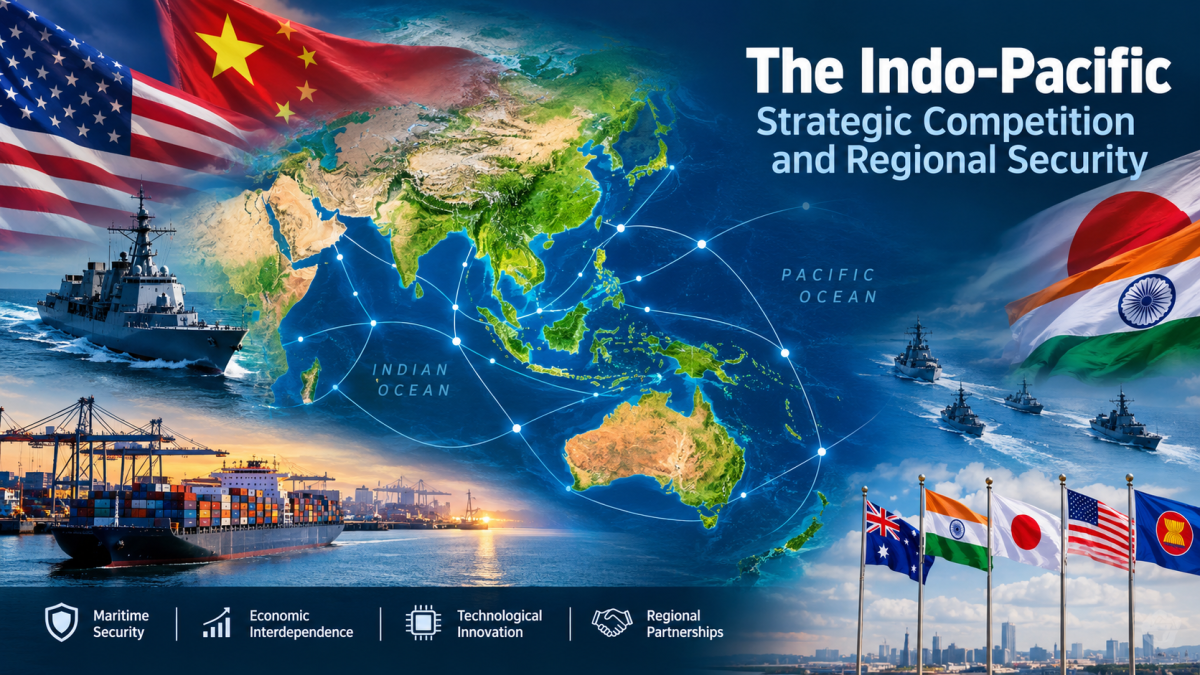
Introduction: The Indo-Pacific’s Growing Geopolitical Significance
The Indo-Pacific has become an important centre of global trade, economic growth, and geopolitical competition. Its strategic location connects major economies and vital shipping routes. Countries across the region are strengthening partnerships to protect their interests and maintain regional stability.
Why the Indo-Pacific Matters?
The Indo-Pacific stretches across the Indian and Pacific Oceans, connecting important economies in Asia, Africa, Oceania, and the Americas. Its significance comes from its economic opportunities, maritime routes, natural resources, and growing political influence.
• Global Trade: The region supports a substantial share of international trade, with shipping routes carrying essential goods, energy resources, and manufactured products.
• Economic Growth: Major economies, including India, China, Japan, and South Korea, contribute significantly to global production, investment, and technological development.
• Strategic Location: Important sea lanes and maritime chokepoints make the region essential to international shipping and energy transportation.
• Security Interests: Governments are increasing defence cooperation and maritime surveillance to protect their national interests and respond to regional security challenges.
As economic and strategic interests continue to grow, developments in the Indo-Pacific are increasingly influencing international relations and the global balance of power.
1. Strategic Competition and the Changing Balance of Power
The Indo-Pacific is becoming a major centre of geopolitical competition as countries seek greater economic influence and regional security. The United States and China are competing across trade, technology, and strategic partnerships, while India, Japan, and Australia are strengthening their regional roles. Many countries are also diversifying their international relationships to protect their national interests. Managing these competing priorities through diplomacy and cooperation will be essential to maintaining regional stability.
Major Powers and Their Strategic Interests
Competition in the Indo-Pacific involves several countries with different priorities, capabilities, and approaches to regional security.
• United States: The United States seeks to maintain regional engagement, protect freedom of navigation, strengthen alliances, and support a balance of power that prevents any single country from dominating the region.
• China: China aims to expand its economic and diplomatic influence, protect its maritime interests, and strengthen its regional and global position.
• India: India seeks to protect its maritime interests, expand economic partnerships, and maintain strategic autonomy while developing relationships with regional and global powers.
• Japan and Australia: Both countries support regional security cooperation, maritime stability, resilient supply chains, and stronger partnerships with other Indo-Pacific countries.
Strategic Competition Beyond Military Power
Competition is no longer limited to defence capabilities or territorial influence. It also involves economic policy, technological development, infrastructure investment, and diplomatic engagement.
Countries are investing in critical technologies, strengthening defence partnerships, and developing alternative supply chains to reduce vulnerabilities. These efforts can improve national resilience, but excessive rivalry may also increase mistrust and economic uncertainty.
Maintaining a stable balance of power will therefore require a combination of deterrence, communication, and constructive diplomacy.
2. India’s Strategic Position in the Indo-Pacific
India plays an important role in the Indo-Pacific because of its geographical position, economic potential, and maritime interests. Through its Act East Policy and regional partnerships, India seeks to strengthen trade, connectivity, and security cooperation. Its approach also emphasises strategic autonomy and independent foreign-policy decisions.
India’s Regional Priorities
India's position gives it significant interests in the Indian Ocean and the wider Indo-Pacific. Its policies aim to support economic development, protect maritime routes, and build stronger relationships with neighbouring countries.
• Act East Policy: India uses this policy to strengthen economic, cultural, and strategic relations with Southeast Asian countries and the wider Asia-Pacific region.
• Maritime Security: India works to improve maritime awareness, protect sea lanes, and strengthen cooperation with regional partners.
• Strategic Autonomy: India seeks to make independent foreign-policy decisions while maintaining partnerships with different countries according to its national interests.
• Regional Connectivity: Infrastructure, transport, and trade links can strengthen India's economic relationships with Southeast Asia and other Indo-Pacific economies.
India’s Partnerships and Diplomatic Approach
India participates in regional forums and partnerships, including the Quad, which also involves the United States, Japan, and Australia. Cooperation through such frameworks covers areas such as maritime security, critical technologies, infrastructure, and disaster response.
However, India also maintains relationships with countries outside these partnerships. This approach reflects its preference for flexible diplomacy and independent decision-making.
India's ability to balance economic opportunities, security concerns, and diplomatic relationships will remain important to the region's future.
3. Maritime Security and International Trade
The Indo-Pacific contains vital shipping routes that support international trade and energy transportation. Disruptions caused by geopolitical tensions or maritime disputes can affect supply chains and increase economic costs. Protecting these routes through cooperation, diplomacy, and respect for international law remains a major regional priority.
The Importance of Sea Lanes
Maritime routes connect manufacturing centres, energy exporters, commercial ports, and consumer markets. Any major disruption can affect shipping schedules, increase transportation costs, and create uncertainty for businesses.
• Energy Transportation: The movement of oil, natural gas, and other energy resources through maritime routes is essential to many regional economies.
• Commercial Shipping: Sea lanes carry manufactured goods, agricultural products, raw materials, and consumer items between international markets.
• Maritime Chokepoints: Narrow passages and strategically important waterways can become vulnerable during periods of conflict or heightened political tension.
• Supply Chain Stability: Safe and predictable shipping conditions help businesses manage costs and maintain reliable access to international markets.
Maritime Disputes and Security Cooperation
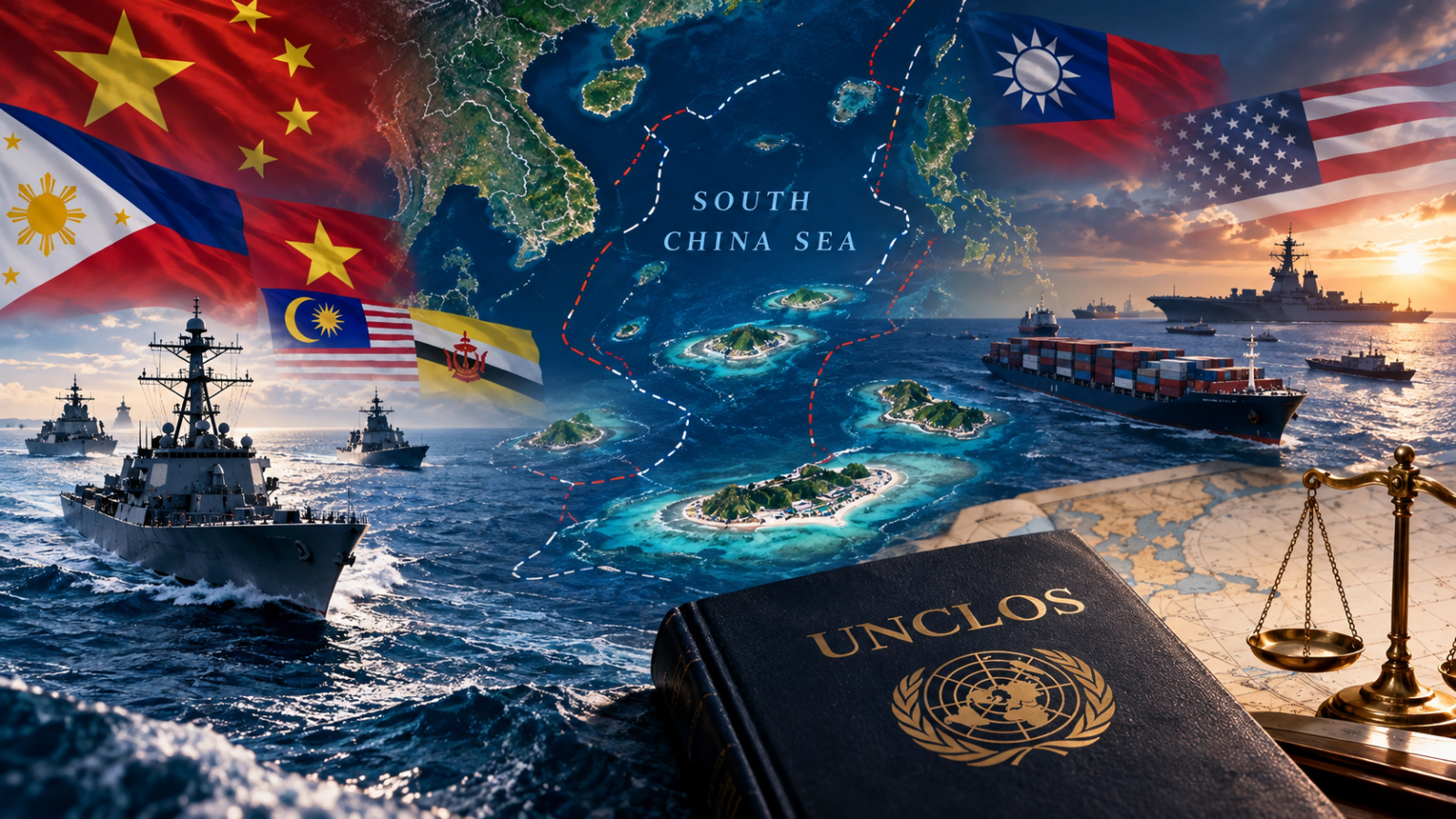
Disputes over maritime boundaries, territorial claims, and access to strategic waters remain significant challenges in parts of the Indo-Pacific. Such disagreements can create tensions between governments and increase the risk of incidents at sea.
Countries can reduce these risks through communication mechanisms, joint exercises, information sharing, and diplomatic engagement. Respect for international law, including the United Nations Convention on the Law of the Sea where applicable, is also important for resolving maritime disputes peacefully.
Effective maritime cooperation can help protect trade while reducing the possibility that regional disagreements will escalate into wider conflicts.
4. Economic Interdependence and Geoeconomic Competition
Economic relationships across the Indo-Pacific connect manufacturers, investors, and consumers worldwide. However, geopolitical tensions and supply-chain disruptions have encouraged countries to diversify trade partnerships and strengthen domestic industries. Balancing economic cooperation with national security will remain an important challenge for regional governments.
Trade, Investment, and Economic Relationships
The Indo-Pacific includes major manufacturing centres, technology industries, financial markets, and rapidly developing economies. Trade and investment create employment, support infrastructure development, and connect countries through shared commercial interests.
• Trade Partnerships: Countries depend on regional markets for exports, imports, industrial inputs, and consumer products.
• Foreign Investment: Investment in manufacturing, infrastructure, energy, and technology can support economic growth and improve productivity.
• Supply Chains: Regional production networks connect businesses across multiple countries, making international cooperation important for the movement of goods.
• Economic Development: Better connectivity and access to markets can create opportunities for smaller economies and developing countries.
Economic Security and Supply Chain Resilience
Recent geopolitical tensions have encouraged governments to reconsider their dependence on particular countries for essential products and technologies. Semiconductors, energy resources, medicines, and critical minerals have become important areas of economic security planning.
Countries are increasingly exploring supply-chain diversification, domestic manufacturing, and alternative trading partnerships. These measures can reduce vulnerabilities, although excessive protectionism may increase costs and weaken the benefits of international trade.
A balanced approach should strengthen economic resilience without unnecessarily limiting cooperation or disrupting established commercial relationships.
5. Technological Sovereignty and Digital Transformation
Technology is becoming an increasingly important factor in the Indo-Pacific's economic and strategic competition. Countries are investing in artificial intelligence, semiconductor manufacturing, digital infrastructure, and cybersecurity to strengthen their capabilities. Greater investment in research and innovation can improve competitiveness and reduce technological vulnerabilities.
Competition in Critical Technologies
Technological capabilities increasingly influence economic productivity, national security, and international competitiveness. Governments are therefore paying greater attention to the development and protection of critical technologies.
• Artificial Intelligence: AI can improve productivity, support research, and strengthen public services, while also creating concerns about security, privacy, and responsible use.
• Semiconductors: Advanced chips are essential for electronics, telecommunications, computing, and many modern defence systems.
• Cybersecurity: Stronger digital protection can help governments and businesses safeguard information, infrastructure, and essential services.
• Digital Infrastructure: Reliable telecommunications, data networks, and digital services support economic growth and cross-border connectivity.
Innovation, Dependence, and Digital Security
Countries that develop strong research ecosystems and technological industries may gain economic and strategic advantages. However, dependence on a limited number of suppliers can create risks when political tensions affect access to essential technologies.
Governments are responding by supporting domestic research, improving digital skills, and building partnerships in areas such as cybersecurity and semiconductor production.
At the same time, international collaboration remains important because technological progress often depends on research, investment, and expertise from multiple countries. Responsible cooperation can support innovation while helping governments manage security concerns.
6. Regional Alliances and Multilateral Cooperation
Regional partnerships provide opportunities for countries to address shared economic and security concerns. Initiatives involving ASEAN, the Quad, and other diplomatic frameworks support cooperation in areas such as maritime security, infrastructure, and technology. Maintaining constructive dialogue will be important for managing disagreements and strengthening regional relationships.
The Role of Regional Partnerships
The Indo-Pacific includes countries with different political systems, economic priorities, and security concerns. Regional institutions and partnerships provide platforms for dialogue, coordination, and practical cooperation.
• ASEAN: The Association of Southeast Asian Nations plays an important role in regional diplomacy and supports dialogue on economic cooperation, political relations, and security challenges.
• The Quad: The partnership between India, Australia, Japan, and the United States focuses on practical cooperation in areas including maritime security, critical technologies, infrastructure, and disaster response.
• Bilateral Partnerships: Agreements between individual countries can strengthen trade, defence cooperation, investment, and technological exchange.
• Multilateral Dialogue: Regional forums help governments discuss shared concerns, reduce misunderstandings, and identify opportunities for cooperation.
Cooperation Despite Strategic Differences
Regional cooperation does not require every country to share identical political views or strategic objectives. Governments can work together on specific issues while maintaining different positions on other matters.
For example, countries may cooperate on disaster relief, maritime safety, public health, and infrastructure even when they disagree on broader geopolitical questions.
Inclusive diplomatic engagement can help reduce tensions and ensure that smaller and developing countries have opportunities to express their interests. Stronger regional institutions and consistent communication can contribute to a more predictable security environment.
7. Persistent Obstacles to Regional Stability
The Indo-Pacific faces several challenges, including territorial disputes, strategic distrust, economic vulnerabilities, and cybersecurity risks. Differences in national interests can make cooperation difficult, while regional tensions may affect trade and investment. Addressing these issues will require sustained diplomacy, effective communication, and practical cooperation.
Major Challenges Facing the Region
Although the Indo-Pacific offers significant economic and strategic opportunities, several unresolved issues could undermine regional stability.
• Territorial Disputes: Competing claims over land and maritime areas can create diplomatic tensions and increase the risk of confrontation.
• Strategic Distrust: Military modernisation and competing security policies may lead governments to misinterpret each other's intentions.
• Economic Vulnerabilities: Heavy dependence on specific markets, suppliers, or transport routes can expose countries to external disruptions.
• Cybersecurity Threats: Cyberattacks and digital vulnerabilities can affect government services, businesses, and critical infrastructure.
• Climate and Natural Disasters: Rising sea levels, extreme weather, and natural disasters create additional challenges for coastal communities and regional economies.
Reducing Risks Through Dialogue
Managing these challenges requires a combination of effective diplomacy, crisis communication, economic planning, and regional cooperation.
Governments can reduce the risk of accidental escalation by maintaining communication channels and developing practical mechanisms for managing disputes. Diversified supply chains and stronger infrastructure can also help economies withstand external shocks.
Climate adaptation, disaster preparedness, and cybersecurity cooperation are further areas where countries can pursue shared goals despite their strategic differences.
Long-term stability will depend not only on military preparedness but also on the ability of governments to manage disagreements responsibly and protect shared economic interests.
8. The Future of Indo-Pacific Geopolitics
The future of the Indo-Pacific will depend on how countries manage strategic competition while maintaining economic and diplomatic cooperation. Stronger regional partnerships, diversified supply chains, and peaceful dispute-resolution mechanisms can help reduce instability. The decisions of major powers and smaller regional states will collectively shape the evolving balance of power.
Emerging Trends to Watch
Several developments are likely to influence the Indo-Pacific's geopolitical direction in the coming years.
• Changing Power Relationships: The policies of the United States, China, India, Japan, and other regional actors will influence the distribution of strategic influence.
• Economic Diversification: Governments and businesses are likely to continue reviewing supply chains and exploring alternative sources of essential products.
• Technological Competition: Advances in AI, semiconductors, telecommunications, and cybersecurity will remain important to economic and strategic planning.
• Regional Diplomacy: Partnerships and multilateral forums will continue to provide opportunities for managing disagreements and coordinating responses to shared challenges.
• Climate and Maritime Cooperation: Environmental pressures and the protection of ocean resources will require stronger regional coordination.
Balancing Competition With Cooperation
Strategic competition is likely to remain a defining feature of Indo-Pacific relations. However, rivalry does not automatically prevent cooperation on issues where countries share common interests.
Regional governments can reduce instability by maintaining diplomatic engagement, improving transparency, and respecting international law. Economic cooperation and practical agreements can also help prevent political disagreements from disrupting essential trade and connectivity.
The future of the region will depend on whether governments can protect their national interests while recognising the importance of peaceful coexistence and shared prosperity.
9. Conclusion: Building a Stable and Inclusive Indo-Pacific
The Indo-Pacific will remain central to global geopolitics because of its economic importance, strategic location, and technological development. Although competition among major powers is likely to continue, diplomacy and cooperation can help prevent tensions from escalating. A stable regional environment will depend on respect for international law, responsible policymaking, and a commitment to peaceful engagement.
The region's future should not be defined solely by competition between major powers. Smaller states, developing economies, regional institutions, and international partnerships will also influence its direction. By strengthening dialogue, protecting maritime routes, diversifying economic relationships, and cooperating on shared challenges, Indo-Pacific countries can work towards a more stable and inclusive regional order.
Sources
1. Association of Southeast Asian Nations (ASEAN): Official information on regional cooperation and diplomacy — https://asean.org/
2. Australian Department of Foreign Affairs and Trade: Information on the Quad partnership — https://www.dfat.gov.au/international-relations/regional-architecture/quad
3. United Nations Division for Ocean Affairs and the Law of the Sea: Information on ocean governance and international maritime law — https://www.un.org/depts/los/
4. Ministry of External Affairs, Government of India: India's foreign policy and regional engagement — https://www.mea.gov.in/

Join the Conversation