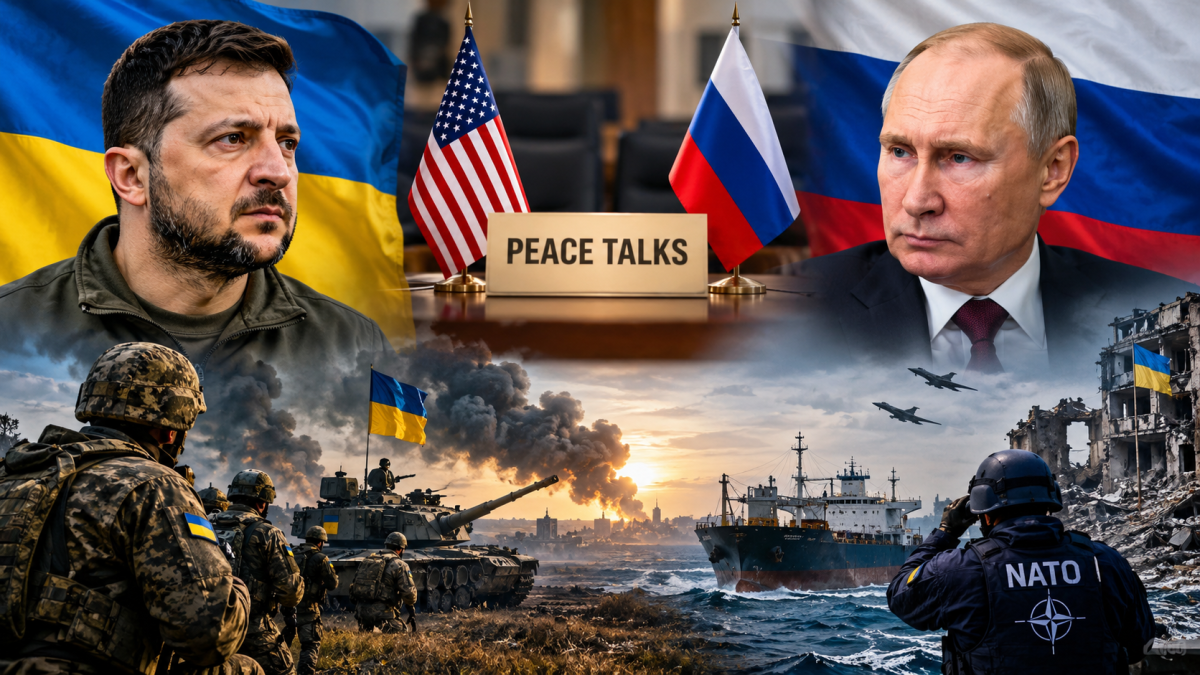
Russia-Ukraine War: US Pushes for Peace Deal as Military Tensions and Territorial Disputes Persist
October 21, 2026: Diplomatic efforts to end the Russia-Ukraine war are continuing as the United States seeks to advance negotiations toward a possible peace agreement. However, ongoing military operations, concerns over critical infrastructure and disagreements over territorial control remain significant obstacles to a lasting settlement.
Washington is working to bring Moscow and Kyiv closer to a negotiated solution, but the two sides continue to differ over the conditions necessary to end the conflict. Recent developments involving US diplomatic engagement, intelligence cooperation, satellite communications and security in the Black Sea highlight the challenges facing efforts to secure peace.
1. US Peace Initiative Advances as Witkoff Prepares for Putin Talks
The Trump administration is intensifying its diplomatic efforts to end the war. US special envoy Steve Witkoff is scheduled to meet Russian President Vladimir Putin on Wednesday to discuss an updated peace proposal.
The planned meeting follows recent discussions in Oslo between Ukrainian President Volodymyr Zelenskyy and US representatives. The diplomatic engagement is part of Washington's broader effort to explore a potential agreement and identify areas where progress may be possible.
For Kyiv, however, ending the fighting is only one part of the challenge. Ukrainian leaders have stressed the importance of protecting the country's sovereignty and securing credible guarantees against future Russian military action. These concerns remain central to Ukraine's position in any negotiations.
2. US Restores Intelligence Sharing With Ukraine
Intelligence cooperation between Washington and Kyiv has emerged as another significant development. Ukrainian President Volodymyr Zelenskyy has confirmed that the United States has resumed sharing intelligence related to incoming Russian missile and drone attacks.
Such information can help Ukrainian forces identify potential threats, improve warning systems and prepare air defences. Intelligence sharing is therefore an important element of Ukraine's defensive capabilities, particularly as Russian aerial attacks continue to pose risks to civilian areas and critical infrastructure.
The restoration of this cooperation could strengthen Ukraine's ability to respond to incoming threats while diplomatic discussions continue. However, its longer-term implications will depend on the scope and continuity of intelligence support.
3. Starlink and Starshield Restrictions Highlight Technology Risks
Satellite communications have become increasingly important in the Russia-Ukraine war, supporting military coordination, communications and drone operations.
Reports of slowdowns affecting military-grade Starlink and Starshield services earlier in October raised concerns about the potential consequences for Ukrainian forces. The reported disruptions also highlighted the extent to which modern military operations can depend on privately operated communications infrastructure.
The issue underscores a broader challenge for governments and armed forces: commercial technology companies can play a significant role in national security and military operations, even though their services are not traditional military assets.
For Ukraine, maintaining reliable communications remains important for operational coordination. Any restrictions or interruptions affecting essential satellite services could therefore have implications for military effectiveness.
4. Russian Attacks Keep Pressure on Ukrainian Infrastructure
Military operations continue despite renewed diplomatic engagement. Reports indicate that Russian missile and drone attacks have targeted locations in western Ukraine, including energy infrastructure.
Attacks on energy facilities can disrupt electricity supplies, damage essential services and increase pressure on local communities. They can also complicate Ukraine's efforts to maintain infrastructure and prepare for periods of increased energy demand.
The continuation of such attacks highlights the gap between diplomatic efforts and conditions on the ground. Even if negotiations produce progress, protecting civilians and critical infrastructure will remain an important challenge during any potential ceasefire or transition toward a broader settlement.
5. Black Sea Security Raises Concerns Over Commercial Shipping
Security in the Black Sea remains another important issue in the wider conflict. Reports of attacks involving cargo vessels near Ukrainian ports have renewed concerns about the safety of maritime routes and commercial shipping.
The Black Sea is strategically important for regional trade, including the movement of agricultural products and other essential goods. Continued insecurity in the area can increase risks for shipping operators, disrupt trade and add pressure to regional economies.
Meanwhile, reports of increased NATO surveillance and patrol activities near Romania and Bulgaria reflect continuing security concerns around the alliance's eastern flank.
Developments in the Black Sea are being closely monitored because any further escalation could affect maritime security, regional stability and international trade.
6. Territorial Disputes Remain a Major Barrier to a Peace Agreement
Despite renewed diplomatic engagement, fundamental disagreements between Russia and Ukraine continue to complicate efforts to end the war.
Ukraine maintains that any settlement must respect its territorial integrity and include credible security guarantees. Russia continues to pursue its territorial objectives, leaving the two sides divided over the future status of contested areas.
These differences mean that a ceasefire, even if achieved, would not necessarily resolve the underlying conflict. Negotiators would still need to address territorial questions, security arrangements, monitoring mechanisms and the implementation of any agreement.
The credibility of security guarantees will also be crucial. Ukraine needs assurances that a settlement would not simply provide an opportunity for renewed Russian military action, while the terms acceptable to Moscow remain a central point of contention.
Bridging these differences is likely to be one of the most difficult aspects of any serious peace initiative.
7. What Happens Next in the Russia-Ukraine Peace Talks?
Steve Witkoff's planned meeting with Vladimir Putin is expected to draw attention as Washington continues its efforts to advance a potential peace agreement. The discussions could offer further indications of Russia's position on the updated proposal and whether additional negotiations are possible.
However, the outcome remains uncertain. A diplomatic meeting alone cannot guarantee progress, particularly when the parties continue to disagree over territorial control, security guarantees and the conditions required to end hostilities.
For now, the conflict is being shaped by two parallel developments: international efforts to negotiate an end to the fighting and continued military pressure on the ground.
The next phase of diplomacy will depend on whether Washington can narrow the differences between Moscow and Kyiv and establish a framework that both sides are prepared to consider. Until then, the prospect of a lasting settlement remains uncertain.
Conclusion
The latest developments underline the complexity of efforts to end the Russia-Ukraine war. Renewed US diplomatic engagement and the restoration of intelligence sharing with Ukraine represent important elements of the evolving situation, while concerns over satellite communications, infrastructure attacks and Black Sea security highlight the continuing risks.
Ultimately, achieving lasting peace will require more than a temporary reduction in fighting. Any durable agreement will need to address territorial disputes, establish credible security arrangements and provide a framework for implementing and monitoring its terms.
Whether the latest US initiative can move the two sides closer to those objectives remains to be seen.
Sources
-
Reuters: U.S. envoy Witkoff arrives in St. Petersburg for talks with Putin. Reuters
-
The Guardian: U.S. resumes intelligence sharing with Ukraine, Zelenskyy says. The Guardian
-
Associated Press (AP): Russia releases imprisoned American man during Witkoff's visit. AP News


Join the Conversation