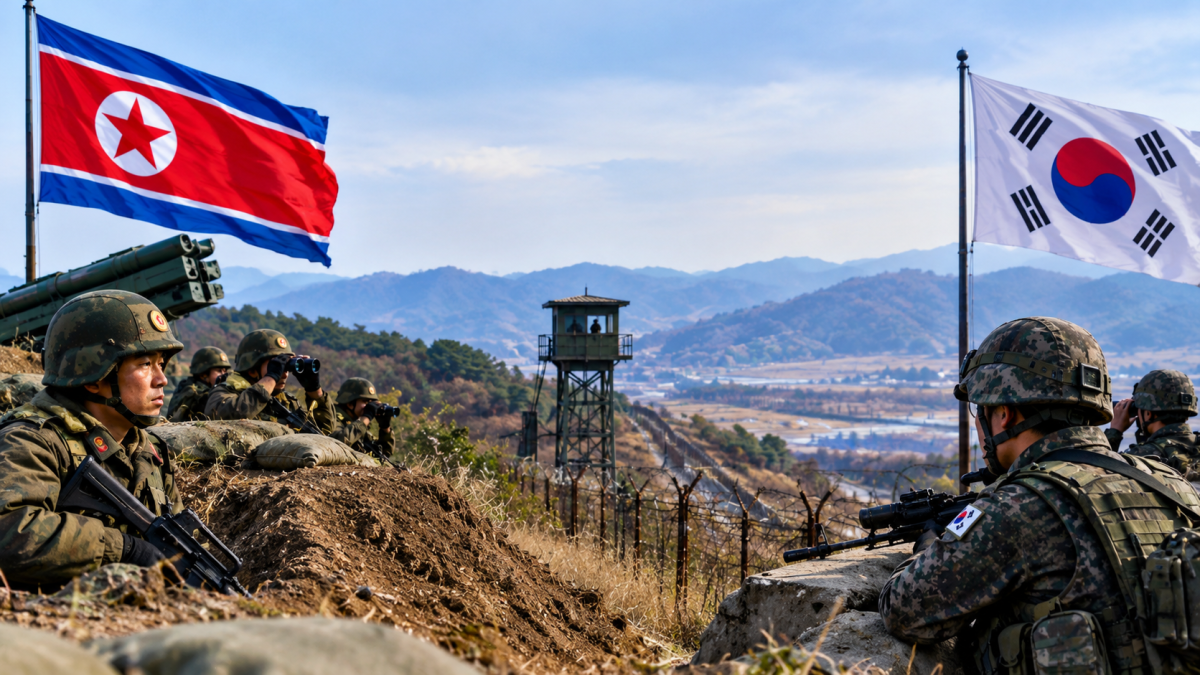
North Korea Strengthens Military Amid Rising Border Tensions
Pyongyang, October 24, 2026: North Korea is continuing to strengthen its military capabilities amid rising tensions along the border with South Korea. Recent military statements by leader Kim Jong Un and warnings from senior officials have raised concerns about regional stability. Meanwhile, prospects for renewed diplomatic engagement with the United States remain uncertain, while Pyongyang continues to maintain important relationships with Russia and China.
These developments highlight the continuing challenges facing the Korean Peninsula, where military preparedness, political mistrust, and limited diplomatic communication complicate efforts to reduce tensions.
1. Kim Jong Un Calls for a Stronger Military
North Korea's renewed emphasis on military readiness reflects its broader strategy of strengthening national defence and maintaining deterrence against perceived external threats. By focusing on company-level units, the leadership appears to be prioritising combat preparedness, discipline, and operational independence. These developments also highlight the continuing importance of military policy in North Korea's domestic and foreign affairs.
Focus on Combat Readiness
Kim Jong Un has continued to emphasise military preparedness and the development of capable frontline units. According to a Reuters report published on October 23, he called for army companies to become elite, self-sufficient combat units during a two-day meeting of company commanders in Pyongyang on October 22–23.
The meeting highlighted the leadership's focus on strengthening military effectiveness and operational readiness. North Korea regularly presents military modernisation as essential to protecting its sovereignty and deterring potential adversaries.
Military Modernisation and Deterrence
North Korea's military strategy places significant emphasis on improving combat readiness and developing domestic defence capabilities. Pyongyang argues that these measures are necessary because of its security concerns and military cooperation between South Korea and the United States.
Nevertheless, neighbouring countries closely monitor North Korea's military developments because changes in its capabilities could influence the regional balance of power.
2. Rising Tensions Along the North–South Korean Border
The border remains one of the most sensitive security areas in East Asia, where military activity and political disagreements can quickly increase tensions. Fortifications, alleged mine-laying, propaganda measures, and threats of retaliation have contributed to an atmosphere of mistrust between the two Koreas. Without functioning communication channels and agreed procedures for managing incidents, even a limited confrontation could create wider security concerns.
Warnings and Military Activity
Tensions along the Korean Peninsula's heavily fortified border remain a significant concern. Statements attributed to Kim Yo Jong, a senior North Korean official, have added to uncertainty about possible further confrontational measures.
The two Koreas have experienced repeated disagreements over border security, propaganda broadcasts, military exercises, and activities near the Demilitarized Zone. Such disputes can make diplomatic engagement more difficult, particularly when both governments view the other's actions as a security threat.
Concerns Over Border Incidents
South Korea has raised concerns about activities near the border, including landmine explosions that injured three South Korean soldiers in September 2026. Seoul attributed the mines to North Korea, while Pyongyang denied responsibility.
On October 23, South Korea proposed military talks to clarify the disputed border, restore communication channels, and reduce the risk of accidental clashes. North Korea's willingness to participate remains uncertain.
3. Prospects for a Trump–Kim Meeting Remain Uncertain
Diplomatic engagement between Washington and Pyongyang remains complicated by disagreements over North Korea's nuclear programme, international sanctions, and the conditions required for negotiations. Although direct talks between the two leaders could create an opportunity to reduce tensions, a successful outcome would depend on detailed preparations and a willingness to address substantive issues. Until both sides demonstrate greater flexibility, the prospects for a breakthrough remain uncertain.
Challenges to Renewed Diplomacy
The possibility of renewed engagement between US President Donald Trump and Kim Jong Un continues to attract attention. However, a Reuters report published on October 23 indicated that the chances of a meeting before the end of 2026 were fading, with no concrete arrangements confirmed.
Previous diplomatic efforts demonstrated that direct engagement can create opportunities for dialogue. However, meetings between leaders do not necessarily produce lasting agreements unless they are supported by detailed negotiations and practical commitments.
Nuclear Policy Remains a Major Obstacle
Washington has historically sought progress on denuclearisation, while Pyongyang has treated its nuclear capabilities as a central component of national security.
Bridging this divide would require negotiations over security assurances, sanctions relief, verification arrangements, and the future of North Korea's nuclear programme. Without progress on these issues, even renewed diplomatic contact may produce only limited results.
4. North Korea Maintains Close Ties With Russia and China
North Korea's relationships with Russia and China are important to its diplomatic positioning and economic connections. Moscow and Pyongyang have strengthened their relationship, while Beijing remains a major neighbour with longstanding political and economic links. These partnerships provide North Korea with additional international connections, although their precise effects on regional security depend on the agreements, policies, and actions of the countries involved.
Relations With Russia
North Korea's relationship with Russia has become an important part of its foreign policy. The two countries have expanded cooperation in several areas, attracting international attention because of the possible implications for security in East Asia and beyond.
Their relationship is closely monitored by the United States, South Korea, Japan, and other countries concerned about military cooperation and its potential consequences for regional stability.
China's Continuing Importance
China remains a significant neighbour and an important economic partner for North Korea. The two countries share a long border and have maintained diplomatic and economic connections despite differences in their priorities and approaches to regional security.
The opening of the New Yalu River Bridge in October 2026 has drawn attention to the potential for increased cross-border connectivity. However, the scale and economic effects of additional trade will depend on practical conditions, international sanctions, and the policies of both governments.
5. Weapons Development and Defence Priorities
North Korea's weapons programmes remain a major concern for neighbouring countries because of their potential implications for deterrence, crisis stability, and nuclear non-proliferation. The government presents military development as necessary for national security, while other countries remain concerned about missile testing and the expansion of strategic capabilities. Assessing these developments requires distinguishing independently verified technical information from claims made by North Korean authorities.
Missile and Strategic Capabilities
North Korea has continued to prioritise the development of missile systems and other military technologies. Its weapons programmes have raised concerns among neighbouring countries because of their potential implications for regional deterrence and international security.
Official announcements and military displays can provide information about the government's stated priorities, but they do not always establish the operational effectiveness of the systems presented. Independent verification remains important when assessing claims about weapons capabilities.
Regional and International Concerns
North Korea's weapons development has implications beyond the Korean Peninsula. South Korea, Japan, and the United States have expressed concern about the potential threats posed by its missile and nuclear programmes.
The situation also presents challenges for international non-proliferation efforts. Reducing tensions will require diplomatic engagement alongside efforts to prevent miscalculations and manage the risks associated with military activity.
6. Domestic Messaging and Economic Self-Reliance
North Korea's emphasis on domestic production and self-reliance reflects its stated objective of reducing dependence on external sources and strengthening national economic capacity. Official exhibitions and industrial initiatives are used to demonstrate progress, but they do not necessarily provide a complete picture of economic conditions. The country's longer-term prospects will depend on productivity, access to resources, living standards, and its ability to balance economic development with substantial defence commitments.
Emphasis on Domestic Production
North Korean state messaging frequently highlights self-reliance, domestic manufacturing, and efforts to strengthen national industries. These themes are presented as important to economic resilience and the country's ability to operate under international restrictions.
However, achieving sustained economic progress depends on more than official announcements. Industrial productivity, access to technology, energy supplies, infrastructure, and the availability of essential goods all influence the economy's performance.
Balancing Defence and Economic Needs
North Korea faces the challenge of allocating resources between national defence and domestic development. Military spending may support the government's security objectives, but economic development also requires investment in infrastructure, agriculture, healthcare, and industrial productivity.
A clearer assessment of economic conditions requires reliable data and independent analysis. The balance between military priorities and the population's economic needs will remain an important issue for the country's long-term development.
7. Risks to Regional Security and Stability
The security situation on the Korean Peninsula illustrates how military preparedness, political mistrust, and limited diplomatic engagement can combine to increase the risk of miscalculation. Although heightened military activity does not automatically mean that conflict is imminent, the absence of effective communication can make incidents more difficult to contain. Maintaining dialogue, improving crisis-management procedures, and encouraging restraint on both sides remain important steps towards reducing the risk of escalation.
The Danger of Miscalculation
Military activity near the border can create uncertainty, particularly when both sides interpret the other's actions as hostile. In a heavily militarised environment, an isolated incident could lead to retaliatory measures and further escalation if communication channels are unavailable or ineffective.
Although military preparations and confrontational statements do not necessarily indicate that conflict is imminent, they can increase the risk of misunderstanding and reduce opportunities for diplomatic intervention.
The Importance of Dialogue
Maintaining regional stability requires reliable communication, restraint, and diplomatic engagement. Military hotlines and direct discussions between the two Koreas could help clarify intentions and reduce the risk of accidental clashes.
International diplomatic efforts may also contribute to managing tensions, provided the parties are willing to engage constructively. Progress is likely to require sustained negotiations rather than temporary gestures or isolated meetings.
Conclusion
North Korea's continued emphasis on military preparedness, its tense relationship with South Korea, and uncertainty surrounding diplomacy with the United States present significant challenges for regional security. Its relationships with Russia and China also influence the broader geopolitical environment surrounding the Korean Peninsula.
Although military readiness remains central to Pyongyang's stated security strategy, sustained confrontation could increase instability and make diplomatic progress more difficult. Improving communication, avoiding unnecessary escalation, and maintaining opportunities for dialogue will be important to reducing the risk of conflict.
The future of the Korean Peninsula will depend not only on military capabilities but also on the willingness of the parties involved to address their differences through practical and sustained diplomatic engagement.
Sources and Further Reading
1. Reuters — Kim Jong Un Calls for a Military Revolution:
"Read the Reuters report" (https://reference-url-citation.invalid/0)
2. Associated Press — South Korea Proposes Military Talks With North Korea:
"Read the Associated Press report" (https://reference-url-citation.invalid/1)
3. Reuters — Trump–Kim Meeting Prospects Remain Uncertain:
"Read the Reuters report on diplomatic prospects" (https://reference-url-citation.invalid/2)
4. The Guardian — North Korea's New Bridges With China and Russia:
"Read the report on North Korea's regional connections" (https://reference-url-citation.invalid/3)

Join the Conversation