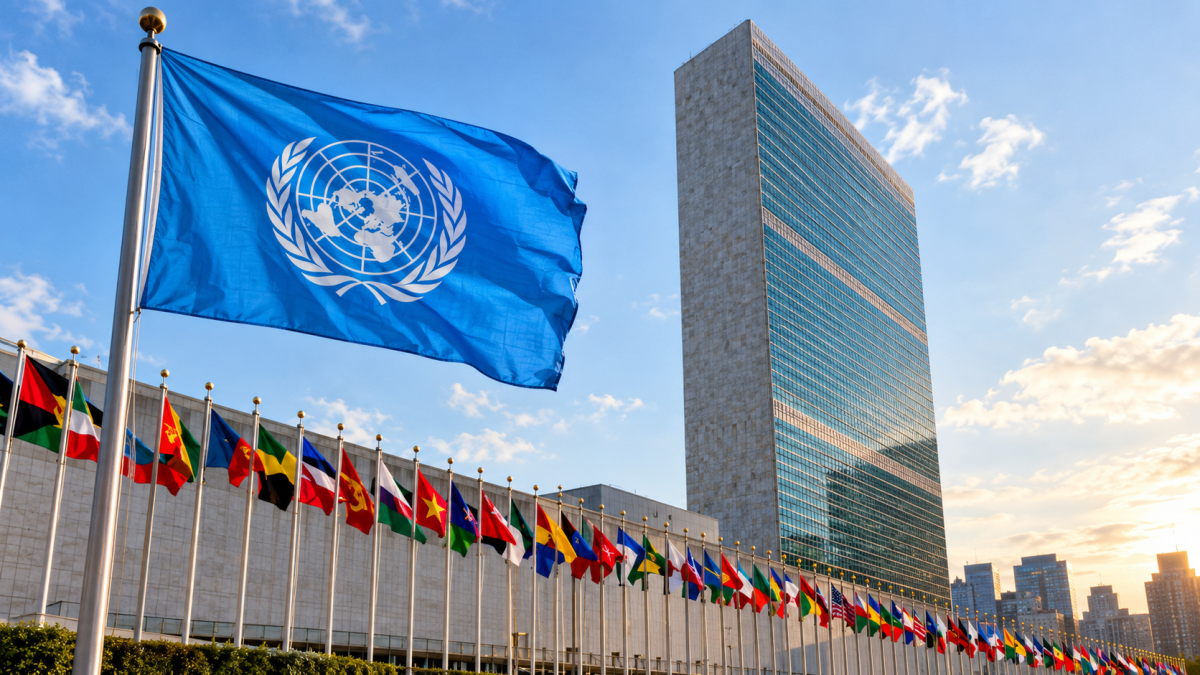
Is the United Nations Still Effective in a Divided World?
The United Nations (UN) was established in 1945 following the devastation of the Second World War, with the aim of preventing future conflicts and promoting international cooperation. Its founders hoped that countries could resolve disputes through diplomacy rather than allowing political disagreements to escalate into another global war.
More than eight decades later, that mission remains relevant. Geopolitical rivalries, regional conflicts and humanitarian emergencies continue to challenge international stability. Meanwhile, climate change, displacement, public health emergencies and emerging technologies have created problems that no country can effectively address alone.
The UN brings together 193 member states and provides a platform for diplomacy, humanitarian assistance, international development and human rights. However, its ability to respond decisively to international crises is often constrained by disagreements among powerful countries.
The organisation is neither entirely ineffective nor capable of resolving every global problem. Its achievements demonstrate the value of cooperation, while its limitations reveal the difficulty of maintaining collective action in a divided world. The central question is whether the UN can reform its institutions and improve its effectiveness without abandoning the principles on which it was founded.
1. Why Was the United Nations Established?
Preventing War Through International Cooperation
The United Nations was created to maintain international peace and security, develop friendly relations among nations and encourage cooperation on economic, social and humanitarian issues.
Its founding principle remains important: international disputes should be addressed through peaceful means and established rules whenever possible. Diplomatic negotiations can provide governments with opportunities to explain their positions, explore compromises and reduce the risk of military confrontation.
However, an international institution cannot guarantee peace simply by existing. Governments retain their own political priorities, security concerns and domestic pressures. When national interests conflict, even established diplomatic channels may struggle to produce agreement.
A Mission Beyond International Security
The UN's work extends beyond conflict resolution. Its agencies and programmes support healthcare, education, food security, refugee protection, disaster response and sustainable development.
These activities demonstrate why the organisation should not be judged exclusively by the outcomes of Security Council meetings. Humanitarian coordination and international development can make important contributions even when governments disagree about major political issues.
Nevertheless, successful humanitarian programmes cannot compensate entirely for failures to prevent conflict or protect civilians. A fair assessment must consider both the organisation's practical achievements and its limitations.
2. Security Council Veto Power: A Major Challenge
How the Veto System Works?
The Security Council has primary responsibility under the UN Charter for maintaining international peace and security. It has 15 members: five permanent members—China, France, Russia, the United Kingdom and the United States—and ten non-permanent members elected for two-year terms.
Each permanent member can veto substantive decisions. The system reflected the political realities of 1945, when securing the participation of major powers was considered essential to the new international order.
However, a mechanism intended to keep powerful countries involved can also prevent collective action when those countries disagree. This creates a significant challenge for an organisation expected to respond to international crises.
When Political Interests Block Collective Action
On 4 June 2025, the United States vetoed a Security Council draft resolution calling for a permanent ceasefire in Gaza. The other 14 Council members voted in favour, but the proposal was not adopted because of the veto. The episode illustrated how one permanent member can block a resolution despite unanimous support among the remaining members.
Russia's position as a permanent member has also complicated Security Council action concerning the war in Ukraine.
The circumstances of these conflicts differ, and governments have advanced different arguments regarding security, sovereignty and proposed diplomatic measures. Nevertheless, these cases illustrate the institutional difficulty of reaching collective decisions when major powers have competing interests.
The veto is not the only reason peace initiatives fail. Negotiations can collapse because parties reject compromise, armed groups continue fighting or governments refuse mediation. However, veto power remains a structural obstacle that reform discussions cannot ignore.
3. Is the United Nations Losing Credibility?
The Gap Between Principles and Practice
The credibility of the UN depends partly on whether its principles are applied consistently. The Universal Declaration of Human Rights, adopted in 1948, established an important international standard for human dignity, equality and fundamental rights.
Yet governments and civil society organisations sometimes question why certain international crises receive stronger diplomatic pressure or more visible responses than others.
Different situations can require different approaches because the available evidence, legal circumstances and diplomatic options vary. Unequal responses do not automatically establish political bias, but repeated perceptions of double standards can weaken public confidence.
When international rules appear to be applied differently depending on geopolitical alliances, countries may begin to question whether the system offers equal protection to all.
Why Transparency and Accountability Matter?
The UN can strengthen its credibility through transparent decision-making, impartial scrutiny and clear explanations of its actions. Human rights principles should not become political instruments used against rivals while comparable abuses by allies are ignored.
At the same time, allegations of bias should not be used to dismiss credible evidence or prevent legitimate scrutiny.
A more trusted international system would assess allegations carefully, explain its decisions and encourage accountability through appropriate legal and institutional processes. Its principles must remain focused on protecting people rather than advancing the interests of particular political blocs.
4. Can the United Nations Prevent Wars?
The Importance of Diplomacy
The UN can facilitate negotiations, support ceasefire efforts, coordinate humanitarian assistance and maintain communication between opposing parties. Even when negotiations do not immediately produce a peace agreement, diplomacy can create opportunities for future settlements.
However, the organisation cannot force every government or armed group to accept compromise. A party that believes continued fighting will produce greater advantages may reject international pressure.
Lasting peace therefore requires political commitment from the parties involved, along with sustained support from influential international actors.
The Strengths and Limits of Peacekeeping
UN peacekeeping operations can monitor ceasefires, protect civilians under authorised mandates and support political transitions. Their effectiveness depends on clear objectives, adequate resources, cooperation from host countries and realistic expectations.
Peacekeepers cannot independently resolve every territorial dispute or guarantee that armed groups will respect agreements. Where political negotiations fail, missions may find themselves operating in dangerous environments without the authority or resources required to meet public expectations.
In August 2026, the UN Secretary-General presented a review of the future of all forms of UN peace operations. The review proposed adapting peace operations to changing security conditions, with greater emphasis on preventive diplomacy, focused mandates and cooperation with regional organisations.
Its recommendations recognise that peacekeeping must evolve alongside the conflicts it seeks to address. The objective should be to give missions realistic responsibilities and sufficient support while strengthening the political processes necessary for lasting peace.
5. Does the UN Represent Today's World?
An International System That Has Changed
The global balance of economic and diplomatic influence has changed considerably since 1945. Countries across Africa, Asia and Latin America have become increasingly important in international affairs, yet the permanent membership of the Security Council remains unchanged.
Africa has no permanent seat on the Council, despite the continent's importance in international peace and security. Other countries also argue that the existing structure does not adequately represent today's international community.
The General Assembly offers a more representative forum because all 193 member states have one vote. However, its role does not eliminate concerns about unequal influence over Security Council decisions.
Why Security Council Reform Is Difficult?
The Pact for the Future, adopted on 22 September 2024, renewed commitments to make the Security Council more representative, inclusive, transparent and effective. It also highlighted the need to address regional underrepresentation, particularly that of Africa.
However, countries disagree over the number of additional seats, regional allocations and whether new permanent members should receive veto powers.
Reform must balance representation with the Council's ability to act. Expanding membership without addressing voting arrangements may leave existing problems unresolved, while preserving the current structure risks further weakening confidence among underrepresented countries.
The objective should be a Council that better reflects the modern world while retaining the ability to respond to international crises.
6. The UN's Contribution Beyond Conflict
Humanitarian Assistance and Development
The UN's wider system supports humanitarian relief, healthcare, education, refugee protection and sustainable development. Its agencies can help coordinate responses, share expertise and direct assistance towards communities affected by emergencies.
These activities are particularly important when disasters or conflicts overwhelm the capacity of individual governments. International coordination can help organisations work towards common objectives and reduce duplication.
However, funding shortages, restricted humanitarian access and political interference can limit results. The effectiveness of these programmes depends on practical implementation, cooperation from governments and reliable financial support.
Addressing Problems That Cross Borders
Climate change, infectious diseases, displacement and emerging technologies demonstrate the need for international cooperation. Decisions made in one country can have consequences far beyond its borders.
The UN provides a platform for exchanging information, negotiating common standards and coordinating international responses. Agreements do not automatically solve global problems, but they can establish frameworks for countries to work together.
Its value lies not in guaranteeing success but in providing institutions through which governments can pursue shared objectives and manage disagreements.
7. What Reforms Could Improve UN Effectiveness?
Reform the Security Council
Member states should continue negotiations on representation, regional balance and voting arrangements. Reform should give underrepresented countries a meaningful voice while preserving the Council's ability to make timely decisions.
Strengthen Accountability for Vetoes
A 2022 General Assembly resolution established a mechanism for the Assembly to meet and debate when a Security Council veto is cast. Although this mechanism cannot overturn a veto, it provides an opportunity for broader scrutiny of the decision.
Member states should use such forums to examine the reasoning behind vetoes and discuss their implications for international peace and security.
Invest in Prevention and Practical Results
Preventive diplomacy, mediation and early engagement can help address disputes before they escalate. Peacekeeping missions also need clear mandates, appropriate resources and measurable objectives.
Predictable funding, transparent reporting and independent evaluations can help determine whether programmes are achieving their goals. Stronger partnerships with regional organisations can further improve local understanding and operational coordination.
Ultimately, reform requires political commitment from member states. Institutional changes alone cannot succeed if governments remain unwilling to cooperate.
Conclusion: An Essential Institution Facing Difficult Challenges
The United Nations remains an important platform for international diplomacy, humanitarian assistance and global cooperation. However, geopolitical rivalries, Security Council vetoes and unequal representation continue to constrain its ability to respond effectively to major crises.
Its achievements should not be overlooked, but neither should its shortcomings be excused. Meaningful reform, transparent decision-making, predictable funding and stronger preventive diplomacy could help the organisation respond more effectively to modern challenges.
The question is not simply whether the UN has succeeded or failed. It is whether its member states are willing to strengthen the institution and cooperate when their interests differ. In a divided world, the future of the United Nations will depend on both institutional reform and the willingness of governments to uphold the principles they have pledged to respect.
Sources and Further Reading
1. United Nations — Security Council Vote on Gaza, 4 June 2025
https://press.un.org/en/2025/sc16708.doc.htm
2. United Nations — Review on the Future of All Forms of UN Peace Operations
https://dppa.un.org/en/review-on-the-future-of-all-forms-of-un-peace-operations
3. United Nations — The Pact for the Future
https://www.un.org/pact-for-the-future/en/about-pact
4. United Nations — Universal Declaration of Human Rights
https://www.un.org/en/about-us/universal-declaration-of-human-rights
5. United Nations Security Council — Voting System
https://main.un.org/securitycouncil/en/content/voting-system

Join the Conversation