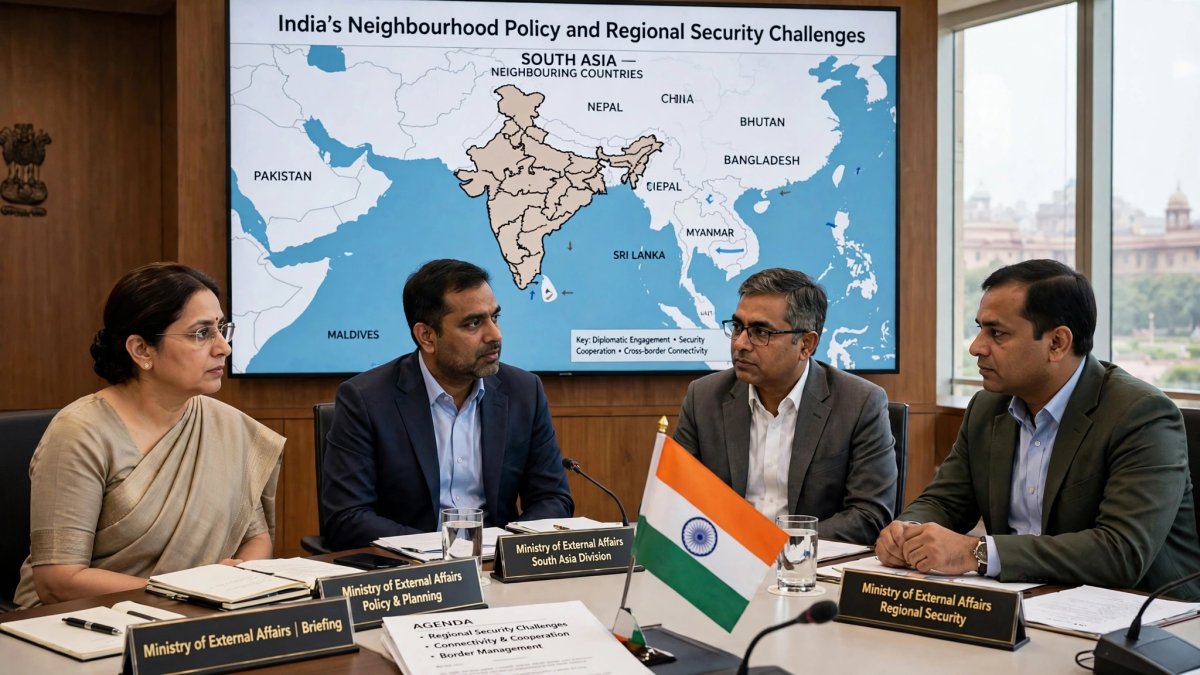
India's Neighbourhood Policy and Regional Security
India's geographical position places it at the centre of South Asian geopolitics, sharing land and maritime boundaries with several countries whose political stability, economic development and security directly affect its national interests. From border management and maritime cooperation to trade, infrastructure and diplomatic engagement, relations with neighbouring countries remain an important part of India's foreign policy.
The Neighbourhood First Policy, introduced as a major foreign policy priority in 2014, reflects India's effort to strengthen cooperation with its immediate neighbours. Its objectives include improving regional connectivity, expanding economic partnerships and addressing common security challenges. However, political instability, territorial disputes and growing competition among major powers continue to complicate India's regional strategy.
1. The Evolution of India's Neighbourhood Policy
India's approach to South Asia has developed through different diplomatic frameworks since independence. Its early foreign policy emphasised peaceful coexistence, sovereignty and regional cooperation.
The Gujral Doctrine and Regional Diplomacy
During the 1990s, the Gujral Doctrine promoted a relationship with smaller neighbouring countries based on mutual trust and cooperation. It argued that India should be willing to make certain concessions without expecting immediate reciprocal benefits, particularly from smaller neighbours.
The Neighbourhood First Policy
In 2014, the Indian government placed renewed emphasis on its immediate neighbourhood. The policy focuses on Afghanistan, Bangladesh, Bhutan, Maldives, Myanmar, Nepal, Pakistan and Sri Lanka.
According to the Ministry of External Affairs, its objectives include strengthening physical, digital and people-to-people connectivity while expanding trade and commerce across the region.
2. India's Relations with Pakistan
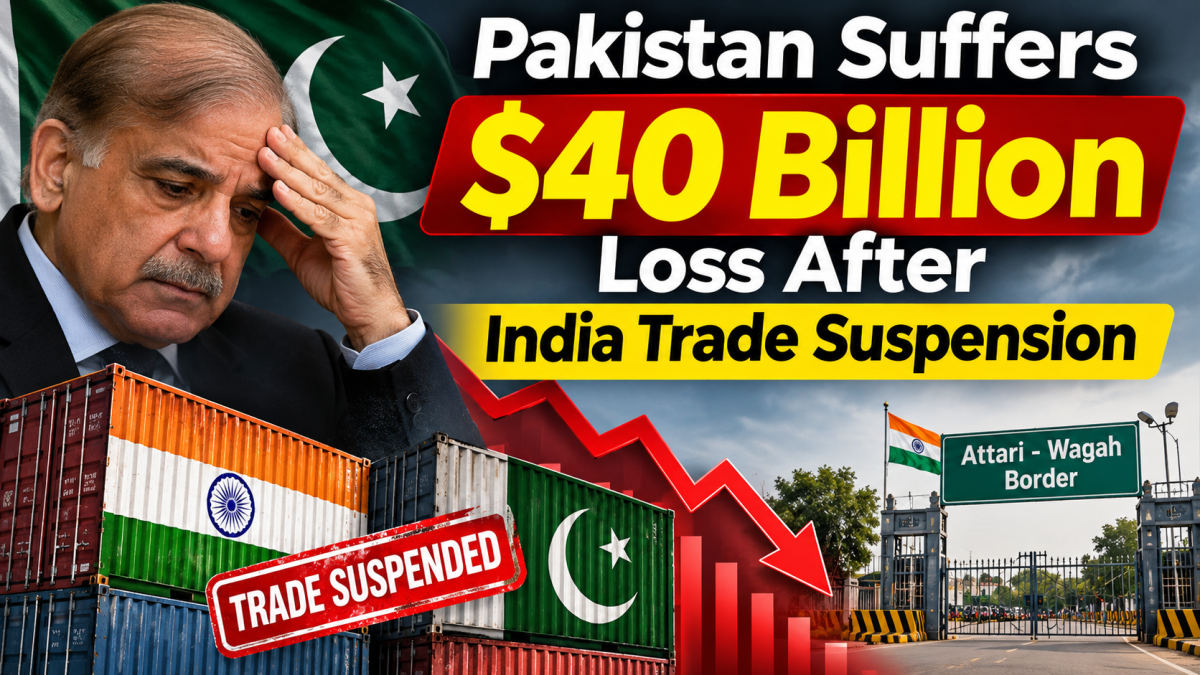
Relations between India and Pakistan remain one of the most complicated dimensions of South Asian geopolitics. Historical disputes, cross-border terrorism, security concerns and the unresolved Kashmir issue have repeatedly affected diplomatic engagement.
Security developments in 2025 further intensified tensions. The Pahalgam terrorist attack in April and India's subsequent military response, Operation Sindoor, in May significantly affected bilateral relations and regional security calculations.
Despite these challenges, the importance of regional stability remains significant. Sustained diplomatic communication and efforts to prevent further escalation are important for the wider South Asian region.
3. Strategic Partnerships with Bangladesh, Nepal and Bhutan
India's relationships with Bangladesh, Nepal and Bhutan demonstrate the importance of economic cooperation, geographical connectivity and shared interests.
Bangladesh
Bangladesh is important to India's eastern security and regional connectivity. Cooperation includes trade, transport links, energy, border management and cultural exchanges. Political developments in Bangladesh have, however, created new diplomatic challenges, requiring careful engagement.
Nepal
India and Nepal share extensive historical, cultural and economic connections. Their relationship includes cross-border trade, infrastructure, energy cooperation and people-to-people movement. Nevertheless, territorial disagreements and political differences periodically create tensions.
Bhutan
Bhutan remains an important partner in India's Himalayan neighbourhood. Cooperation includes hydropower development, infrastructure, education and economic assistance. The relationship also has strategic significance because of Bhutan's geographical position near sensitive areas along the India-China frontier.
4. Sri Lanka and Maldives in the Indian Ocean
India's maritime neighbourhood is essential to its trade, energy security and regional influence. Sri Lanka and Maldives occupy strategically important positions along major Indian Ocean routes.
Sri Lanka
India and Sri Lanka cooperate in trade, infrastructure, energy, maritime security and development assistance. Sri Lanka's economic difficulties in recent years also highlighted India's role as a regional economic partner.
Maintaining stable relations with Colombo is important for maritime cooperation and the security of the surrounding waters.
Maldives
The Maldives has considerable importance because of its location in the Indian Ocean. India has supported development projects, infrastructure and capacity-building initiatives in the country.
At the same time, changes in domestic political priorities and the Maldives' engagement with other international partners have influenced its relationship with New Delhi. India's diplomatic approach therefore involves balancing strategic interests with respect for Maldivian sovereignty.
5. China's Growing Influence in South Asia
China's expanding economic and diplomatic presence has become an important factor in India's regional calculations. Through infrastructure investments, loans, trade agreements and the Belt and Road Initiative, Beijing has developed partnerships across South Asia.
The China-Pakistan Economic Corridor, infrastructure projects in Sri Lanka and wider engagement with other neighbouring countries have added another dimension to regional competition.
For India, this development creates both strategic concerns and diplomatic challenges. However, neighbouring countries also have independent economic and foreign policy priorities. Their engagement with China should therefore be understood within their broader national interests rather than simply as a choice between New Delhi and Beijing.
India's response has included infrastructure cooperation, development assistance, regional connectivity and stronger diplomatic engagement.
6. Afghanistan and Myanmar
Afghanistan and Myanmar are important to India's wider regional security and connectivity interests.
Afghanistan
India has historically supported Afghanistan through development projects, education, infrastructure and humanitarian assistance. Political changes following the Taliban's return to power in 2021 altered the diplomatic environment.
India has maintained limited engagement while continuing to consider humanitarian concerns, regional stability and security interests.
Myanmar
Myanmar connects South Asia with Southeast Asia and is important to India's Act East Policy. Cooperation includes border development, transport connectivity and regional economic engagement.
However, continuing political instability and security challenges in Myanmar have complicated infrastructure projects and India's efforts to strengthen connectivity with Southeast Asia.
7. Regional Organisations and Cooperation
Regional institutions provide opportunities for cooperation on trade, connectivity, security and development.
SAARC
The South Asian Association for Regional Cooperation was established in 1985 to promote regional cooperation and improve the economic and social conditions of South Asian populations. However, political disagreements, particularly between India and Pakistan, have restricted its effectiveness.
BIMSTEC
The Bay of Bengal Initiative for Multi-Sectoral Technical and Economic Cooperation connects South Asia with Southeast Asia. It provides a framework for cooperation involving India, Bangladesh, Bhutan, Myanmar, Nepal, Sri Lanka and Thailand.
India leads the organisation's security pillar, which includes counter-terrorism, disaster management and energy security. Its transport connectivity initiatives also seek to strengthen regional economic integration.
8. Challenges and the Future of India's Regional Strategy
India's neighbourhood policy faces several interconnected challenges. Political instability, border disagreements, economic differences, security threats and external geopolitical competition can affect bilateral relations.
Another challenge is the perception of unequal influence. As the region's largest country, India's decisions can have significant consequences for smaller neighbours. Maintaining trust therefore requires sensitivity towards their sovereignty, domestic priorities and development needs.
Economic integration also remains below its potential. Better transport links, energy networks, digital infrastructure and simpler trade arrangements could strengthen regional interdependence.
Going forward, India's regional strategy will depend on consistent diplomatic engagement, practical development cooperation and effective security coordination. Stronger regional institutions and improved cross-border connectivity could also help create greater economic opportunities.
Conclusion
India's Neighbourhood First Policy reflects the importance of regional stability to the country's wider geopolitical interests. Its relationships with Pakistan, Bangladesh, Nepal, Bhutan, Sri Lanka, Maldives, Afghanistan and Myanmar involve different historical experiences, strategic priorities and diplomatic challenges.
China's growing presence and political changes across South Asia have added further complexity. India's ability to maintain constructive relationships will depend not only on its economic and strategic influence but also on mutual trust, respect for sovereignty and sustained cooperation.
A stable and connected neighbourhood is closely linked to India's long-term security, economic development and position in the emerging multipolar world.
Sources and Further Reading
1. Ministry of External Affairs — "Neighbourhood First Policy" https://www.mea.gov.in/Images/CPV/LU-157-EN-02-02-2024.pdf
2. PRS Legislative Research — "India's Neighbourhood First Policy" https://prsindia.org/policy/report-summaries/india-s-neighbourhood-first-policy
3. Observer Research Foundation — "India's Hits and Misses in the Neighbourhood in 2025" https://www.orfonline.org/research/india-s-hits-and-misses-in-the-neighbourhood-in-2025
4. Ministry of External Affairs — "India-BIMSTEC Relations" https://www.mea.gov.in/Portal/ForeignRelation/India-BIMSTE-2025.pdf
5. Indian Council of World Affairs — "Advancing Sub-Regional Cooperation" https://www.icwa.in/show_content.php?lang=1&level=2&lid=7635&ls_id=12495

Join the Conversation