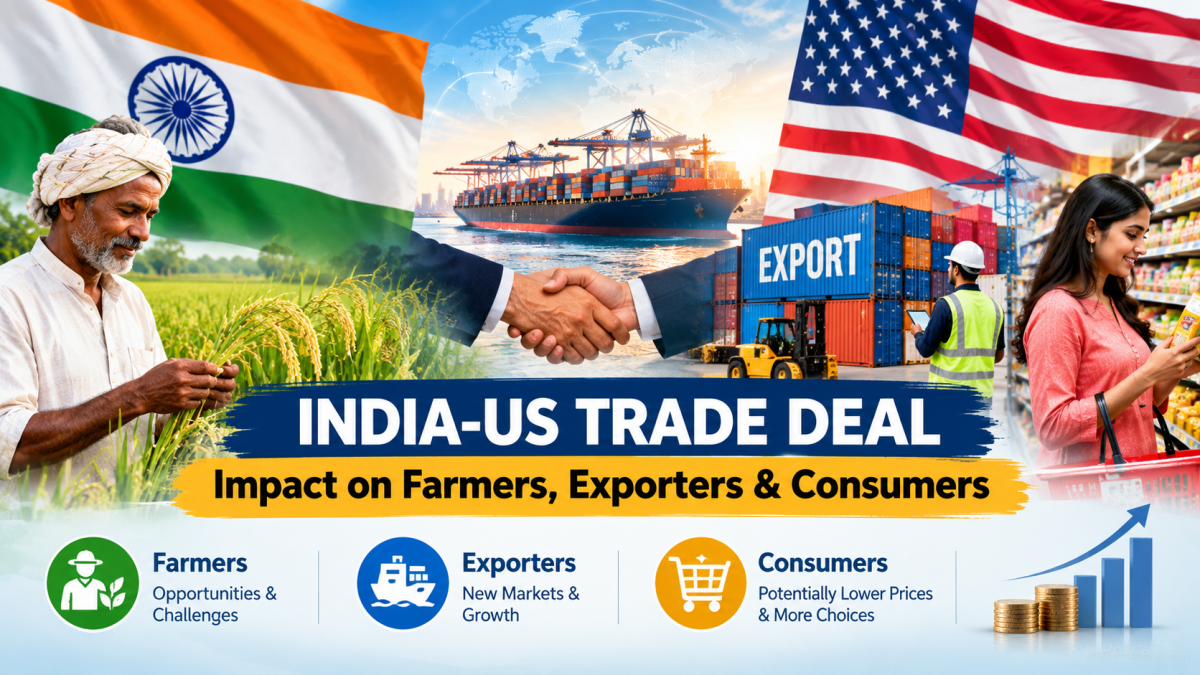
What Is the India-US Trade Deal?
The India-US trade deal is a proposed arrangement intended to improve trade between the two countries by reducing certain tariffs, expanding market access and addressing barriers that make international business more expensive.
On February 6, 2026, India and the United States announced a framework for an interim trade agreement. The framework outlined proposed tariff changes for industrial goods, agricultural products and several export sectors. It also reaffirmed the countries' commitment to negotiating a broader Bilateral Trade Agreement (BTA).
However, a framework is not the same as a fully implemented agreement. The final terms, tariff schedules and implementation arrangements will determine the actual impact on Indian businesses and consumers.
For India, the central question is how to expand exports to the United States while protecting sensitive domestic industries and maintaining competitive conditions for Indian producers.
How Could the Trade Deal Affect Indian Farmers?
Agriculture is one of the most sensitive areas of the India-US trade negotiations because millions of Indian households depend on farming for their livelihoods.
Under the February framework, India proposed reducing or eliminating tariffs on selected American agricultural and food products. The listed categories included tree nuts, fresh and processed fruit, soybean oil, red sorghum for animal feed and dried distillers' grains, among other products.
These proposed changes could create both opportunities and challenges for India's agricultural sector.
1. Increased Competition From Imported Agricultural Products
If the relevant tariff reductions are implemented, certain American agricultural products could become more competitive in the Indian market.
For example, lower import duties on selected edible oils or animal-feed ingredients could benefit food processors, livestock businesses and other industries that use these products.
However, Indian producers supplying similar products could face greater competition. The impact would depend on import volumes, domestic production costs, market demand and the final tariff conditions.
It would be inaccurate to assume that all Indian farmers would be affected in the same way. The consequences could differ significantly between crops, regions and farming businesses.
2. Concerns About Small and Marginal Farmers
Small farmers often have limited financial resources and may find it difficult to respond quickly to changes in market prices.
If imported products put downward pressure on prices for a particular crop, some farmers could experience reduced earnings. The extent of that risk would depend on whether the imported goods compete directly with domestic produce and whether domestic buyers can switch suppliers easily.
At the same time, cheaper agricultural inputs could reduce costs for certain farming and livestock operations.
This is why the product-specific details of the agreement matter. A reduction in import duties may help one group of producers while increasing competitive pressure on another.
3. Will India's Dairy Sector Be Affected?
Dairy has been a particularly sensitive issue in India-US trade negotiations.
India's dairy industry includes millions of small producers, cooperatives and family-run businesses. Changes affecting milk and dairy-product imports could have important consequences for their livelihoods.
The final scope of any agreement and its treatment of sensitive agricultural sectors must therefore be examined carefully. The February framework should not be interpreted as proof that all American dairy products will automatically enter India duty-free.
Farmers and dairy businesses should follow the final official tariff schedules rather than relying on general claims circulating on social media.
4. Could Indian Agricultural Exporters Benefit?
The trade relationship also creates opportunities for Indian agricultural exporters.
Indian products such as spices, tea, coffee, fruits, processed foods and other agricultural goods already serve international markets. More favourable access to the American market could help eligible exporters expand sales if the final agreement provides the relevant tariff benefits.
However, exporters would still need to meet American food-safety requirements, labelling rules, quality standards and other applicable regulations.
The key point: The impact on Indian farmers will depend on which products receive tariff concessions, which products remain protected and how domestic markets respond.
How Could Indian Exporters Benefit From the Trade Deal?
Indian exporters are among the businesses closely watching the negotiations because the United States is an important market for Indian goods.
More favourable tariff conditions could help Indian manufacturers compete with suppliers from other countries. Lower trade barriers can also make it easier for businesses to plan production, negotiate contracts and develop long-term relationships with overseas buyers.
Several sectors could be affected.
1. Textile and Garment Exports
India's textile and garment industry supplies clothing, fabrics and other products to international buyers.
If the final agreement provides favourable tariff treatment, Indian exporters could become more competitive in the American market. This could create opportunities for manufacturers, garment factories and smaller businesses involved in the textile supply chain.
Possible benefits include additional export orders, higher production and greater demand for skilled and unskilled workers.
However, tariff reductions alone cannot guarantee more orders. Indian businesses must also compete on price, quality, delivery schedules and product design.
2. Pharmaceutical Exports
India is a major supplier of generic medicines to international markets, including the United States.
The February framework identified generic pharmaceuticals among the product categories that could receive reciprocal tariff relief, subject to the successful conclusion of the interim agreement and applicable conditions.
If implemented, favourable treatment could improve the position of eligible Indian pharmaceutical exporters. Nevertheless, the actual impact will depend on the final provisions, applicable pharmaceutical regulations and any other duties that may apply.
3. Gems, Jewellery and Diamond Exports
India has an established gems and jewellery industry, with businesses involved in cutting, polishing, manufacturing and exporting products to international buyers.
More favourable tariff treatment could help eligible exporters compete in the United States. It could also support businesses that rely on overseas demand.
The February framework identified gems and diamonds among the categories that could receive reciprocal tariff relief, subject to the agreement's conditions. Exporters should verify the treatment of their specific products before assuming that a particular tariff exemption applies.
4. Engineering Goods and Machinery
India exports engineering products, machinery and industrial components to various countries.
A more predictable trade environment could help manufacturers negotiate contracts and plan investments. Businesses that become more competitive in the US market may have opportunities to expand production and explore additional customers.
For small and medium-sized enterprises, however, access to finance, compliance costs and international certification requirements will remain important challenges.
5. Employment Opportunities
Export growth can support employment across manufacturing, logistics, packaging, warehousing and transportation.
If Indian companies receive additional orders from American customers, they may need to increase production and hire more workers. The potential benefit could extend beyond large exporters to smaller suppliers.
But employment gains are not automatic. They depend on whether export demand actually increases and whether businesses can maintain their competitiveness after accounting for tariffs, production costs and other trade conditions.
Will the India-US Trade Deal Make Products Cheaper for Indian Consumers?
Indian consumers may benefit if the final agreement reduces import duties on selected American products.
When import duties fall, importers may pay less tax when bringing eligible goods into India. Some of those savings could be passed on to customers through lower retail prices.
However, the final price also depends on shipping costs, insurance, currency exchange rates, distribution expenses, other applicable taxes and the pricing decisions of importers and retailers.
Products That Could Be Affected
The February framework identified several American industrial and agricultural products for proposed tariff reductions.
Depending on the final terms, imported products or inputs such as selected food products, nuts, fruits, soybean oil and industrial goods could become less expensive.
The impact would vary by product. It would also depend on whether the relevant tariff changes are implemented and whether businesses pass the savings on to consumers.
Could Indian-Made Products Become More Expensive?
Not necessarily.
Greater competition from imports could put pressure on some domestic producers to improve efficiency or adjust prices. Other businesses might continue to compete successfully through quality, local availability, established brands or lower production costs.
Consumers could gain more choice in certain categories, but the effect on prices and domestic businesses would depend on market conditions.
It is therefore too early to promise that the trade deal will make everyday shopping cheaper for every Indian household.
What Could the Trade Deal Mean for Small Businesses in India?
Small and medium-sized enterprises play an important role in India's manufacturing and export economy.
A trade agreement that improves market access could create opportunities for smaller companies producing garments, leather goods, handicrafts, engineering components and other export products.
These businesses may benefit from additional customers, larger orders and opportunities to become suppliers to bigger exporters.
However, exporting to the United States also involves practical challenges. Businesses must understand customs procedures, product standards, documentation, shipping requirements and the rules that determine whether goods qualify for preferential tariffs.
Smaller firms may also need better access to working capital and reliable logistics.
Government support, export training and improved infrastructure could help businesses take advantage of new opportunities if the final agreement creates favourable conditions.
India-US Trade Deal: Potential Winners and Challenges
The agreement's impact will not be the same for every sector.
| Group | Potential opportunity | Main concern |
|---|---|---|
| Textile exporters | Better tariff competitiveness | Strong international competition |
| Pharmaceutical exporters | Potential tariff relief for eligible products | Regulatory requirements and final tariff rules |
| Agricultural exporters | Improved access for eligible products | Food-safety standards and market access conditions |
| Indian farmers | Possible export opportunities in selected products | Competition from certain imports |
| Consumers | Potentially lower prices on selected imports | Savings may not reach retail customers |
| Small businesses | New overseas customers | Finance, compliance and shipping costs |
| Food processors | Potentially cheaper imported inputs | Dependence on international prices and exchange rates |
These are potential effects rather than guaranteed outcomes. The final agreement and its implementation will determine which benefits materialise.
Why Has the India-US Trade Agreement Been Delayed?
Despite the February framework, negotiations have continued to face difficulties.
One major issue is market access. The United States wants greater access to India's market, while India wants favourable conditions for its exporters and protection for sensitive sectors.
Agricultural products remain an important point of discussion. India has sought to protect sensitive farm sectors, while the United States has pursued wider opportunities for its agricultural and industrial exporters.
Tariff uncertainty has also complicated negotiations. Reuters reported on October 6, 2026, that the talks had stalled again amid changing American tariff conditions and disagreements over the terms India could secure for its exports.
The changing tariff environment means that businesses should not assume the rates described in the February framework are the final rates applicable to every product today.
The governments must settle the remaining details and announce the relevant implementation arrangements before companies can confidently plan around the final trade terms.
What Should Indian Farmers and Exporters Do Now?
Until the final terms are confirmed, farmers and businesses should avoid making major decisions based only on proposed trade concessions.
Farmers can follow official announcements concerning the treatment of their specific crops and agricultural products. They should also monitor domestic prices, input costs and potential changes in demand.
Exporters should review their product classifications, applicable US duties, rules of origin and documentation requirements. They should verify the current tariff treatment of their goods before quoting prices or signing contracts based on expected tariff savings.
Businesses should also explore opportunities in multiple international markets rather than depending entirely on one destination.
For consumers, it is sensible to wait for confirmed product-specific tariff changes before expecting particular goods to become cheaper.
Official announcements from India's Ministry of Commerce and Industry, the Press Information Bureau and the Office of the United States Trade Representative are useful starting points for verifying the latest terms.
Frequently Asked Questions
1. How will the India-US trade deal affect Indian farmers?
The impact will depend on the agricultural products covered by the final agreement. Some farmers could face increased competition from selected imports, while others may benefit from improved access to the American market. The overall effect will vary by crop and region.
2. Which Indian exporters could benefit from the agreement?
Textile and garment manufacturers, pharmaceutical companies, gems and jewellery exporters, engineering businesses and other eligible exporters could benefit if the final terms improve their access to the US market.
3. Will American products become cheaper in India?
Some products could become cheaper if the final agreement reduces their import duties and businesses pass the savings on to consumers. The actual price changes will depend on the product and wider market conditions.
4. Will the trade deal create jobs in India?
It could support employment if Indian exporters receive more orders and expand production. However, job creation will depend on actual export growth, business investment and the competitiveness of Indian manufacturers.
5. Has the India-US trade agreement been fully finalised?
As of October 18, 2026, the February framework has not resulted in a fully finalised bilateral agreement. Negotiations have faced renewed difficulties, and the final terms and implementation arrangements remain important milestones.
6. Where can readers find official updates?
Readers can consult the Indian Ministry of Commerce and Industry, the Press Information Bureau and the Office of the United States Trade Representative for official announcements and details of the proposed trade framework.
Conclusion
The India-US trade deal could create new opportunities for Indian exporters, improve access to certain imported products and strengthen commercial ties between the two countries. At the same time, increased import competition could create challenges for some domestic producers, particularly in sectors where Indian businesses compete directly with foreign suppliers.
For farmers, the effect will depend on the agricultural products covered and the protections retained in the final terms. For exporters, favourable tariffs could improve competitiveness, but success will still depend on quality, cost and international demand. Consumers may benefit from lower prices on selected products, although these savings are not guaranteed.
As of October 18, 2026, the framework remains distinct from a fully finalised agreement. The most important next step is to confirm the final provisions and understand how they will apply to individual products and industries.
For India, the long-term impact will depend not just on tariff changes, but also on how effectively farmers, manufacturers and small businesses can adapt to new trade opportunities.
Sources and Further Reading
Editorial note: This article reflects the reported position as of October 18, 2026. Proposed trade provisions and tariff conditions may change. Verify product-specific details against official announcements before publication.

Join the Conversation