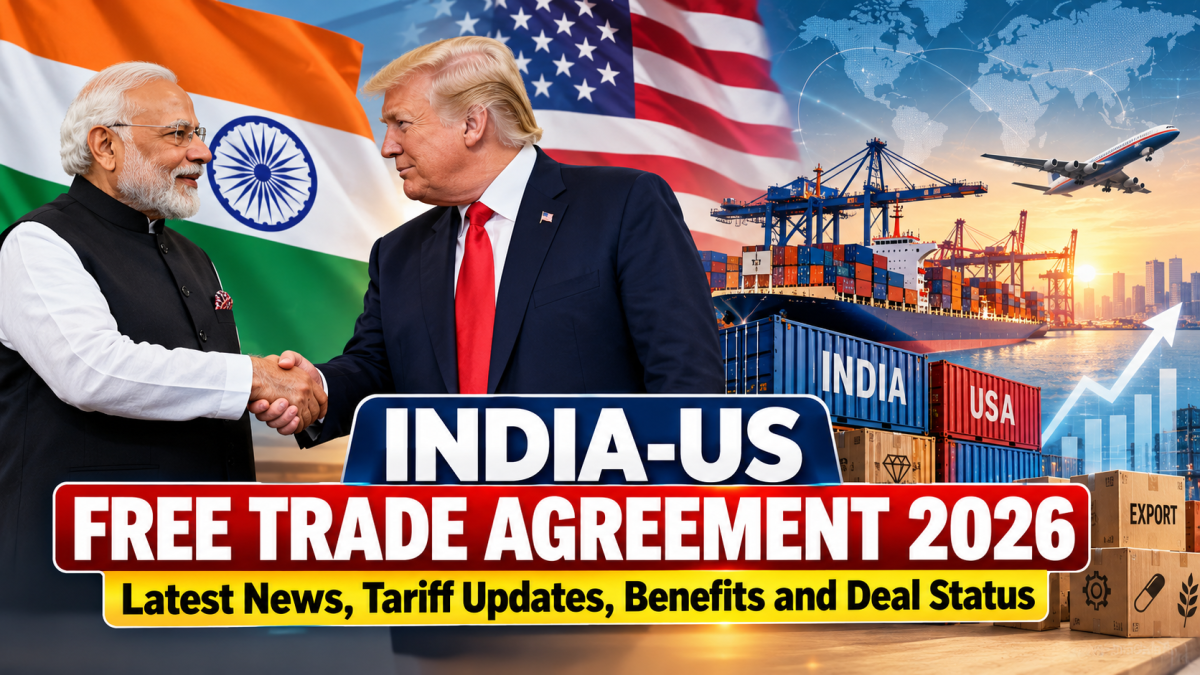
India-US Trade Agreement 2026: Latest News, 18% Tariff Update, Benefits and Deal Status
India-US Trade Agreement 2026: India and the United States are moving closer to concluding the first phase of their proposed bilateral trade agreement. The deal could create new opportunities for exporters, manufacturers, farmers and businesses in both countries. However, the final legal text and implementation arrangements remain important milestones.
As of October 18, 2026, the first phase of the proposed trade agreement has been finalised at the negotiating level and is undergoing legal drafting, according to statements by India's Commerce and Industry Minister, Piyush Goyal, on October 15. India has also emphasised the need to secure competitive tariff conditions for its exporters before operationalising the agreement.
The February 2026 framework provides the historical basis for several proposed tariff and market-access provisions discussed in this article. These proposals should not automatically be treated as implemented benefits. The final legal text, applicable tariff measures and official implementation announcements will determine the actual treatment of individual products.
Latest India-US Trade Deal News: October 2026
The latest developments indicate significant progress in negotiations between India and the United States.
On February 6, 2026, both countries announced a framework for an interim trade agreement as part of their broader bilateral trade agreement negotiations. The framework outlined proposed tariff arrangements, agricultural market access, industrial trade and other commitments.
The position subsequently advanced. On October 15, India's Commerce and Industry Minister, Piyush Goyal, said the first phase had been finalised and was undergoing legal drafting. He also stressed that India wanted a competitive advantage over rival exporting countries before operationalising the agreement.
India is seeking preferential market access and greater tariff stability for its exporters. The United States, meanwhile, is pursuing improved access to India's market for American goods and businesses.
The key distinction is that progress on the first phase does not mean every proposed tariff concession is already in force.
Current status as of October 18, 2026:
-
February 6: India and the United States announced a framework for an interim trade agreement.
-
October 15: Indian officials reported that the first phase had been finalised and was undergoing legal drafting.
-
Next milestone: Completion of the legal text, formal conclusion of the agreement and confirmation of the applicable implementation arrangements.
Sources: Reuters report, October 15, 2026 and The Economic Times.
What Is the India-US Trade Agreement?
A Free Trade Agreement (FTA) is an arrangement between countries to reduce or remove selected trade barriers and improve access to each other's markets.
India and the United States are negotiating a Bilateral Trade Agreement (BTA). The proposed interim agreement is intended to advance this broader process by addressing tariffs, industrial goods, agricultural products, regulatory barriers and supply-chain cooperation.
The February 2026 announcement was a framework for an interim agreement, not the completion of a comprehensive FTA. The progress reported in October concerns the first phase of the broader negotiations.
The final provisions will determine which products qualify for preferential treatment, what conditions businesses must satisfy and when the relevant changes take effect.
India-US Trade Deal: What Does the Proposed 18% US Tariff Mean?
The February 2026 framework specified an 18% reciprocal tariff rate for covered Indian-origin goods, subject to the framework's conditions and the successful conclusion of the interim agreement.
However, the proposed 18% rate should not be interpreted as a universal final customs duty on every product exported from India. The actual treatment depends on the product category, applicable US tariff measures and any exclusions or additional duties.
Proposed tariff treatment by product category
1. Covered industrial and consumer goods
The February framework identified products including textiles and apparel, leather and footwear, plastics and rubber products, organic chemicals, home décor, artisanal products and certain machinery among the categories covered by the proposed 18% reciprocal tariff arrangement.
2. Products identified for potential reciprocal tariff relief
The framework identified generic pharmaceuticals, gems and diamonds, and aircraft parts among the categories that could receive reciprocal tariff relief, subject to the successful conclusion of the agreement and applicable conditions.
This potential relief should not be confused with a blanket exemption from every US import duty. Other applicable tariffs, trade measures and product-specific requirements may still affect the final customs cost.
3. Other sector-specific arrangements
The framework also referred to separate arrangements concerning certain aircraft and aircraft parts, as well as a preferential tariff-rate quota for specified Indian automotive parts. Pharmaceutical outcomes were linked in part to the findings of a US investigation.
These arrangements have their own conditions and should be assessed separately from the proposed 18% reciprocal tariff rate.
Important: The February framework describes proposed arrangements, not proof that every concession is currently operational. Exporters should verify the applicable US tariff classification, current duty treatment and effective dates before calculating costs or promising customers tariff savings.
Which Indian Industries Could Benefit From the Trade Deal?
The proposed agreement could create opportunities for several Indian industries if the final terms improve market access or provide more favourable tariff treatment. The actual benefits will depend on product eligibility, international demand and the competitiveness of Indian businesses.
1. Textiles and Garments
India has a significant textile and apparel industry, supplying cotton products, fabrics, garments and other textile goods to international markets.
More favourable tariff conditions could help Indian manufacturers compete with suppliers from Bangladesh, Vietnam and other exporting countries. Potential benefits include additional export orders, increased production and employment opportunities.
However, businesses should wait for the final tariff provisions before assuming that their products will receive preferential treatment.
2. Pharmaceuticals
India is a major producer of generic medicines and supplies pharmaceutical products to international markets.
The February framework identified generic pharmaceuticals for potential reciprocal tariff relief, subject to the relevant conditions. If these provisions are concluded and implemented, eligible pharmaceutical exporters could benefit from improved tariff treatment.
Companies must still comply with applicable US pharmaceutical regulations and verify the treatment of individual products.
3. Gems and Jewellery
India's gems and jewellery industry relies heavily on international demand, including demand from the United States.
The framework identified gems and diamonds for potential reciprocal tariff relief. Eligible exporters could benefit if the relevant provisions take effect, although the entire jewellery sector should not be assumed to qualify automatically.
4. Leather and Footwear
India exports leather goods, footwear and related products to several international markets.
Competitive tariff conditions could help Indian manufacturers attract overseas buyers and expand production. The actual benefit will depend on the final tariff treatment, manufacturing costs and demand from US customers.
5. Engineering Goods and Machinery
India exports machinery, industrial components and other engineering products.
More predictable trade conditions could help manufacturers plan production, negotiate contracts and invest in export capacity. Product classification, origin requirements, quality standards and delivery times will remain important factors in determining competitiveness.
How Could the Trade Deal Affect Indian Farmers?
Agriculture remains one of the most sensitive issues in the India-US trade negotiations.
Under the February 2026 framework, India proposed eliminating or reducing tariffs on a wide range of US agricultural and food products. The listed categories included tree nuts, fresh and processed fruit, soybean oil, red sorghum and other products.
Greater access for American agricultural products could increase supply and competition in some Indian markets. Consumers and food-processing businesses could benefit from additional sourcing options, while some domestic producers could face greater competitive pressure.
The effect would differ across agricultural sectors depending on the products covered, final tariff commitments, applicable safeguards and domestic market conditions.
It would therefore be inaccurate to conclude that all Indian farmers will either benefit or lose from the agreement. The final provisions will determine how the agreement balances market access, consumer interests and the position of domestic agricultural producers.
What Could American Businesses Gain From the Agreement?
The proposed agreement is also intended to improve American businesses' access to India's large consumer market.
The February framework outlined proposed Indian tariff reductions on US industrial goods and a wide range of American agricultural and food products. It also addressed non-tariff barriers affecting areas such as medical devices, information and communication technology goods and agricultural exports.
In addition, India stated its intention to purchase $500 billion of US products across specified categories over five years. These included energy products, aircraft and aircraft parts, precious metals, technology products and coking coal.
This figure represents a stated intention in the framework, not proof that the purchases have already occurred or a guarantee that all the proposed purchases will be completed.
If the relevant commitments are concluded and implemented, American manufacturers, agricultural exporters and technology suppliers could gain commercial opportunities in India.
Will the India-US Trade Agreement Reduce Prices in India?
Some imported products could become cheaper if the final agreement reduces the duties applicable to them. However, a tariff reduction does not automatically translate into an equivalent reduction in retail prices.
Shipping, insurance, currency fluctuations, distribution expenses and other applicable taxes or duties can affect the final cost.
Indian manufacturers could also benefit if imported machinery or industrial inputs receive lower tariffs. Conversely, domestic producers competing with imported goods could face greater price pressure.
The impact will depend on the final provisions, product eligibility and how businesses respond to the changes.
Business Checklist: What Exporters and Importers Should Do Before the Deal Takes Effect
Businesses should prepare for possible changes without relying on proposed tariff benefits before they are officially applicable.
For Indian Exporters Selling to the United States
-
Verify product classification: Confirm the correct US Harmonized Tariff Schedule (HTS) code for each exported product.
-
Check current duties: Determine the duties and other trade measures applicable on the expected date of entry into the United States.
-
Identify possible tariff relief: Check whether the product falls within a category identified in the February framework. Confirm eligibility under the final rules before claiming a concession.
-
Review origin documentation: Maintain records of manufacturing, materials and sourcing to demonstrate compliance with applicable rules of origin.
-
Update pricing and contracts: Calculate costs using current duties and possible future tariff changes. Avoid guaranteeing unconfirmed savings to customers.
-
Prepare shipment documents: Check commercial invoices, packing lists, origin documents and product-specific certificates required by the importer or customs authorities.
-
Monitor official announcements: Follow updates from India's Ministry of Commerce and Industry and US Customs and Border Protection.
For Indian Importers Purchasing Goods From the United States
-
Review import duties: Confirm the Indian customs classification and applicable import duty for each product.
-
Assess proposed concessions: Check whether products are covered by proposed tariff reductions and verify the final rules before claiming benefits.
-
Review supplier contracts: Account for possible changes in duties, customs delays and delivery costs.
-
Check regulatory requirements: Verify import licences, product standards, labelling and other compliance requirements.
-
Calculate landed costs: Include duties, freight, insurance, currency fluctuations and applicable taxes.
-
Maintain records: Keep purchase invoices, origin information, product classification records and customs documentation.
Steps for All Businesses
-
Do not change customs declarations based solely on media reports or the February framework.
-
Confirm the agreement's formal status, effective date and product-specific provisions through official government announcements.
-
Review pricing, procurement and inventory plans after the final text and implementation rules are published.
Following these steps can help businesses prepare for potential changes while reducing the risk of incorrect duty calculations or premature commercial commitments.
Why Has the India-US Trade Agreement Taken So Long?
Several issues have complicated the negotiations.
Market access: Both countries are seeking better commercial opportunities for their businesses while protecting important domestic interests.
Agricultural trade: Proposed access for US agricultural products raises questions about competition and the potential impact on Indian farmers.
Tariff competitiveness: India wants its exporters to receive conditions that allow them to compete effectively with suppliers from Bangladesh, Vietnam, Indonesia and other countries.
Regulatory barriers: Differences in product standards, licensing, digital trade rules and other non-tariff measures require detailed negotiations.
US tariff policy: Changes in the wider US tariff framework and questions about additional trade measures have added uncertainty. India has sought greater clarity and stability before operationalising the agreement.
Legal drafting and implementation: Even after negotiators reach an understanding, the legal text must establish the obligations, exceptions, conditions and procedures for applying the agreement.
These issues explain why progress on a negotiating framework does not automatically make its provisions legally operational.
India-US Trade Deal: What Happens Next?
The immediate priorities are completing legal drafting, formally concluding the interim agreement and clarifying the implementation process.
Once the governments publish the final terms and relevant official measures, businesses will need to determine:
-
Which products qualify for preferential tariff treatment.
-
Whether product-specific exclusions or additional duties apply.
-
What origin and documentation requirements must be met.
-
When the tariff changes become effective.
-
Whether further regulatory approvals or implementation measures are required.
Readers should monitor India's Ministry of Commerce and Industry, the Press Information Bureau and the Office of the United States Trade Representative.
Until the applicable provisions are formally confirmed, businesses should continue to use the current official customs rules for shipments and cost calculations.
India-US Trade Agreement 2026: Frequently Asked Questions
1. Has India signed a Free Trade Agreement with the USA?
As of October 18, 2026, Indian officials have said that the first phase has been finalised and is undergoing legal drafting. Formal conclusion and operationalisation remain important milestones. This is not the same as completing a comprehensive free trade agreement.
2. What is the proposed US tariff rate on Indian goods?
The February 2026 framework specified an 18% reciprocal tariff rate for covered Indian-origin goods, subject to the relevant conditions. The applicable treatment of individual products must be checked against current official rules.
3. Are pharmaceuticals and gems exempt from US tariffs?
The framework identified generic pharmaceuticals, gems and diamonds, and certain other products for potential reciprocal tariff relief. The proposed relief was conditional and should not be treated as a blanket exemption from every applicable import duty.
4. Which Indian industries could benefit?
Textiles, garments, pharmaceuticals, gems and diamonds, leather products, footwear, chemicals and machinery could benefit from favourable tariff treatment or more predictable market access, depending on the final provisions.
5. Will Indian farmers be affected?
Potentially. Proposed tariff reductions on selected US agricultural products could increase competition in some markets. The impact will depend on final product coverage, tariff rules and any applicable safeguards.
6. When will the agreement come into effect?
A confirmed implementation date should not be assumed until the governments formally conclude the agreement and announce the relevant procedures.
7. What should exporters do before implementation?
Exporters should confirm product classification, check current duties, maintain origin records, review customer contracts and monitor official tariff announcements. They should not claim unconfirmed preferential treatment.
8. Where can readers find official updates?
Readers can consult India's Ministry of Commerce and Industry, the Press Information Bureau, the White House and the Office of the United States Trade Representative.
Conclusion
The India-US trade agreement could strengthen commercial ties between two major economies, improve market access and create opportunities for exporters, manufacturers and consumers.
The February 2026 framework established the initial proposed terms, while developments reported in October indicate that the first phase has progressed to legal drafting. The distinction between the original framework and the current negotiating status remains essential.
For Indian businesses, the immediate priority is preparation rather than assuming that proposed tariff benefits are already available. Product classification, customs compliance, rules of origin and official implementation dates will determine how the agreement affects individual shipments.
The ultimate economic impact will depend on the final legal provisions, the competitiveness of Indian exporters and how effectively both countries implement their commitments.
Editorial note: This article reflects publicly reported developments and the February 2026 framework as of October 18, 2026. Proposed tariff provisions and sectoral benefits may change before formal conclusion or implementation.
Sources and Further Reading
-
Reuters: India says first phase of US trade deal finalised, October 15, 2026
-
The Economic Times: Indian trade secretary says first phase of US trade deal finalised
-
India Today: India-US trade pact first phase finalised, legal drafting underway
-
Office of the United States Trade Representative: Official trade policy updates
-
Ministry of Commerce and Industry, Government of India: Official website

Join the Conversation