Published: 24 October 2026 | Category: India News | Geopolitics
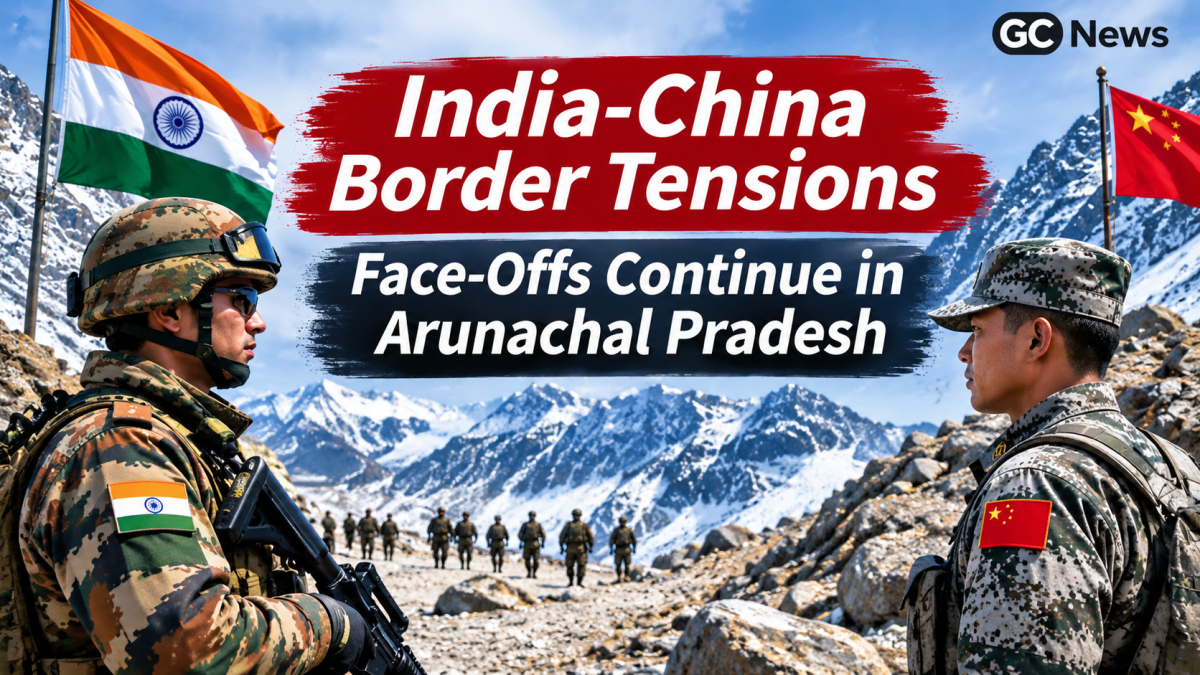
Tensions along the India-China border have returned to the spotlight after India's Indo-Tibetan Border Police (ITBP) chief confirmed that face-offs between Indian and Chinese forces were continuing at several locations in Arunachal Pradesh.
The development has raised fresh questions about border security, the effectiveness of diplomatic talks and the future of relations between the two Asian neighbours.
On 22 October, ITBP Director General Shatrujeet Kapur spoke about continuing face-offs and praised the role of the force's specialised Shaurya commando teams. His remarks marked a significant public acknowledgement of ongoing friction along the northeastern frontier. The following day, India's Ministry of External Affairs (MEA) said that border conditions are periodically disturbed when Chinese forces deviate from established patrolling patterns.
The latest developments come despite continued diplomatic and military engagement between New Delhi and Beijing.
For India, the immediate challenge is to protect its border interests while preventing local confrontations from escalating into a wider military crisis. For China, the continuing dispute remains part of a broader and unresolved territorial disagreement with India.
Although face-offs between troops are serious developments, they should not automatically be described as a new war or a confirmed large-scale armed clash. The precise locations and circumstances of the latest encounters have not been fully detailed in the public statements cited in current reporting.
What Is Happening on the India-China Border?
According to reports published on 23 October, ITBP chief Shatrujeet Kapur said that encounters between Indian and Chinese forces had taken place at several locations in Arunachal Pradesh and were continuing.
He praised the performance of the ITBP's Shaurya commandos during these situations. However, he did not publicly identify every location or provide a complete account of the encounters. <sup>[1]</sup>
The remarks followed reports of tensions around Taksing in Arunachal Pradesh's Upper Subansiri district. Indian and Chinese forces operate along a sensitive frontier where competing perceptions of the Line of Actual Control can lead to disagreements over patrolling.
India's Ministry of External Affairs responded on 23 October by reiterating that the two countries continue to use established diplomatic and military mechanisms to address outstanding issues and avoid misunderstandings.
MEA spokesperson Randhir Jaiswal also stressed that peace and tranquillity along the border are essential for the overall development of India-China relations.
The government's response indicates that diplomatic channels remain active, but it does not mean the underlying border dispute has been resolved.
The important question now is whether the two sides can contain the current face-offs and prevent further deterioration in an already sensitive relationship.
Why Arunachal Pradesh Remains a Sensitive Border Region
Arunachal Pradesh is strategically important to India because of its geographical position in the eastern Himalayas and its proximity to Tibet.
India administers Arunachal Pradesh as one of its states. China claims the region and disputes India's position, making it a recurring source of tension between the two governments.
The Line of Actual Control, or LAC, separates areas under Indian and Chinese control. However, the two countries have not mutually agreed on the entire alignment of the line. This creates situations in which patrols may enter areas that the other side considers part of its own patrolling zone.
Such disagreements can lead to face-offs even when neither side intends to begin a wider conflict.
The mountainous landscape adds to the difficulty. Harsh weather, difficult terrain and limited access make border management challenging, while roads, infrastructure and military deployments influence how quickly forces can reach sensitive locations.
For India, maintaining a secure frontier is a matter of national security and territorial integrity. For China, its claims in the eastern sector are part of a longstanding territorial dispute.
Until the underlying disagreement is addressed, the possibility of further confrontations cannot be ruled out.
India and China Had Held Military Talks Before the Latest Reports
The latest reports are particularly important because they emerged after another round of military discussions between India and China.
On 6 September 2026, the two sides held Corps Commander-level talks at the Wacha-Damai border meeting point on the Indian side. The discussions were intended to address issues along the LAC in the area amid reports of tensions around Taksing. <sup>[3]</sup>
Such meetings form part of a wider effort to maintain communication between the two militaries.
Military talks allow commanders to raise concerns, clarify disputed movements and explore ways to prevent local incidents from escalating. They are especially important when the boundary has not been fully agreed upon.
However, talks do not automatically resolve every disagreement.
The latest face-offs suggest that border management remains a difficult task, even while diplomatic and military channels continue to operate. The public information available so far does not establish the full circumstances of each reported encounter or whether all the issues raised in September have been resolved.
What is clear is that sustained communication remains necessary if both countries want to prevent local tensions from developing into a broader confrontation.
What Is India's Government Saying?
Following the ITBP chief's remarks, MEA spokesperson Randhir Jaiswal said that situations along the India-China border are periodically disturbed when Chinese forces diverge from established patrolling patterns.
He added that both countries continue to use existing diplomatic and military mechanisms to resolve outstanding issues and avoid misunderstandings or miscalculations along the LAC.
The two sides have also agreed to discuss ways of improving their understanding of the LAC in appropriate areas to support better border management.
The ministry referred questions about the specific incidents to the Ministry of Defence and did not provide a detailed, location-by-location account during the briefing.
The distinction matters. Official statements have confirmed continuing friction, but they have not supplied all the details required to reconstruct each face-off independently.
For a developing story involving national security, clarity about what is known and what remains unconfirmed is essential.
The situation should therefore be assessed through further official updates and credible reporting rather than assumptions about the scale of the confrontation.
Why the Latest Face-Offs Matter for India-China Relations
India and China have several reasons to prevent the latest border tensions from escalating.
Both countries have major economic and development priorities. A serious military confrontation could divert resources, increase regional uncertainty and place additional pressure on an already complicated bilateral relationship.
The border dispute is also connected to wider strategic concerns. India pays close attention to China's regional influence and military capabilities, while both countries seek to protect their national interests in Asia.
These competing objectives make trust difficult to establish.
A face-off at the border may be geographically limited, but its political effects can extend far beyond the immediate location. It can influence diplomatic discussions, public opinion, security planning and the willingness of businesses to operate in an uncertain environment.
The challenge is to prevent each new incident from becoming another reason for both governments to retreat from dialogue.
This does not mean India should overlook its security concerns. Nor does it mean that diplomatic engagement guarantees a peaceful outcome.
It means that security preparedness and diplomatic communication need to operate together. A capable border force can help protect national interests, while effective communication can reduce the possibility of a misunderstanding turning into a larger crisis.
Could the Situation Escalate Into a Larger Conflict?
A border face-off does not automatically lead to war. Many encounters are managed through communication between local commanders or other established military channels.
However, the risks should not be dismissed.
When forces operate in close proximity, a misunderstanding, an unexpected movement or a serious incident can create pressure for retaliation. If communication breaks down, it can become harder to contain the situation.
The history of India-China relations demonstrates why both sides need to approach such encounters carefully. The 1962 war and the deadly Galwan Valley clashes of June 2020 remain important reminders of the consequences of serious confrontation.
Those historical events do not establish that the current face-offs will follow the same path. They do, however, explain why border incidents receive close attention from both governments.
At present, the publicly available reports reviewed for this article establish continuing face-offs and official concern, not that a new large-scale war has begun.
The immediate priority is to establish the circumstances of the reported encounters, maintain communication and prevent further escalation.
What Happens Next?
The next phase will depend on developments along the border and the ability of India and China to use existing communication mechanisms effectively.
Further military discussions could help clarify the situation and address disputed patrolling activities. Clearer public information from the relevant authorities would also help separate confirmed developments from speculation.
For India, maintaining security along the frontier remains essential. At the same time, continuing diplomatic engagement can help reduce the risks associated with unresolved territorial disagreements.
For China, the dispute also presents a continuing test of its relationship with India. Stable border conditions would create more room for cooperation in other areas, even if the territorial disagreement remains unresolved.
Neither country needs to agree on every issue to prevent conflict. Both need to demonstrate that competing claims can be managed through communication, predictable conduct and established procedures.
Conclusion: Border Stability Remains the Key Challenge
The latest India-China border tensions in Arunachal Pradesh highlight how difficult it remains to establish lasting trust between the two countries.
The ITBP chief's remarks on 22 October and the MEA's response the following day have brought renewed attention to reported face-offs at several locations along the frontier. They also underline the continuing importance of border management and diplomatic communication.
The precise circumstances of the encounters remain incompletely documented in public reporting. That makes it important to avoid exaggerated claims while recognising the seriousness of the situation.
For India, the priority is to protect its territorial interests and ensure that border arrangements are respected. For both countries, the challenge is to prevent a local confrontation from undermining wider efforts to maintain stability.
Diplomatic meetings alone cannot settle the dispute. Lasting progress requires reliable communication, consistent implementation of agreements and a willingness to address disagreements before they escalate.
The latest developments are a reminder that peace along the India-China border cannot be taken for granted. It must be maintained through continued engagement and careful management of competing interests.
The immediate test for New Delhi and Beijing is whether they can contain the current face-offs, clarify the circumstances and prevent another border dispute from becoming a wider crisis.
Sources and Further Reading
1. The Indian Express — 23 October 2026
“After ITBP chief's Arunachal remarks, Congress asks PM Modi to ‘come clean’.” Includes reporting on the ITBP chief's confirmation of face-offs at multiple locations and the military talks held in September.
2. The Financial Express — 24 October 2026
“What is happening along the India-China border in Arunachal and what has MEA said?” Reports the ITBP chief's remarks, the MEA's response and the limits of currently available information about the specific incidents.
3. India Today — 23 October 2026
“ITBP chief says China face-offs ongoing along Arunachal, Congress attacks PM.” Provides additional context on the reported face-offs and the wider border situation.
4. Ministry of External Affairs, Government of India
Official background on India's position regarding the border dispute and agreements on border-related issues.

Join the Conversation