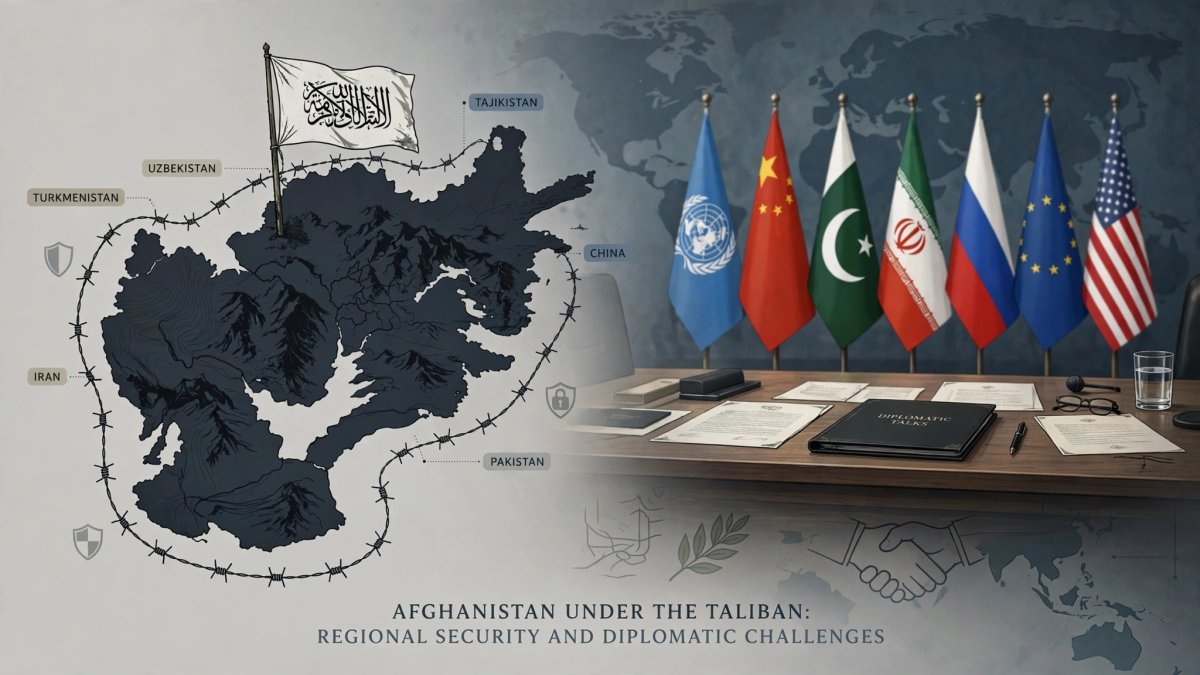
Afghanistan Under the Taliban: Regional Security and Diplomatic Challenges
KABUL, October 25, 2026 — Afghanistan under the Taliban remains a significant issue for regional security, international diplomacy and humanitarian policy five years after the movement returned to power in August 2021. Although the authorities have consolidated control and the economy has recorded modest growth, persistent security concerns, restrictions on women and girls, economic hardship and limited international acceptance continue to shape the country's future.
Afghanistan's strategic location between South Asia, Central Asia, China and Iran makes its stability important to neighbouring governments. The central challenge is how to engage with the Taliban authorities to address shared security and economic interests while responding to concerns about governance, human rights and international obligations.
1. Political Governance and International Legitimacy
Since 2021, the Taliban has established control over Afghanistan's central administration and security institutions. Its authorities point to nationwide control, infrastructure initiatives and efforts to stabilise the economy as evidence of progress.
In a September 2026 briefing to the United Nations Security Council, the UN Assistance Mission in Afghanistan acknowledged these developments but stressed that restrictions on women and girls, exclusionary governance and the presence of terrorist groups remain major concerns.
This creates a dilemma for foreign governments. Practical engagement is necessary to discuss humanitarian assistance, trade, border management and counterterrorism, but maintaining diplomatic contact does not automatically mean granting formal recognition.
Supporters of engagement argue that maintaining communication channels gives international stakeholders opportunities to influence decisions and resolve urgent problems. Critics counter that deeper diplomatic relations without measurable improvements in governance and human rights could weaken international pressure for reform.
2. Regional Security and Cross-Border Threats
The security situation in Afghanistan affects neighbouring countries through concerns about terrorism, border instability and the activities of armed organisations.
The Taliban has stated that Afghan territory should not be used to threaten other countries. Nevertheless, international assessments continue to identify terrorist groups operating in or around Afghanistan as a concern for regional and international security. The presence of these groups also complicates efforts to establish confidence between Kabul and neighbouring capitals.
Regional cooperation could improve intelligence-sharing, border monitoring and the prevention of militant movement. However, mutual distrust and disagreements over responsibility for attacks have made sustained cooperation difficult.
A long-term security strategy will require verifiable commitments, consistent communication and measures to protect civilians. Military action alone cannot resolve the political disputes and security concerns affecting Afghanistan's relationships with its neighbours.
3. Afghanistan–Pakistan Relations: Border Tensions
Relations between Afghanistan and Pakistan have deteriorated amid disputes over cross-border militancy. Pakistan accuses the Taliban authorities of allowing the Tehreek-e-Taliban Pakistan (TTP) to operate from Afghan territory. The Taliban denies responsibility for attacks in Pakistan and rejects Islamabad's allegations.
The dispute intensified again in September 2026, when Pakistan carried out airstrikes in Afghanistan. Afghan officials reported civilian casualties, while Pakistan said its operations targeted militant locations. The competing accounts highlight the difficulty of resolving security disputes when both governments dispute the other's claims.
On October 24, the Associated Press reported that Pakistan had again urged the Taliban authorities to take verifiable action against militants allegedly operating from Afghanistan. Kabul rejected the accusations.
These tensions affect more than the two governments. Border closures disrupt commercial transport, increase costs for businesses and complicate travel for families and migrant workers.
Negotiated security arrangements, independent verification of allegations and functioning communication channels could help reduce escalation. Without such measures, recurring violence risks damaging trade and further destabilising border communities.
4. India's Afghanistan Policy: Strategic Interests and Diplomatic Engagement
India has gradually expanded its functional engagement with Afghanistan since the Taliban's return to power. Its interests include regional stability, humanitarian assistance, development cooperation, trade and preventing Afghan territory from being used for terrorism against other countries.
In September 2026, India's Ministry of Commerce reported that an India–Afghanistan joint working group had discussed customs cooperation, trade facilitation, banking, pharmaceuticals, agricultural trade, investment and connectivity.
This engagement offers potential benefits. Maintaining diplomatic channels enables India to communicate directly with Afghan authorities, support humanitarian programmes and preserve long-standing connections with Afghan communities.
However, closer engagement also presents challenges. Critics argue that diplomatic and commercial cooperation must not obscure restrictions on women's rights or concerns about political inclusion. India's approach therefore involves balancing practical interests with its stated support for the welfare and development of the Afghan people.
5. China's Role and Regional Economic Interests
China has strategic interests in Afghanistan's stability, including concerns about terrorism, border security and the safety of regional economic projects. Afghanistan's mineral resources and location could also offer opportunities for investment and transport connectivity.
For Kabul, Chinese investment could support infrastructure development, create employment and expand access to regional markets. Economic cooperation could also give the Taliban authorities additional diplomatic options.
Nevertheless, security risks, financial constraints, limited infrastructure and uncertainty over long-term governance continue to complicate major investment projects. Commercial agreements will have limited impact unless they produce sustainable employment and measurable improvements in local living standards.
China and other regional powers also face the challenge of protecting their interests without assuming that economic cooperation alone can resolve Afghanistan's political and humanitarian problems.
6. Iran and Central Asia: Cooperation and Competition
Iran and the Central Asian countries share concerns about border security, migration, water resources, trade and the movement of extremist groups.
Afghanistan's landlocked position makes access to neighbouring markets particularly important. Improved transport infrastructure and reliable border procedures could help the country diversify its trading routes and strengthen economic connections with Central and South Asia.
However, disagreements over water management, migration and security can undermine cooperation. Regional governments must also consider the potential consequences of instability for their own border communities and domestic economies.
Regular diplomatic consultations and practical agreements on trade, migration and water management could reduce tensions while creating opportunities for economic development.
7. Terrorist Organisations: ISIS-K and Al-Qaeda
The Islamic State Khorasan Province (ISIS-K) and concerns surrounding Al-Qaeda remain important elements of international assessments of Afghanistan's security environment.
ISIS-K has conducted attacks in Afghanistan and the wider region. International governments also continue to monitor whether other militant networks can use Afghan territory to organise, recruit or support operations abroad.
These threats provide a shared reason for regional governments to cooperate with one another and communicate with the authorities in Kabul. However, disagreements about the scale of militant activity and the effectiveness of Taliban counterterrorism measures continue to complicate diplomatic relations.
Effective counterterrorism efforts require credible intelligence, measurable enforcement and cooperation that protects civilians. Regional security will remain fragile if governments cannot establish confidence in one another's commitments.
8. Human Rights: Restrictions on Women and Girls
Restrictions on women's education, employment and participation in public life remain among the most significant obstacles to Afghanistan's international reintegration.
The Taliban authorities maintain that their policies reflect their interpretation of Islamic law and Afghan social norms. However, the United Nations has repeatedly expressed concern about the effects of these restrictions on fundamental rights, economic development and the delivery of humanitarian assistance.
In October 2026, reporting by the Associated Press on a UNAMA update described arrests and detentions of women and girls over alleged violations of strict dress requirements and rules concerning male guardianship.
The consequences extend beyond individual freedoms. Restrictions limit the number of women able to participate in the workforce, reduce educational opportunities and create additional challenges for healthcare and aid delivery.
International stakeholders argue that lifting these restrictions would improve Afghanistan's prospects for economic recovery and diplomatic engagement. The Taliban's position, meanwhile, continues to reflect its own interpretation of religious and social obligations. The disagreement remains a central barrier to improved relations.
9. Humanitarian Crisis and Economic Challenges
Afghanistan continues to face severe humanitarian needs driven by poverty, food insecurity, drought, displacement and the return of large numbers of Afghan migrants.
A UK government country-policy assessment published in April 2026 estimated that 21.9 million people, or 45% of Afghanistan's population, would require humanitarian assistance during 2026. Priority needs included food, healthcare, safe water, shelter and protection services.
The economic outlook is similarly complicated. The World Bank reported in May 2026 that Afghanistan's economy was growing modestly, but rising population pressures, weak investment and declining external assistance were limiting improvements in living standards. It estimated that GDP per capita had fallen by 5.6% in 2025.
Financial restrictions and difficulties accessing international banking services further complicate commercial activity. Although humanitarian exemptions exist, practical obstacles can still affect financial transactions and the delivery of essential goods.
International assistance can help prevent further deterioration, but long-term recovery will also require private-sector development, reliable financial services, investment in infrastructure and policies that enable women and men to contribute to economic activity.
10. International Diplomacy, Trade and Refugee Pressures
International diplomacy remains divided over how to engage with the Taliban. Some governments favour sustained communication to address security and humanitarian concerns, while others argue that deeper engagement should depend on measurable improvements in governance and human rights.
Afghanistan's geographic position offers opportunities to develop transport corridors and expand trade with neighbouring regions. However, border tensions, weak infrastructure, limited financial access and unpredictable regulations continue to restrict these opportunities.
The refugee situation adds another layer of pressure. Returning Afghans require housing, employment, healthcare and education, while host countries face their own economic and administrative constraints. Coordinated international assistance and safe, dignified reintegration policies are therefore important to reducing the strain on communities.
Conclusion: Afghanistan's Future and Regional Stability
Afghanistan under the Taliban presents a complex combination of security risks, diplomatic opportunities and humanitarian challenges. The authorities' consolidation of control and the economy's modest growth offer potential foundations for stability, while regional engagement could support trade, development and counterterrorism cooperation.
However, these developments must be considered alongside persistent militant threats, strained relations with Pakistan, restrictions on women and girls, and widespread humanitarian needs.
A sustainable approach will require regional governments to maintain diplomatic channels, pursue verifiable security arrangements and support economic cooperation. International engagement should also address human rights, inclusive governance and the needs of vulnerable communities.
Ultimately, Afghanistan's future will depend not only on its authorities' ability to maintain control but also on whether the country can provide greater security, improve living conditions and establish constructive relationships with its neighbours and the wider international community.
Sources and Further Reading
2. https://unama.unmissions.org/en/reports-of-the-un-secretary-general
4. https://apnews.com/article/d272bc5e5647190476b051a650c8f8a7
5. https://www.pib.gov.in/PressReleasePage.aspx?PRID=2305807&lang=2®=48
8. https://unama.unmissions.org/en/unama-human-rights-monitoring-and-reporting

Join the Conversation