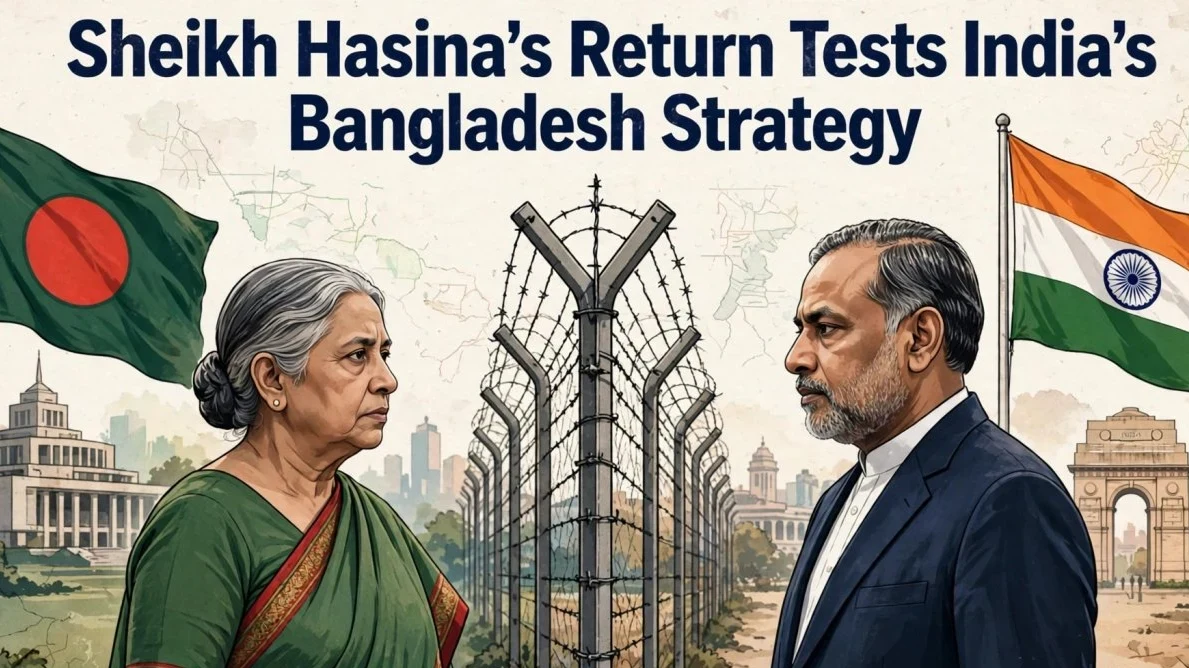
India–Bangladesh relations are facing another diplomatic challenge following former Bangladeshi Prime Minister Sheikh Hasina's reported plan to return to Bangladesh on 16 December 2026, the country's Victory Day. Having lived in India since leaving Bangladesh in August 2024, Hasina's possible return has created a complicated situation involving extradition, domestic politics and regional security.
The developments place New Delhi in a sensitive diplomatic position. India must consider its bilateral relationship with Bangladesh while handling the legal and political questions surrounding a former head of government residing on Indian soil.
Also Read: General Category Students Challenge Reservation Expansion
1. Sheikh Hasina's Departure and Political Background
Hasina's departure from Bangladesh in 2024 transformed the country's political environment and created new challenges for its relationship with India. Her continued presence in India and the legal proceedings against her remain central to the diplomatic disagreement between the two neighbours.
The 2024 Political Crisis
Sheikh Hasina left Bangladesh on 5 August 2024 following a student led uprising that brought an end to her 15 year tenure as prime minister. The political crisis and subsequent violence significantly changed Bangladesh's domestic political landscape.
Hasina has remained in India since her departure. Her political future has become a major issue in bilateral relations, particularly after Bangladesh's International Crimes Tribunal sentenced her to death in absentia in November 2025 over the crackdown on protesters. Hasina has rejected the proceedings and disputed the accusations against her.
Bangladesh's Extradition Demand
The Bangladeshi government has formally requested India's cooperation in returning Hasina under the extradition treaty between the two countries. Dhaka maintains that she should face the legal consequences of the charges against her.
This demand has created a difficult diplomatic question for New Delhi: how should India respond to an extradition request involving a former leader who remains within its territory?
Also Read: Medical Aid Beyond Caste and the Case for Need-Based Welfare
2. The December 16 Return Proposal
The reported December 16 return plan has brought the issue back into the spotlight. The date is politically significant because Bangladesh celebrates Victory Day on this occasion, but several legal and practical obstacles remain.
Hasina's Reported Intention
According to Reuters reports published on 24 November, Hasina intends to return to Bangladesh on 16 December, coinciding with Victory Day. Her spokesperson said she had requested arrangements for travel from New Delhi aboard Bangladesh's national carrier, Biman Bangladesh Airlines.
However, this remains a reported intention rather than a confirmed travel arrangement. The Bangladeshi government has rejected the idea of an unrestricted return and maintains that her return should take place through the extradition process.
India's Official Position
On 25 November, India's Ministry of External Affairs spokesperson Randhir Jaiswal clarified that voluntary return to one's country and a formal extradition request are separate matters.
He stated that Bangladesh's extradition request was being examined under established procedures. This distinction indicates that India is treating the legal extradition process separately from Hasina's reported personal plans to return.
3. The Diplomatic Challenge for India
The Hasina issue is not simply a question of an individual's return. It tests India's ability to protect its diplomatic interests while maintaining a stable relationship with a neighbouring country that shares important economic and security priorities.
Balancing Bilateral Relations
India and Bangladesh share a long border and extensive cooperation in trade, connectivity, energy, water management and regional security. Political disagreements over Hasina could affect these wider areas of cooperation.
New Delhi must avoid allowing one contentious issue to undermine the broader relationship. At the same time, India's response must consider the legal obligations arising from the bilateral extradition treaty.
Domestic Politics and Regional Stability
Bangladesh's political leadership faces domestic pressure over Hasina's future, while her supporters continue to regard her return as a significant political issue.
India must carefully assess the potential consequences of any decision. A sudden diplomatic escalation could complicate border cooperation, security coordination and economic relations between the two neighbours.
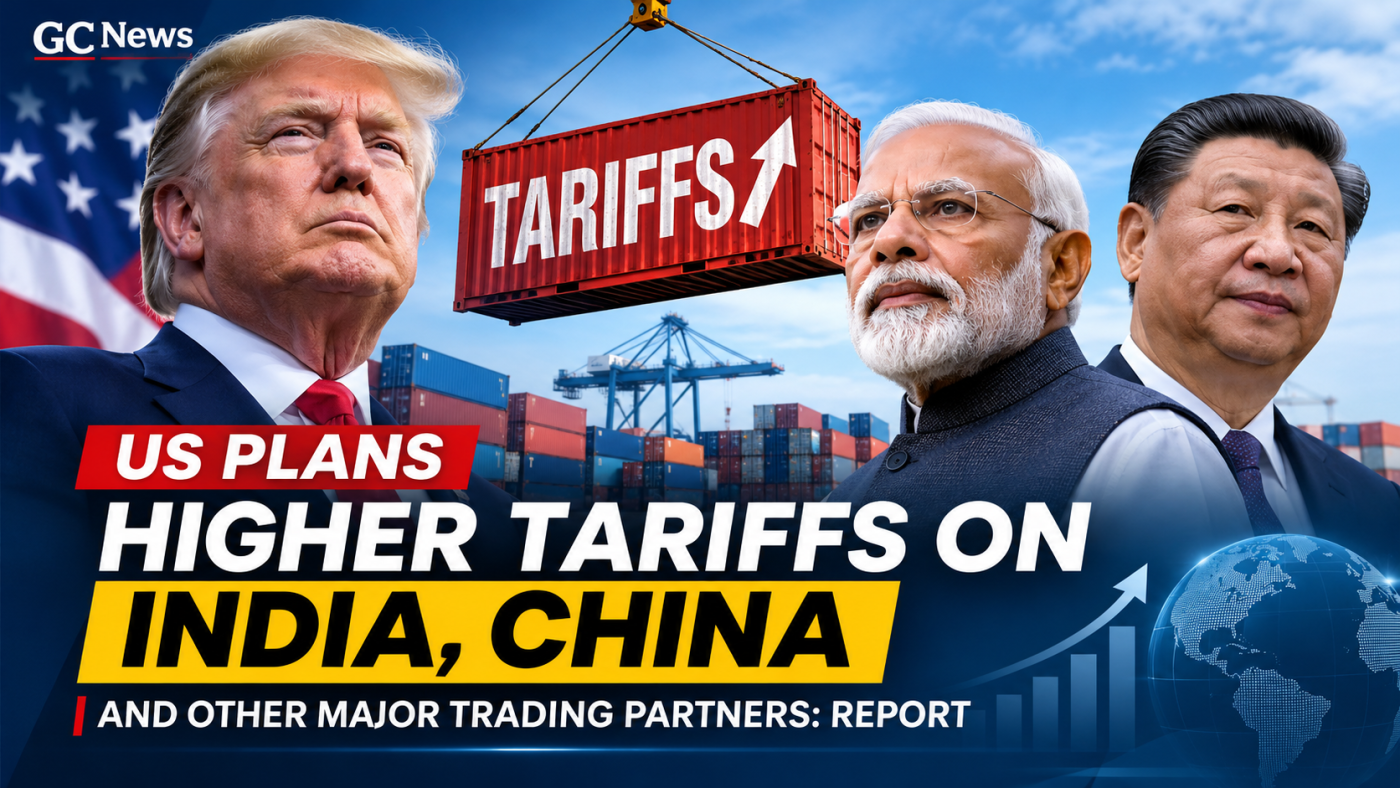
Also Read: US Plans Higher Tariffs on India, China and Other Major Trading Partners
4. China, Pakistan and the Regional Geopolitical Dimension
The political situation in Bangladesh also carries wider geopolitical significance. India's approach must account for the country's strategic location and the possibility that strained bilateral relations could influence the regional balance of power.
Strategic Competition in South Asia
Bangladesh occupies a significant geographical position between India's northeastern states, the Bay of Bengal and Southeast Asia.
Any prolonged deterioration in relations could create opportunities for other regional powers, particularly China, to expand their diplomatic and economic influence. Pakistan may also seek to strengthen its engagement with Dhaka.
However, such developments should not automatically be interpreted as a shift in Bangladesh's foreign policy. Dhaka has its own national interests and will continue to make decisions based on its economic and strategic priorities
India's Neighbourhood Policy
For India, maintaining constructive relations with Bangladesh is essential to its Neighbourhood First policy and broader Indo-Pacific interests. Cooperation on counterterrorism, connectivity, maritime security and regional trade remains important regardless of political disagreements.
Also Read: Russia’s Role in India’s Strategic and Economic Interests
Sources and Further Reading
1. Reuters (24 November 2026) – "Sheikh Hasina seeks to return to Bangladesh on December 16 on state carrier" https://www.reuters.com/world/asia-pacific/sheikh-hasina-seeks-return-bangladesh-december-16-state-carrier-2026-11-24/
2. The Daily Star (25 November 2026) – "India says Hasina's voluntary return is separate from Bangladesh's extradition request" https://www.thedailystar.net/news/world/south-asia/news/india-says-hasinas-voluntary-return-separate-extradition-request-4333186
3. The Daily Star (24 November 2026) – "Hasina seeks to return to Bangladesh on December 16 on state carrier" https://www.thedailystar.net/news/news/hasina-seeks-return-bangladesh-december-16-state-carrier-reuters-4331841
4. Associated Press (24 November 2026) – "Bangladesh's ousted leader Hasina plans to return home from exile on December 16" https://apnews.com/article/1c668d190907b8ff9c041427fd25c8cb
5. ThePrint – Reuters (25 November 2026) – "India says Hasina's plan to return to Bangladesh is separate from extradition request" https://theprint.in/world/india-says-hasinas-plan-to-return-to-bangladesh-is-separate-from-extradition-request/3109003/

Join the Conversation