Middle East Conflict Escalates as Oil Prices Rise and Shipping Risks Grow
October 22, 2026 | International News
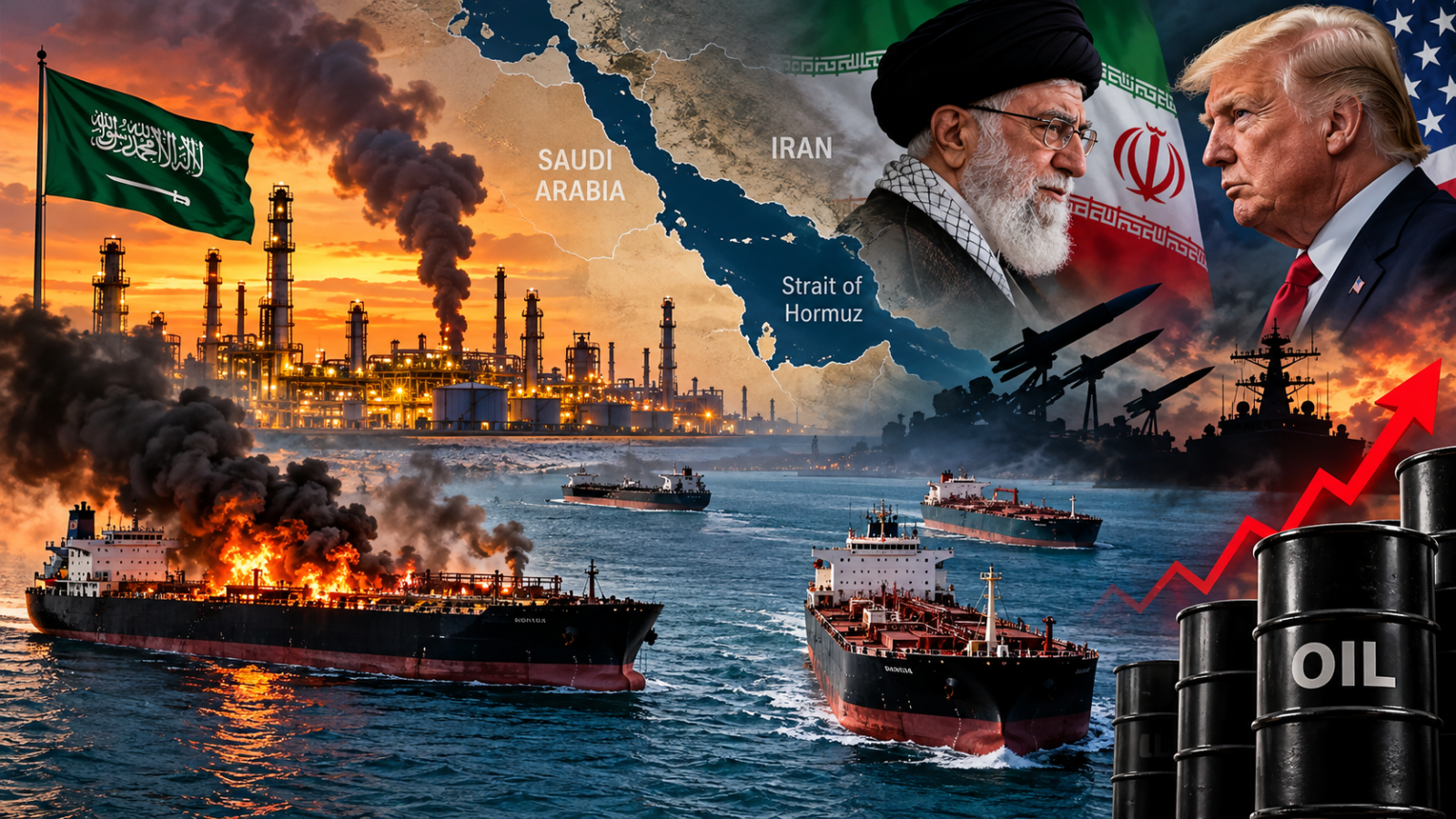
The conflict in the Middle East intensified on Thursday, October 22, as reported attacks in Saudi Arabia, claims of damage to oil tankers in the Strait of Hormuz, and growing tensions between Iran and the United States raised fresh concerns about regional stability. The developments have also put international shipping, diplomatic relations, and global energy supplies under increasing pressure.
According to Reuters, oil prices climbed as markets reacted to renewed security threats in the region. The United States also ordered some diplomatic personnel and their family members to leave Saudi Arabia amid growing concerns about their safety.
Meanwhile, Iranian state television reported that seven oil tankers had been damaged in incidents in the Strait of Hormuz, a vital route for international oil shipments. Although the report raised serious questions about maritime security, the details had not been independently verified in full.
The latest developments show how the conflict is affecting more than the countries directly involved. From rising energy costs to potential disruptions in global trade, the consequences could reach economies and consumers across the world.
1. Oil Prices Climb as Fears of Supply Disruptions Grow
International oil prices moved higher on Thursday as traders assessed the possibility of further disruptions to energy supplies from the Middle East.
Reuters reported that Brent crude futures rose by approximately 3.08% to $112.17 per barrel, while US West Texas Intermediate (WTI) crude reached $99.83 per barrel during the trading session.
The increase came amid concerns about attacks in Saudi Arabia and growing uncertainty over the security of regional oil transportation routes.
The Middle East remains central to the global energy market. Any threat to major oil-producing countries or the routes used to transport crude can influence prices, even when the full extent of a disruption is not yet clear. Traders often respond to the risk of reduced supplies before the actual impact on production or exports becomes known.
If oil prices remain high, the effects could spread across several industries. Airlines, transport operators, manufacturers, and other energy-dependent businesses may face higher operating costs. Consumers could also feel the impact through more expensive goods and services.
For countries that depend heavily on imported oil, prolonged price increases can create additional economic pressure. However, the extent to which international price movements affect domestic fuel costs depends on factors such as currency exchange rates, taxation, government policy, and the pricing decisions of oil companies.
Source: Reuters, October 22, 2026.
2. Reports of Seven Damaged Tankers Raise Maritime Security Concerns
The safety of commercial shipping became another major concern after Iranian state television reported that seven oil tankers had been damaged in incidents in the Strait of Hormuz.
According to The Associated Press (AP), Iranian state media cited a statement from the navy of Iran's Islamic Revolutionary Guard Corps. The report said four vessels caught fire while transferring oil, while three others were reportedly damaged after striking naval mines.
Details about the vessels, including their identities, national flags, and the possibility of casualties, were not fully established in the available reporting. The claims had also not been independently confirmed in full.
That distinction matters. During an armed conflict, information released by parties directly involved may not provide a complete picture of an incident. Independent assessments, statements from shipping companies, and information from maritime monitoring organisations can help establish what happened.
The Strait of Hormuz connects the Persian Gulf with the Gulf of Oman and the Arabian Sea. It is one of the world's most important energy shipping corridors, carrying substantial volumes of crude oil and petroleum products to international markets.
A serious disruption to traffic through the strait could have consequences far beyond the immediate region. Shipping companies might delay voyages or reconsider routes, while insurers could increase premiums to account for heightened security risks.
Such changes could raise transportation costs, delay deliveries, and add further uncertainty to global energy markets.
For countries that rely on oil imports from the Gulf, the safety of this route is particularly important.
Source: Associated Press, October 22, 2026.
3. US Orders Some Diplomatic Personnel to Leave Saudi Arabia
The United States has ordered some diplomatic personnel and their family members to leave Saudi Arabia as security concerns increase.
Reuters reported that the decision followed attacks in the kingdom and growing fears that the conflict could spread further. US authorities have also considered arrangements involving family members at other diplomatic missions in the region.
Such measures reflect the challenges governments face when maintaining diplomatic operations in areas affected by military tensions. Officials must weigh the need to protect their personnel against the importance of continuing essential diplomatic and consular work.
However, the departure of some diplomatic staff does not automatically mean that Washington is preparing to launch a new military operation against Iran. Governments may reduce their personnel in response to deteriorating security conditions without making an immediate decision about further military action.
Even so, the move underlines the seriousness of the situation and the uncertainty surrounding the next phase of the conflict.
Washington now faces the challenge of protecting its personnel and regional interests while keeping diplomatic channels open. Any further changes to its presence in the Middle East will depend on security assessments and decisions by the relevant authorities.
Source: Reuters, October 22, 2026.
4. Saudi Arabia Faces Growing Security Pressures
Saudi Arabia is facing renewed security challenges following attacks attributed to Yemen's Houthi movement.
According to Reuters, the reported attacks contributed to concerns about regional stability and the security of energy supplies, helping push international oil prices higher.
Separately, The Associated Press reported an attack at King Fahd International Airport in Dammam that reportedly killed two people and injured eight, according to information published on October 22.
The reported incidents have drawn attention to the vulnerability of airports, transport networks, and other strategic facilities during a widening regional conflict.
Saudi Arabia is one of the world's leading oil producers. Its production facilities, export terminals, pipelines, and transport infrastructure therefore play an important role in maintaining stability in international energy markets.
Any disruption to these systems could affect exports and increase uncertainty among energy traders. Even if oil production continues, threats to infrastructure and transportation routes can make deliveries more expensive and difficult to manage.
There is also a significant civilian safety dimension. Attacks affecting airports and other public facilities can endanger passengers, workers, and nearby communities.
The protection of civilians and civilian infrastructure is an important principle of international humanitarian law. The circumstances surrounding individual incidents, including responsibility and the extent of the damage, should be established through reliable reporting and appropriate investigations.
Sources: Reuters and The Associated Press, October 22, 2026.
5. Iran–US Tensions Make a Diplomatic Resolution More Difficult
Relations between Iran and the United States remain a major factor in the wider Middle East crisis.
Military activity, threats involving commercial vessels, and warnings from officials have increased uncertainty over whether the conflict can be contained. Disagreements over regional security and access to strategically important waterways continue to complicate the situation.
The Associated Press reported that Iran's Revolutionary Guard warned of possible retaliation against US bases in the region if Washington continued efforts to facilitate tanker movements through routes Tehran considers illegal.
The warning has raised concerns that a confrontation involving commercial shipping could expand into a broader military crisis.
However, official threats should not be confused with confirmation that a particular military action has been authorised or will take place. The situation will depend on subsequent decisions, military developments, and diplomatic efforts.
Dialogue remains one possible way to reduce the risk of further escalation. Any meaningful progress would likely require discussions about maritime security, military activity, regional stability, and the conditions needed to ensure safe passage for commercial vessels.
As of October 22, the available reports do not establish that a comprehensive agreement to end the conflict has been reached.
International observers are therefore watching for further statements from Tehran and Washington, signs of diplomatic engagement, and developments affecting shipping across the region.
Source: Associated Press, October 22, 2026.
6. Global Economic Impact Could Extend Beyond the Middle East
The economic consequences of the conflict could spread well beyond the countries directly involved.
Rising crude oil prices can increase expenses across transportation, aviation, manufacturing, and other energy-intensive industries. Businesses may initially absorb some of these additional costs, but prolonged increases could eventually be reflected in the prices paid by consumers.
Shipping disruptions present another challenge. If vessels face security threats or are forced to take longer routes, delivery times can increase and transportation costs may rise. Higher insurance premiums could add further pressure on international trade.
Financial markets also respond to geopolitical uncertainty. A prolonged crisis can influence inflation expectations, business confidence, corporate earnings, and investment decisions.
Why India could be affected
India is particularly exposed to changes in international oil prices because it imports a substantial share of the crude oil it consumes.
If global prices remain elevated, India's oil import bill could increase, potentially placing additional pressure on foreign-exchange demand and the country's trade balance.
The effect on domestic petrol and diesel prices is not automatic. It depends on international crude benchmarks, the rupee's exchange rate against the US dollar, government taxation, and decisions by oil marketing companies.
Higher energy costs can also affect transport fares, logistics, industrial production, and the prices of goods that depend on fuel-intensive supply chains.
Other oil-importing economies in Asia and Europe could face similar challenges if disruptions continue.
Still, the overall economic impact will depend on how long the conflict lasts, whether oil supplies remain available from alternative sources, and whether commercial shipping can continue safely through major maritime routes.
7. Shipping Security Becomes a Central International Concern
The latest reports have renewed attention on the safety of maritime trade routes across the Middle East.
Commercial vessels transport crude oil, refined petroleum products, and a wide range of other goods between international markets. When security risks rise, shipping companies must decide whether to continue normal operations, introduce additional precautions, delay voyages, or consider alternative routes where possible.
Each of these decisions can carry financial consequences. Longer journeys may increase fuel consumption and operating expenses, while delays can affect delivery schedules and disrupt supply chains.
In energy markets, uncertainty itself can influence prices. Traders must consider not only the amount of oil being produced but also whether supplies can reach their intended destinations without significant interruption.
Governments and maritime organisations will need reliable information about the reported tanker incidents to assess the actual level of risk and determine appropriate responses.
Independent verification is particularly important when reports involve naval mines, attacks on commercial vessels, or allegations of responsibility made by parties to the conflict.
The safe passage of civilian shipping is essential for countries that depend on international trade. A prolonged interruption to a major maritime corridor could increase economic pressure and make diplomatic efforts to reduce tensions even more urgent.
8. What Happens Next?
The immediate outlook remains uncertain as governments, shipping companies, and energy markets assess the latest developments.
Three issues are likely to shape the situation in the coming days.
First, the security of the Strait of Hormuz will remain a priority. Independent confirmation of the reported damage to seven tankers will be important in determining the scale of the incidents and whether they have caused a significant disruption to shipping.
Second, further attacks could increase regional instability. Additional incidents in Saudi Arabia or elsewhere in the Middle East could raise concerns about civilian safety, threaten strategic infrastructure, and put further pressure on international oil prices.
Third, diplomatic decisions by Iran and the United States could influence the direction of the crisis. Efforts to reduce hostilities and improve maritime security could help ease uncertainty. Further confrontation, by contrast, could prolong instability and increase the risks facing commercial shipping.
For now, it is important to distinguish between independently verified events, official statements, unconfirmed claims, and predictions about what might happen next.
The situation remains fluid. Further statements from governments, shipping operators, and independent monitoring organisations may provide a clearer picture of the reported incidents and their wider implications.
Conclusion
The Middle East conflict remained a major international concern on October 22, 2026, as reported attacks in Saudi Arabia, claims of damage to seven oil tankers, and continuing tensions between Iran and the United States raised fresh questions about regional security.
The rise in international oil prices highlights how instability in a strategically important region can influence energy markets worldwide. At the same time, the reported threats to commercial shipping and civilian infrastructure underline the potential human and economic costs of continued hostilities.
For India and other oil-importing countries, the situation deserves close attention. A prolonged increase in crude prices could raise import costs, place pressure on the wider economy, and affect businesses and consumers through higher transportation and production expenses.
Much will depend on whether maritime routes remain safe, whether the reported incidents can be independently verified, and whether the countries involved take steps to prevent further escalation.
As the situation develops, accurate reporting and independent verification will be essential to understanding what is happening on the ground and how the consequences may unfold across the global economy.
Sources and Further Reading
1. Reuters — Oil Prices Rise as Middle East Conflict Intensifies
Published October 22, 2026. The report covers rising oil prices, attacks attributed to Yemen's Houthi movement in Saudi Arabia, and the US decision to order some diplomatic personnel to leave the kingdom.
2. Associated Press — Iran Says Seven Tankers Were Damaged in the Strait of Hormuz
Published October 22, 2026. The report covers Iranian state media's claims about damage to seven oil tankers and other developments related to the regional conflict.



Join the Conversation