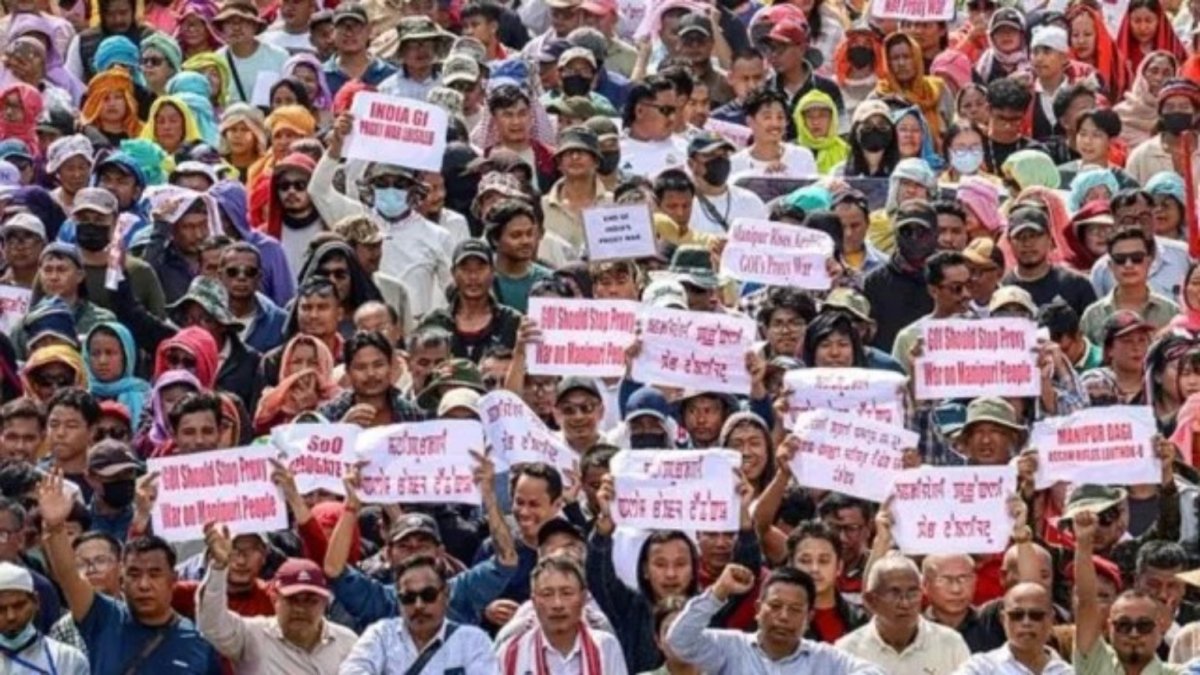
Meitei and Naga Groups Rally in Manipur Amid Renewed Ethnic Tensions
Demonstrations involving Meitei and Naga organisations in Manipur on October 31 have brought renewed attention to the state's prolonged ethnic conflict, security concerns and unresolved political demands. Protesters called for changes to existing security arrangements, the termination of the Suspension of Operations (SoO) agreement with Kuki armed groups and stronger action to rehabilitate families displaced by the violence.
The mobilisation took place amid continuing tensions and fresh reports of killings in the state. Organised by civil society groups, the demonstrations reflected growing dissatisfaction among sections of the population over the government's handling of the crisis.
The conflict, which began in May 2023, has had serious consequences for Manipur, including loss of life, displacement, disruption of livelihoods and strained relations between communities. The latest developments underline the difficulty of restoring normalcy without addressing the underlying political and security concerns.
1. Joint Demonstrations Highlight Growing Political Tensions
The October 31 mobilisation brought together organisations representing communities from different parts of Manipur. The demonstrations highlighted concerns about public safety, the role of security forces and the government's response to the prolonged conflict.
Meitei and Naga Organisations Participate in Imphal Rally
Thousands of demonstrators reportedly marched through parts of Imphal before gathering at Thau Ground in Thangmeiband. The rally was organised by the Coordinating Committee on Manipur Integrity (COCOMI), alongside several civil society organisations, including Naga groups.
The participation of Naga organisations alongside Meitei groups was significant because the conflict has affected relationships between communities across the state. However, the mobilisation should not be interpreted as evidence that every member or organisation within these communities holds an identical political position.
The protesters raised demands concerning security, displaced residents and the government's approach to the conflict. Demonstrations were also reported in other areas, reflecting the wider regional significance of the issues being discussed.
Protesters Demand Changes to Security Arrangements
One of the prominent demands concerned the withdrawal of Assam Rifles personnel from certain conflict-affected areas. Protest organisers questioned existing security arrangements and called for stronger measures to protect civilians.
The role of security forces has become a sensitive subject in Manipur, where different communities have expressed concerns about deployment patterns, law enforcement and the protection of vulnerable areas.
Any changes to security arrangements will require careful consideration. Authorities must ensure that decisions protect civilians, prevent further confrontation and maintain public order without creating additional insecurity.
2. Suspension of Operations Agreement Becomes a Major Flashpoint
The future of the Suspension of Operations agreement has emerged as a major point of disagreement in Manipur. The arrangement was introduced to regulate relations between the government and certain Kuki armed organisations and provide an opportunity for political dialogue.
Background of the SoO Agreement
The Suspension of Operations agreement was signed in 2008 between the government and Kuki armed organisations represented by the Kuki National Organisation and the United People's Front.
Under the arrangement, participating groups agreed to suspend offensive operations and operate within designated camps under specified conditions. The agreement was intended to reduce armed confrontation and create an environment for negotiations.
However, the arrangement has faced criticism from sections of the population. Some organisations have questioned whether its conditions have been properly followed and whether its continuation serves the broader security interests of the state.
These disagreements have become more pronounced following the outbreak of ethnic violence in 2023. The agreement is now connected to wider questions about security, political representation and the future relationship between communities.
Disagreement Over the Agreement's Future
The future of the SoO arrangement has become increasingly uncertain. Some Meitei and Naga organisations have demanded its termination, while Kuki-Zo groups have sought its continuation as part of the political process.
The disagreement reflects competing security concerns and differing expectations about how the conflict should be resolved. Any decision by the Centre will need to consider the agreement's legal and political implications, as well as the concerns of communities affected by the violence.
A decision taken without meaningful consultation could deepen existing mistrust. Transparent communication and sustained dialogue will therefore be important in determining the next steps.
3. Fresh Violence Raises Concerns Over Public Security
The demonstrations coincided with reports of fresh killings, highlighting the fragile security environment. The incidents have raised concerns about the possibility of further escalation and the safety of civilians in conflict-affected districts.
Five Kuki Men Killed in Separate Incidents
According to reports published on November 1, five Kuki men were killed in two separate incidents in Manipur.
Three men reportedly died during an exchange of gunfire involving unidentified armed groups in Noney district on October 31. Two other men, who had reportedly been missing earlier in the week, were found dead in Kangpokpi district.
A Kuki tribal organisation blamed Naga armed groups for the killings. However, allegations concerning responsibility must be distinguished from independently established findings. Investigations and official statements remain important for establishing the circumstances surrounding the incidents.
The deaths have added to concerns about civilian safety and the risk of renewed tensions between communities. Preventing retaliatory violence and ensuring impartial investigations will be essential to maintaining public order.
Displacement Remains a Major Humanitarian Challenge
The rehabilitation of internally displaced people remains another major challenge. The violence that began in May 2023 forced thousands of families to leave their homes, disrupting education, employment, businesses and access to essential services.
Although rehabilitation and relief measures have been undertaken, returning to normal life remains difficult for many affected families. Some continue to face uncertainty over housing, livelihood opportunities and personal security.
Long-term rehabilitation requires more than temporary accommodation. It involves rebuilding homes, restoring access to education and healthcare, supporting employment and creating conditions in which displaced families can return voluntarily and safely.
4. Political Accountability and the Road Ahead
The demonstrations have also renewed questions about political accountability and the responsibilities of the state and central governments. Restoring stability will require a coordinated approach that addresses immediate security concerns as well as the deeper causes of the conflict.
Protesters Seek Greater Government Accountability
Organisers raised concerns about the government's response to the continuing crisis and demanded political accountability. Some protesters also called for changes in the state leadership.
These demands reflect dissatisfaction among sections of the population. However, resolving the crisis will require more than political statements or administrative changes. Authorities must demonstrate that security measures are effective, investigations are impartial and affected communities receive meaningful support.
Dialogue and Rehabilitation Remain Essential
A lasting resolution will require sustained engagement between the Centre, the state government, civil society organisations and representatives of all affected communities.
Impartial law enforcement, accountability for violence and protection of civilians must remain priorities. Equally important is creating opportunities for dialogue that address competing political concerns without encouraging further hostility.
The rehabilitation of displaced families should also remain central to the government's response. Without safe conditions, reliable support and a credible path towards normalcy, the humanitarian consequences of the conflict will continue.
Conclusion
The Meitei and Naga mobilisation in Manipur on October 31 reflects continuing public dissatisfaction over security arrangements, the Suspension of Operations agreement and the rehabilitation of displaced residents. Fresh reports of killings on November 1 have further highlighted the fragile situation.
The challenge for the authorities is to prevent further violence while addressing the concerns of all affected communities. A lasting resolution will depend on impartial governance, transparent investigations, sustained dialogue and effective rehabilitation measures. Restoring peace in Manipur will require not only security operations but also a credible political process that rebuilds public confidence.
Sources and Further Reading
1. "Reuters – Five Killed in Fresh Ethnic Violence in Manipur" https://www.reuters.com/world/asia-pacific/five-killed-fresh-ethnic-violence-indias-manipur-state-2026-11-01/
2. "The Indian Express – Meitei and Naga Rally in Imphal" https://indianexpress.com/article/india/manipur-meitei-naga-joint-rally-imphal-soo-abrogation-kuki-zo-tensions-10945060/
3. "India Today – Thousands Rally in Manipur" https://www.indiatoday.in/india/story/manipur-protests-cocomi-naga-groups-demand-scrapping-soo-agreement-kuki-zo-govt-resignation-bjp-3029270-2026-10-31
4. "The Economic Times – Future of the Suspension of Operations Agreement" https://m.economictimes.com/news/india/what-awaits-the-fate-of-suspension-of-operations-agreement-in-manipur/amp_articleshow/135394771.cms
5. "The Telegraph – Manipur Rallies and Security Concerns" https://www.telegraphindia.com/north-east/manipur-rallies-cocomi-cotu-raise-demands-over-kuki-zo-demands-and-abducted-youths-prnt/cid/2187288
Join the Conversation