How Artificial Intelligence Is Transforming Modern Education?
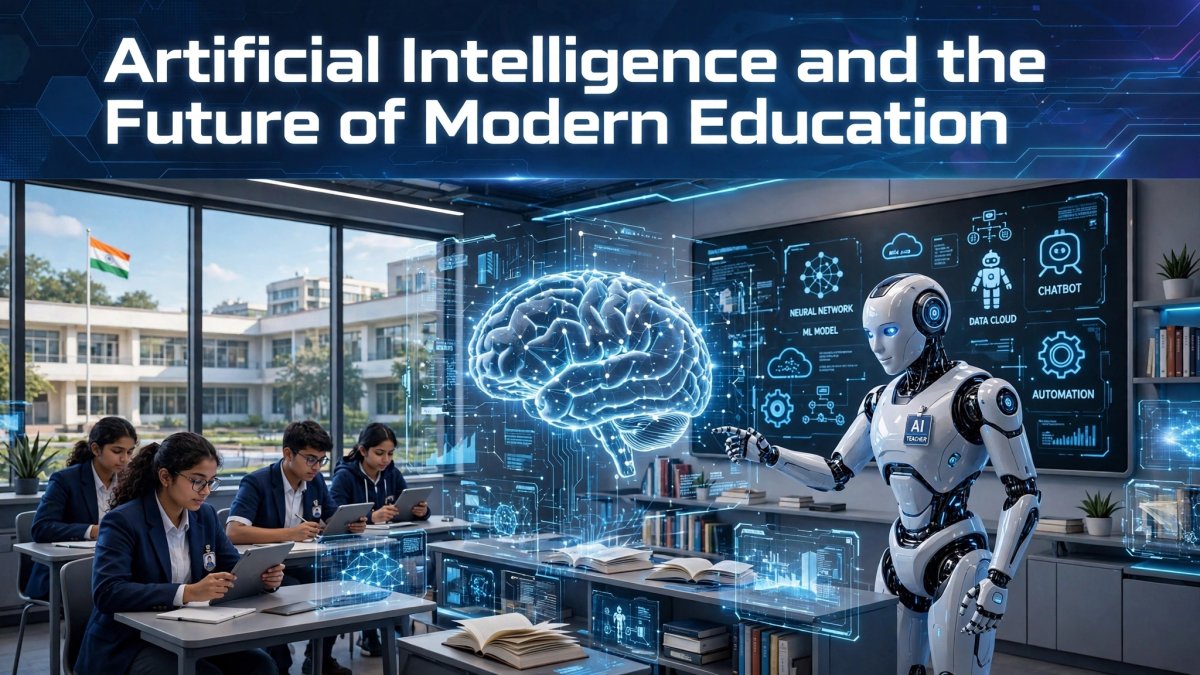
Artificial Intelligence (AI) is increasingly influencing the way students learn, teachers deliver lessons and educational institutions manage academic activities. From personalised learning platforms to automated assessment systems, AI-powered technologies are creating new possibilities for education. What was once considered an emerging technological concept is now becoming part of discussions about the future of schools, colleges and universities.
The growing adoption of generative AI has accelerated this transformation. Students can use AI tools to understand difficult concepts, explore subjects and receive explanations, while teachers can use them to prepare learning materials and organise classroom activities. However, the expansion of these technologies also raises concerns about academic integrity, data privacy, unequal access and excessive dependence on automated systems.
As educational institutions consider integrating AI into their systems, the central challenge is to ensure that technology strengthens learning without weakening independent thinking or the essential role of teachers.
1. The Growing Role of AI in Education
Artificial intelligence refers to computer systems designed to perform tasks that traditionally require human intelligence, including analysing information, recognising patterns and generating responses. In education, these capabilities are being applied to teaching, learning, assessment and institutional administration.
Changing Learning Methods
AI-powered platforms can provide explanations, generate practice questions and help students explore subjects at their own pace. Some AI systems can respond interactively to questions and adjust explanations according to a learner's requirements.
The "UNESCO Guidance for Generative AI in Education and Research" https://unesdoc.unesco.org/ark:/48223/pf0000386693 examines the opportunities and risks associated with introducing generative AI into educational environments. It emphasises the importance of a human-centred approach that protects learners and supports teachers.
2. Personalised Learning and Student Support
One of AI's potential contributions to education is its ability to support more personalised learning experiences. Students have different learning speeds, academic strengths and areas requiring additional attention. AI-based systems can help identify these differences and provide learning activities suited to individual requirements.
Supporting Individual Learning Needs
AI-enabled educational platforms may help students through:
• Explanations of difficult academic concepts.
• Additional practice questions and exercises.
• Immediate feedback on selected learning activities.
• Recommendations for further reading and revision.
• Language assistance and accessible learning resources.
These applications can supplement classroom teaching, particularly when students require additional explanations outside regular school hours. However, their effectiveness depends on the accuracy of the information and the quality of the educational design.
3. AI in Teaching and Classroom Management
Artificial intelligence is also changing the responsibilities and working methods of teachers. Certain administrative and preparatory activities can be supported by automated tools, potentially allowing educators to devote more attention to classroom interaction and individual student needs.
Supporting Teachers
Teachers may use AI applications to:
• Prepare lesson plans and classroom activities.
• Develop practice questions and learning materials.
• Organise educational content.
• Assist with feedback and assessment preparation.
• Adapt explanations for different learning levels.
Nevertheless, AI-generated educational material requires professional review. Teachers remain responsible for ensuring that classroom content is accurate, appropriate and aligned with the prescribed curriculum.
The "UNESCO AI Competency Framework for Teachers" https://www.unesco.org/en/articles/ai-competency-framework-teachers highlights the importance of developing teachers' knowledge of AI, ethical awareness and ability to integrate these technologies into teaching.
4. Benefits and Opportunities of AI-Based Education
The responsible use of AI could expand educational opportunities by making certain learning resources more accessible and supporting different teaching approaches.
Wider Access to Learning
Students can potentially access explanations, revision assistance and educational resources beyond traditional classroom hours. AI-based translation and accessibility tools may also support learners facing language or certain learning barriers.
Improved Educational Support
AI can assist institutions with organising information, identifying broad learning patterns and supporting administrative processes. When appropriately implemented, these applications may help educators identify areas where additional academic support is required.
However, technology should complement established educational practices rather than become a substitute for qualified teachers, textbooks, classroom discussions and practical learning.
5. Challenges and Risks of Artificial Intelligence
Despite its potential, AI introduces significant challenges that educational institutions must address. Unregulated or poorly designed applications can create problems relating to accuracy, privacy, fairness and academic standards.
Academic Integrity and Overdependence
Students may become overly dependent on AI-generated answers instead of developing their own understanding. Submitting automatically generated material as independent academic work can also undermine the purpose of assignments and assessments.
Privacy and Data Protection
Educational applications may process personal information, learning records and other sensitive data. Institutions must therefore examine how information is collected, stored and used.
Digital Inequality
Access to reliable internet connections, suitable devices and quality digital resources remains unequal. Students in rural and economically disadvantaged communities may face greater barriers to using advanced educational technologies.
The "UNESCO Guidance for Generative AI in Education and Research" https://unesdoc.unesco.org/ark:/48223/pf0000386693 highlights the importance of privacy protection, inclusion, equity and institutional readiness.
6. Impact on Teachers and Educational Institutions
The integration of AI requires educational institutions to reconsider teacher training, assessment methods and institutional policies. Simply introducing digital tools is not sufficient to improve educational outcomes.
Developing Digital Competencies
Teachers need opportunities to understand how AI systems work, evaluate generated information and identify potential risks. Students also require guidance on responsible technology use, source verification and academic honesty.
Institutions should establish clear policies covering:
• Acceptable AI use in assignments and examinations.
• Protection of student information.
• Verification of AI-generated educational content.
• Teacher training and professional development.
• Fair access to digital learning facilities.
A human-centred approach is essential to ensure that technological developments serve educational objectives rather than dictate them.
7. AI and the Future of Indian Education
India's education system includes government schools, private institutions, universities and professional colleges with widely differing levels of digital infrastructure. AI adoption could create opportunities for improving educational access, but its benefits will depend on affordability, connectivity and institutional preparedness.
Opportunities and Priorities
AI-based learning resources may support students across different languages and academic levels. Educational institutions could also explore technology-assisted teaching, digital libraries and improved academic support systems.
However, successful integration requires investment in:
• Reliable internet connectivity.
• Teacher training and digital literacy.
• Affordable digital infrastructure.
• Data protection and responsible technology policies.
• Equal access to educational resources.
Schools and universities must ensure that students who lack access to advanced devices are not excluded from educational opportunities.
Conclusion
Artificial intelligence is creating new possibilities for modern education, influencing how students access information, how teachers prepare lessons and how institutions manage academic activities. Its potential benefits include personalised learning, improved educational support and greater access to digital resources.
However, technology alone cannot guarantee better educational outcomes. Academic integrity, student privacy, digital inequality and teacher preparedness require sustained attention.
The future of education will depend on how effectively institutions balance technological innovation with human guidance. AI should function as a supporting tool that strengthens teachers, encourages independent thinking and expands learning opportunities. Ultimately, the purpose of education must remain the development of knowledge, critical reasoning and responsible individuals.
Sources and Further Reading
1. UNESCO – Guidance for Generative AI in Education and Research
https://unesdoc.unesco.org/ark:/48223/pf0000386693
2. UNESCO – AI Competency Framework for Teachers
https://www.unesco.org/en/articles/ai-competency-framework-teachers
3. UNESCO – AI and the Future of Education: Disruptions, Dilemmas and Directions
https://gcedclearinghouse.org/en/node/165863
4. OECD – Policies Supporting Responsible and Systematic GenAI Adoption in Higher Education
https://doi.org/10.1787/c4e5621f-en
5. UNESCO – Education in the Age of Artificial Intelligence
https://courier.unesco.org/en/articles/education-age-artificial-intelligence


Join the Conversation